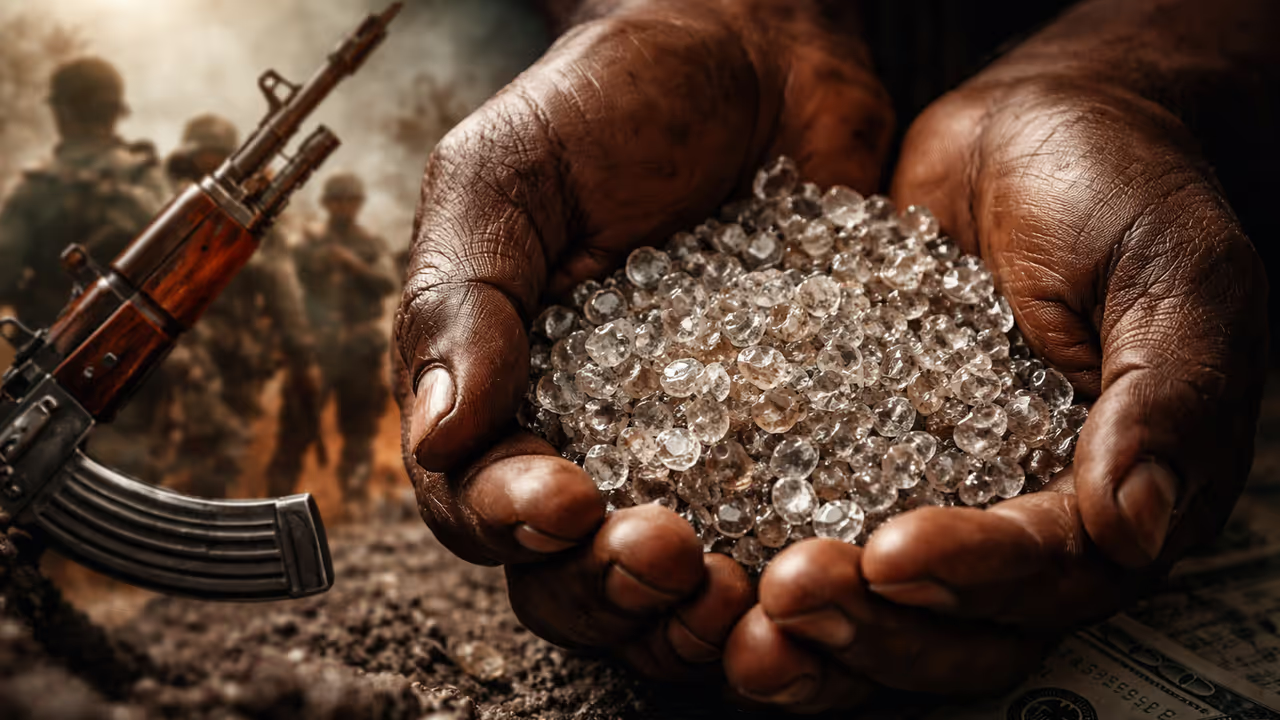
Blood diamonds are stones mined in war zones and sold to fund violence and armed groups. They became widely known during African civil wars in the 1990s. While global systems like the Kimberley Process have reduced their share, risks remain. These diamonds are easy to hide and trade, making them powerful tools in conflicts,.
Blood diamonds, also known as conflict diamonds, are diamonds mined in areas controlled by armed groups and sold to fund wars. These groups use the money to buy weapons, support fighters and continue violence. The term became widely known in the 1990s during civil wars in Africa. According to the United Nations, as quoted by Britannica, these diamonds were used to support insurgencies and attacks against governments.

Unlike other natural resources like oil or gas, diamonds are small and easy to carry. They can be hidden in a pocket and moved across borders without much difficulty. This makes them very useful for illegal trade.
Why diamonds are used in conflicts
Diamonds have a special value. Even a small stone can be worth a lot of money. This makes them attractive for armed groups that need quick and easy funding. They do not require large machines to extract. In many places, diamonds can be found close to the surface. People can dig them out using basic tools.
Related Articles

Because of this, armed groups can take control of mining areas and start earning money quickly. They do not need banks or official systems. They can sell diamonds directly to traders or exchange them for weapons.
This is why diamonds became a major source of war funding in several countries.
Also Read: Who Was Alireza Tangsiri? Iran’s Naval Chief Killed In Fresh Strike Near Hormuz
How diamonds turn into war money
The process usually follows a clear pattern. In areas where the government is weak, armed groups take control of diamond-rich land. Local people are often forced to work in the mines. They dig for long hours under difficult conditions. Some are paid very little, while others are forced to work without any choice.
Once the diamonds are found, they are smuggled out of the country. They often pass through nearby nations before entering global markets.
During this journey, they are mixed with legal diamonds. By the time they are cut and polished, it becomes almost impossible to know where they came from.
The money earned from these diamonds is then used to buy weapons and supplies. This helps conflicts continue for longer periods.
Africa’s wars and the diamond trade
The issue of blood diamonds became clear during civil wars in countries like Sierra Leone, Angola and the Democratic Republic of the Congo. In Sierra Leone, rebel groups took control of diamond-rich regions in the 1990s. They forced people to mine diamonds and used the money to buy weapons.
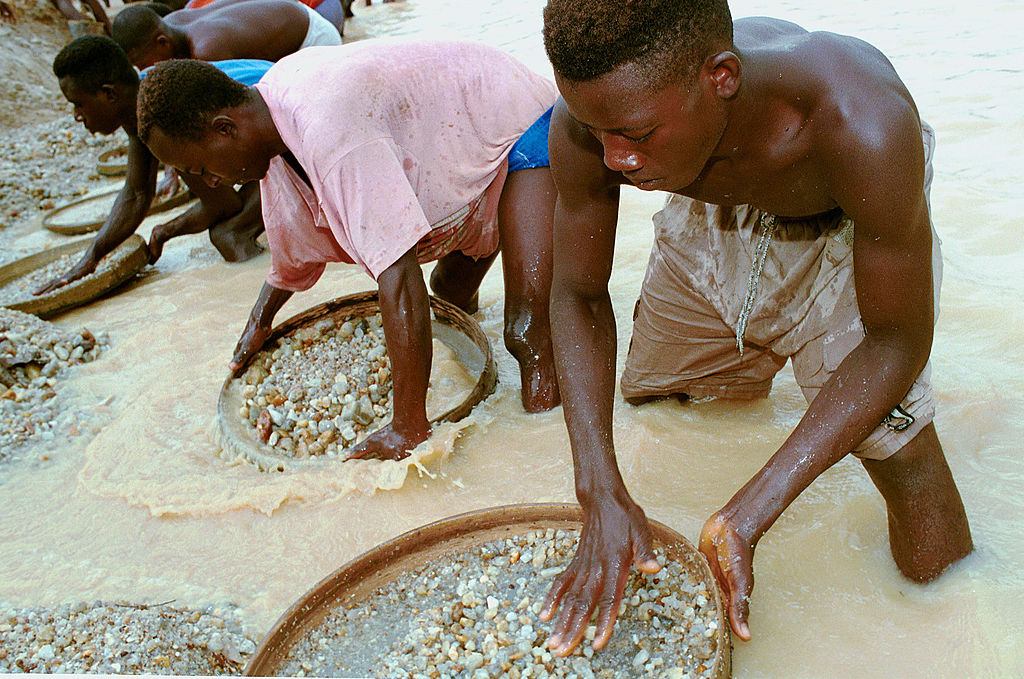
Getty Image: (Workers pan for diamonds in a government controlled diamond mine June 15, 2001 near Kenema, Sierra Leone)
At its peak, illegal diamond trade from Sierra Leone was worth hundreds of millions of dollars each year. Many of these diamonds were smuggled through neighbouring Liberia before reaching global markets.
In Angola, the rebel group UNITA earned billions of dollars from illegal diamond sales. These funds helped keep the war going for years.
Other countries like Guinea and Guinea-Bissau also became part of this network, either as conflict zones or transit routes.
Diamonds were not the only reason for these wars, but they made them harder to end by providing a steady source of money.
Human cost behind the trade
Behind every conflict diamond is a human story. Many people working in these mines face harsh conditions. They dig through mud and water for hours each day. The work is slow and dangerous. Injuries are common, and there is little safety.
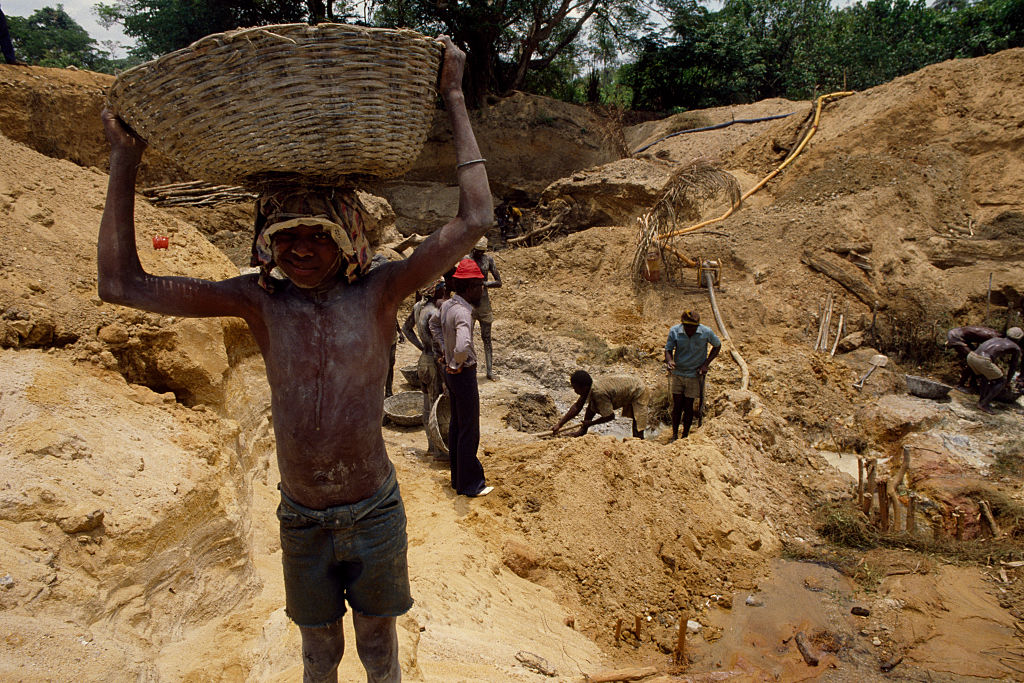
(Getty Image: Blood diamonds being mined in Sierra Leone)
Children are also involved in this work. In many regions, thousands of children have worked in small-scale mining. Some do it because their families are poor. Others are forced by armed groups. They carry heavy loads, search for stones and miss out on school.
In such places, there are very few rules or protections. Workers often have no rights, and abuse is common.
Even in areas without active war, informal mining still raises concerns about safety and fairness.
Global response and the Kimberley Process
As awareness grew, countries and organisations took action. In 2003, the Kimberley Process was introduced. This system requires countries to certify that their diamonds are conflict-free before exporting them. The goal is to stop illegal diamonds from entering global markets.
Today, more than 99 percent of diamonds in global trade are officially certified under this system.
This has helped reduce the share of blood diamonds. In the 1990s, they made up around 4 to 15 percent of global trade. By 2010, this fell to less than one percent.
However, experts say the system is not perfect. It mainly focuses on diamonds used by rebel groups. It does not always cover cases where governments misuse resources or where workers face abuse.
Challenges in stopping the trade
Stopping the illegal diamond trade is not easy. Diamonds can cross borders quickly and leave little record. They can be mixed with legal stones, making it hard to trace their origin. Once they are cut and polished, they look the same as any other diamond.
There are also gaps in monitoring. Some regions still lack strong systems to track where diamonds come from.
Organised crime groups are sometimes involved in smuggling diamonds. They use secret routes and networks to avoid detection. Even today, there are concerns about transparency in the global diamond supply chain.
Why the issue still matters today
Even though the share of blood diamonds has reduced, the issue has not disappeared. Modern conflicts are complex. They are often funded by multiple sources, including natural resources.
Diamonds remain a part of this system because of their value and ease of transport.
Whenever a new conflict begins, questions arise about how it is being funded. The history of blood diamonds means people remain cautious. It is important to note that not all diamonds are linked to conflict. Most are mined and sold legally. But the past continues to shape how people view the industry.
Also Read: Inside 'Hell On Earth' Brooklyn Jail: How Nicolás Maduro Is Living In A Notorious US Jail
A symbol with two sides
Diamonds are often seen as symbols of love, wealth and beauty. They are used in jewellery and special occasions. But their history shows another side. In some parts of the world, they have been linked to violence and suffering.
A small stone can carry a powerful impact. It can bring happiness in one place and pain in another.
This contrast is what makes the story of blood diamonds important.
Efforts to improve transparency and safety in the diamond trade continue. Governments, companies and organisations are working to strengthen rules and monitoring systems.
Technology may also help in tracking the origin of diamonds more accurately in the future. At the same time, there is growing awareness among buyers. Many people now want to know where their diamonds come from.
The story of blood diamonds is not just about the past. It is a reminder of how global trade, conflict and human lives are connected.
As long as diamonds remain valuable and easy to trade, the risk of misuse will remain.
That is why the issue continues to be discussed around the world.