Crude Oil Jumps Above $100 As US-Iran Tensions Rise, Global Markets Fall
Global markets turned volatile as oil prices surged and stocks fell amid uncertainty over US-Iran talks. Crude crossed $100/barrel as tensions rose and Strait of Hormuz faced disruption. Mixed signals from both sides have shaken investor confidence.
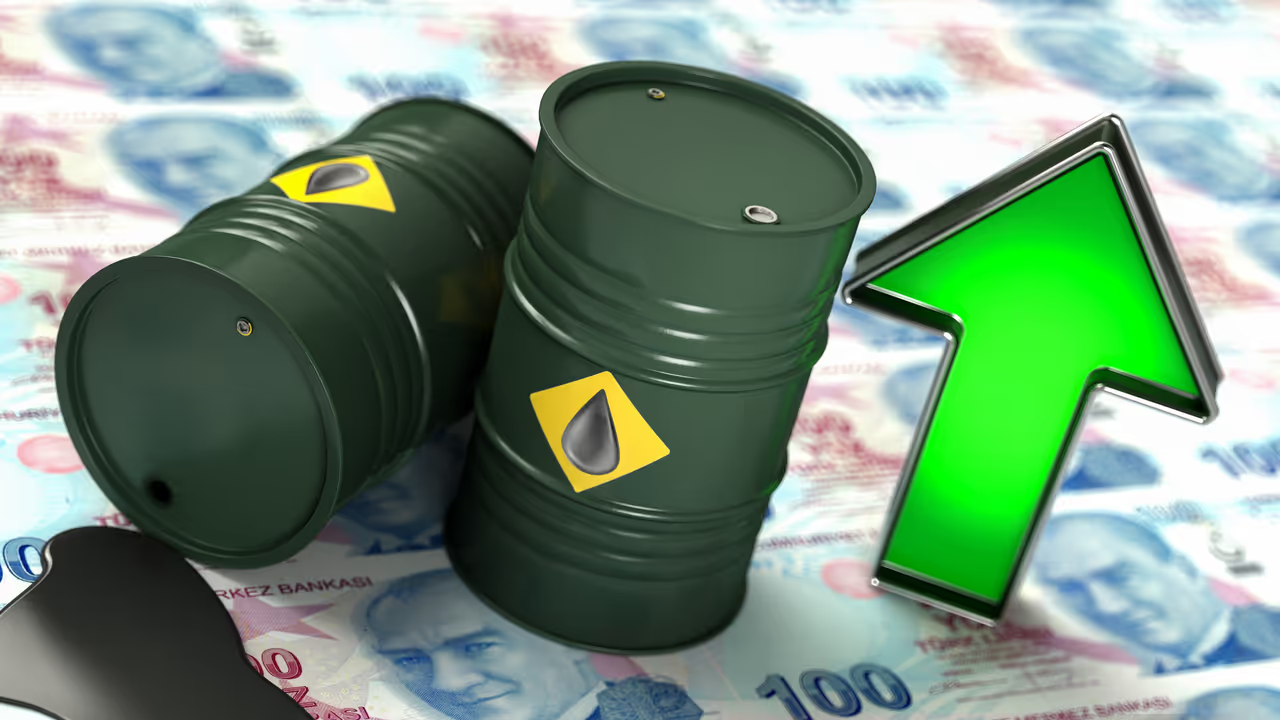
Oil prices jump as peace hopes weaken
Oil prices rose sharply on Thursday as hopes for a peace deal between the United States and Iran began to fade. Investors reacted quickly after Iran rejected a US proposal aimed at ending the ongoing conflict, which has now lasted for nearly four weeks.
Crude prices climbed by almost four percent during the day. Brent crude moved above $101 per barrel, while US benchmark West Texas Intermediate (WTI) traded close to $94. The sudden rise reflects growing concern about global oil supply as tensions continue.
Markets had earlier shown signs of calm after Donald Trump said that planned strikes on Iran’s energy facilities would be delayed. He also claimed that peace talks were underway. However, the situation quickly changed after Iran denied active negotiations.
Stocks fall across global markets
As oil prices rose, stock markets around the world moved in the opposite direction. Major indices in the United States, Europe and Asia all recorded losses.
Wall Street opened lower, with the Dow Jones falling by around 0.5 percent. The S&P 500 dropped 0.8 percent, while the Nasdaq fell by more than one percent.
In Europe, London’s FTSE 100 declined by 1.3 percent. Germany’s DAX and France’s CAC 40 also recorded losses. Asian markets followed the same trend, with Hong Kong’s Hang Seng Index dropping nearly two percent and China’s Shanghai Composite falling over one percent.
Experts say this pattern is common. When oil prices rise sharply, it increases costs for businesses and reduces profits, leading to a fall in stock prices.


Strait of Hormuz adds to fears
A major concern for markets is the situation in the Strait of Hormuz. This narrow waterway is one of the most important oil routes in the world.
Around 20 percent of global oil and liquefied natural gas passes through it during normal times. However, the ongoing conflict has led to severe disruptions. Reports suggest that the route is almost closed, with Iran allowing only selected ships to pass.
This has raised fears of supply shortages. Any major disruption in this route can push oil prices even higher and affect global trade.
Conflicting signals from US and Iran
The situation has become more confusing due to mixed messages from both sides. The US is believed to have offered a 15-point peace plan to Iran. At the same time, Iran has reportedly proposed its own set of conditions.
Despite these developments, Iran’s Foreign Minister Abbas Araghchi has clearly stated that the country does not plan to negotiate directly with the US government.
On the other hand, Pakistan has confirmed that it is helping with indirect talks. Ishaq Dar said that messages are being exchanged through Islamabad. Other countries like Turkey and Egypt are also said to be supporting the process.
This unclear situation has made investors nervous, as there is no clear sign of when or how the conflict might end.
Trump issues fresh warning
Adding to the tension, Donald Trump issued a strong warning to Iran. He urged the country to take talks seriously and warned of serious consequences if no agreement is reached.
In a social media post, Trump said that the situation could reach a point of “no turning back”. He also claimed that Iran had already suffered major military losses.
Such statements have raised concerns that the conflict could become even more intense, especially if diplomacy fails.
War continues with fresh strikes
The conflict on the ground has also continued without pause. Israel reported that it had carried out strikes targeting Iranian military positions and infrastructure.
One of the major developments was the killing of a senior Iranian naval commander, Alireza Tangsiri. Israel claimed he was responsible for actions in the Strait of Hormuz during the conflict.
Air strikes were reported in several Iranian cities, including Isfahan, Shiraz and Tabriz. Some attacks also reached areas closer to the Afghan border, showing how widely the conflict has spread.
In response, Iran continued its missile and drone attacks on Israel. Falling debris from intercepted missiles reportedly injured several people.
Conflict spreads across the region
The violence is no longer limited to Iran and Israel. Other parts of the Gulf region have also been affected.
In the United Arab Emirates, two people were killed by debris from a missile intercepted near Abu Dhabi. Drone attacks were also reported in Saudi Arabia and Kuwait.
Iran has accused some Gulf countries of supporting US military actions. In response, it has targeted energy sites and other important locations in the region.
These developments have increased fears that the conflict could turn into a wider regional war.
Economic risks grow globally
Rising oil prices and ongoing conflict are now affecting the global economy. Higher energy costs can lead to increased prices for goods and services, adding to inflation.
The Organisation for Economic Co-operation and Development (OECD) has already lowered its growth forecast for the eurozone. It also warned that inflation could rise further in 2026 due to expensive energy.
Germany, Europe’s largest economy, has also shown signs of weakness. A recent survey found that consumer confidence is falling as people worry about rising costs and economic uncertainty.
Markets react to uncertainty
Financial experts say the current situation is highly unstable. Analysts note that even small changes in news or political statements can quickly move markets.
Higher oil prices have also led to a rise in government bond yields. This means borrowing costs are increasing, which can slow down economic growth.
Experts believe that Iran may continue the conflict to maintain pressure through energy prices. Controlling supply routes gives it an advantage in negotiations.
Global leaders prepare for talks
Efforts are being made to manage the crisis. France, which currently holds the G7 Presidency, is set to host a major meeting next week.
Finance ministers, energy officials and central bank leaders from the G7 countries will gather to discuss the situation. They are expected to focus on stabilising energy markets and reducing economic risks.
Meanwhile, the World Trade Organization has warned that global trade is facing one of its worst disruptions in decades due to ongoing conflicts and rising tensions.
(With inputs from agencies)
Stay updated with all the latest Business News, including market trends, Share Market News, stock updates, taxation, IPOs, banking, finance, real estate, savings, and investments. Track daily Gold Price changes, updates on DA Hike, and the latest developments on the 8th Pay Commission. Get in-depth analysis, expert opinions, and real-time updates to make informed financial decisions. Download the Asianet News Official App from the Android Play Store and iPhone App Store to stay ahead in business.