
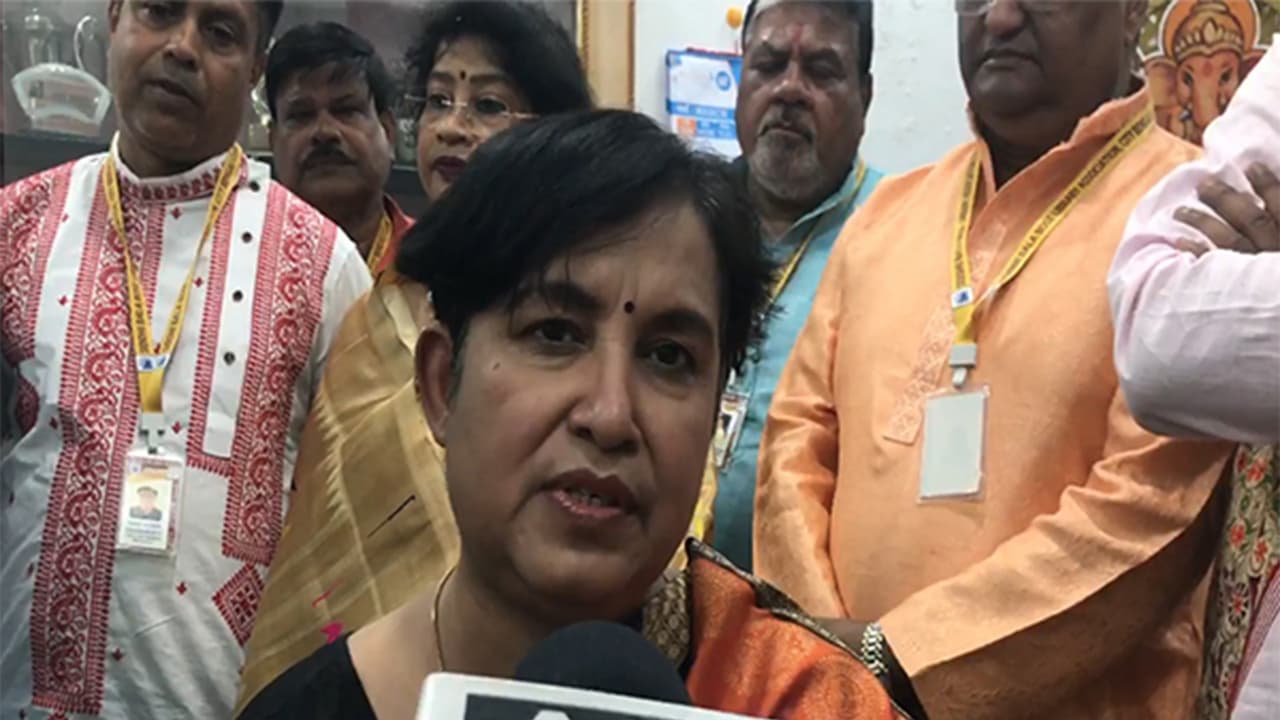
Writer Taslima Nasreen welcomed the defeat of the extremist Jamaat-e-Islami in Bangladesh's election, calling it a victory for human rights and secularism. While not happy with the BNP's win, she proposed a 15-point secular reform charter.
Taslima Nasreen on Friday welcomed the defeat of Jamaat-e-Islami in the Bangladesh election, citing their extremist ideology and violence against Hindus and women. In a post on X, Bangladeshi writer and activist Taslima Nasreen said that while the Bangladeshi National Party (BNP's) victory is not necessarily the primary cause for celebration, the rejection of Jamaat-e-Islami and Jihadi elements is a victory for human rights.

A Reprieve for Secularism and Women's Rights
She said that the defeat of Islamist factions is not just a political change, but a temporary reprieve for secularism and women's rights. She highlighted Jamaat-e-Islami, specifically targeting Hindu homes and lives, forced imposition of veils and the exclusion of women from the political process, as well as the rise of extrajudicial violence and "moral policing." "In this election, I am not happy because the BNP won, but because the Islamists-jihadi-terrorist group was defeated. Over the past year and a half, they displayed outrageous dominance, held rallies with hundreds of thousands of supporters, carried out mob violence day and night whenever they wished, killed and tortured whomever they wanted, set fire to Hindu homes, beat and burned Hindus to death, and did not allow even a single woman to run as a candidate for votes. Such an extremely misogynistic party insulted working women by calling them prostitutes, spoke against women's leadership, pushed women into the darkness of burqa and niqab, viewed women as men's slaves and sex slaves, and dreamed of enforcing anti-women Sharia law. The people did not allow Jamaat-e-Islami to come to power. That, for now, is the good news," she said. In this election, I am not happy because the BNP won, but because the Islamists–jihadi–terrorist group was defeated. Over the past year and a half, they displayed outrageous dominance, held rallies with hundreds of thousands of supporters, carried out mob violence day and night… — taslima nasreen (@taslimanasreen) February 13, 2026
Nasreen's 15-Point Agenda for BNP Government
The writer outlined a 15-point agenda that she believes the BNP government should adopt, including re-establishing a friendly, pragmatic relationship with India. She urged the BNP to take steps towards secularism, including revoking the July 1 charter, abolishing religion-based family laws, and ensuring women's equality and safety. "Now, here is what I think the BNP should do: The July 1 charter must be revoked. Secularism must be restored in the Constitution. The state religion must be removed," she added.
Secular Constitution and Uniform Civil Code
The 15-point secular reform charter also suggested a Uniform Civil Code, protection for the vulnerable, educational reform, a social safety net, political pluralism, economic equality, and measures to move away from family- and religion-based political structures. "Religion-based family laws must be abolished, and a Uniform Civil Code based on equal rights must be enacted to ensure women's equality. Freedom of speech, human rights, the security of minorities (Hindus, Buddhists, Christians, Indigenous peoples), and women's safety must be ensured. Madrasa education should be ended, and a secular, science-based education system must be strengthened. Universal Education and healthcare must be ensured for all. Out of respect for democracy, the ban on the Awami League must be lifted. Arrangements should be made so that its leaders can return from exile and engage in politics. It is not safe to keep a jihadi-supported Jamaat-e-Islami as the main opposition party. Alongside economic development, the gap between the rich and the poor must be reduced. Politics based on family dynasties and based on religion must not be encouraged," she added.
Call for Cultural Freedom and Security Measures
Taslima Nasreen also called for the safe return of free thinkers, cultural freedom, historical preservation, banning the mandatory imposition of the hijab/burqa and restricting niqabs for security reasons and re-arresting Jihadi militants who were recently released. "During Sheikh Hasina's rule, bloggers were killed, forcing free thinkers to seek refuge abroad to save their lives. Arrangements must be made so they can return home and work safely. Freedom of speech and press freedom must not be violated. All books, theatre productions, and films that have been banned should be released. The memorial sculptures of the Liberation War must be rebuilt. The house at Dhanmondi 32 must also be reconstructed. No government or private institution should make hijab, burqa, etc., mandatory for women. For security reasons, burqa and niqab should be banned. Jihadi terrorists who have been released from prison must be re-arrested," she added.
Friendly India Ties and Release of Prisoners
Taslima Nasreen emphasised the need for friendly relations with India and the release of unjustly imprisoned individuals, including Chinmoy Krishna Das. "Hostile relations with India must end, and friendly relations should be established in the interest of the state and the people. Chinmoy Krishna Das should be released. All members and supporters of the Awami League, as well as artists, writers, and journalists who have been unjustly imprisoned, should be freed," she added.
BNP Secures Absolute Majority
Bangladesh's Election Commission has declared the official results for 297 constituencies in the 13th National Parliament election, according to Prothom Alo on Friday. Announcements for the Chittagong-2 and Chittagong-4 constituencies have been deferred and will be made at a later stage, while the result of another constituency was postponed earlier.EC Secretary Akhtar Ahmed provided these details during his concluding remarks at the Election Commission Secretariat in Agargaon today, outlining the status of the declared and pending seats.
Of the 297 announced seats, the Bangladesh Nationalist Party (BNP) and its allies won 212. The 11-party electoral alliance headed by Bangladesh Jamaat-e-Islami secured 77 seats. Islami Andolan Bangladesh took one seat, and independent candidates claimed seven seats.
According to Prothom Alo, the party-wise breakdown shows that the BNP won 209 seats independently. Jamaat-e-Islami obtained 68 seats, Jatiya Nagorik Party six, Bangladesh Khelafat Majlis two, Khelafat Majlis one, Bangladesh Jatiya Party-BJP one, Gana Sanghati Andolon one, and Gana Adhikar Parishad one seat. These figures position BNP to form the next government with a clear absolute majority in parliament. The Awami League, barred from political activity, did not participate in the polls, leading to a major shift in the nation's political dynamics after nearly two decades. Voter turnout stood at 60.26 per cent in this election, with 48 million 74 thousand 429 "yes" votes and 22 million 25 thousand 627 "no" votes cast, according to Prothom Alo. (ANI)
(Except for the headline, this story has not been edited by Asianet Newsable English staff and is published from a syndicated feed.)