Tensions are rising after Donald Trump suggested possible action on Iran’s Kharg Island, a key oil hub. Experts warn that any US attack could be extremely risky due to strong Iranian defences, difficult geography, and threats from drones and missiles. Comparisons are being made to the deadly Normandy invasion.
Tensions between the United States and Iran have sharply increased after comments by Donald Trump about possibly targeting Kharg Island. Trump suggested that the US could take control of the island, though he also admitted it would need a long-term military presence. Kharg Island is a small Iranian island in the Persian Gulf, but its importance is huge. It is the main hub for Iran’s oil exports. Any attack or disruption here could affect global oil supplies and push fuel prices higher across the world.

Related Articles

Experts say the situation is serious and should not be seen as just political talk. Reports suggest that thousands of US Marines may already be positioned in the region, raising fears that a military operation could be under consideration.
Why Kharg Island is so important
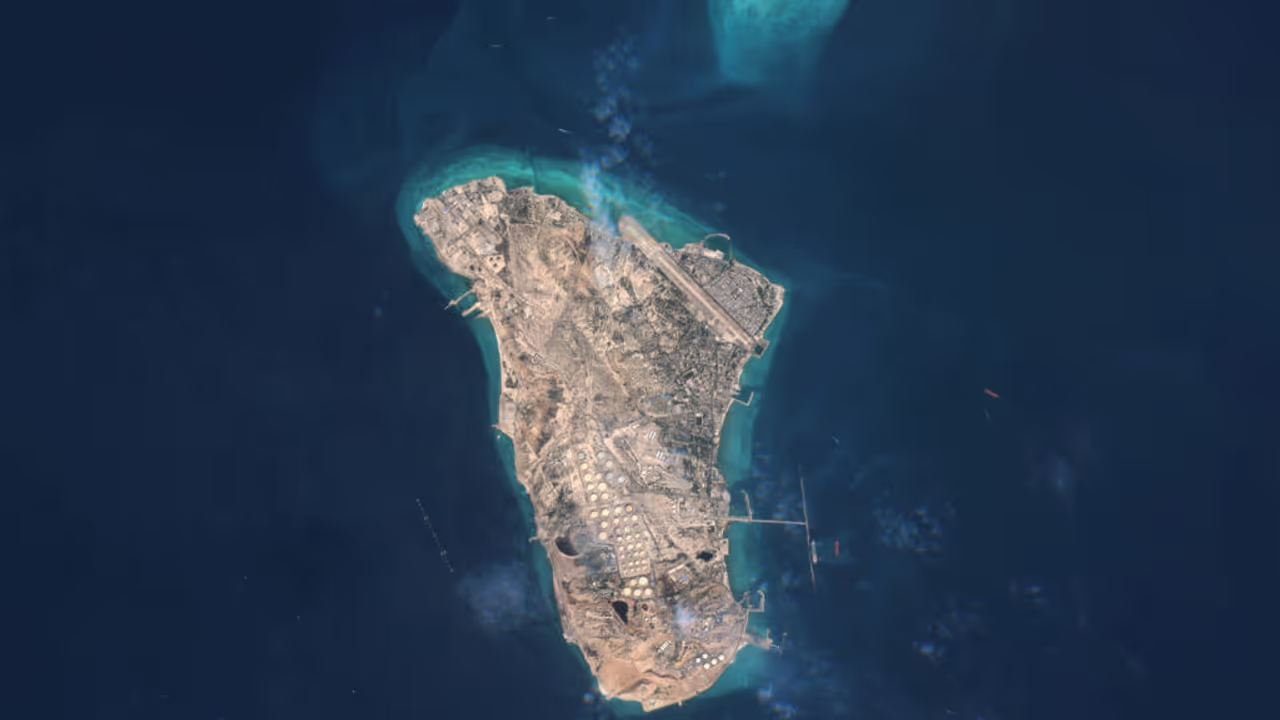
Kharg Island is only about 8 km long and 4-5 km wide. But it plays a key role in Iran’s economy. Around 90% of Iran’s crude oil exports pass through this island. It also has a storage capacity of about 30 million barrels, with millions of barrels already stored there.
The island is located close to the Strait of Hormuz, one of the world’s most important oil routes. A large share of global oil shipments passes through this narrow waterway. This makes Kharg Island not just important for Iran, but for the entire global economy.
If the island is attacked or blocked, it could disrupt oil supply chains and lead to sudden price rises. This is why global markets closely watch any developments in this region.
A silence before a possible storm
The waters of the Persian Gulf may look calm, but experts say the situation is tense. The big question now is whether the US is preparing for a risky military move. Some analysts are comparing the situation to historic battles where sea-based attacks led to heavy losses.
One such comparison being discussed is the famous D-Day landing during World War II.
The Normandy lesson: a costly victory
On 6 June 1944, Allied forces launched a massive sea invasion at Normandy in France during World War II. The goal was to defeat Nazi Germany led by Adolf Hitler.
Thousands of ships carried soldiers across the English Channel. But as soon as troops landed on the beaches, they faced heavy gunfire from German forces hiding in bunkers and on high ground.
Many soldiers were killed before they even reached safety. The sea turned red with blood. Although the Allies eventually won, the cost was very high, with heavy casualties.
Experts warn that a similar situation could happen if forces attempt to land on Kharg Island.
Geography that favours defence
Kharg Island’s natural structure makes it difficult to attack. The surrounding waters are shallow, but the island itself rises into hilly terrain. This gives defenders a strong advantage.
Iran has reportedly strengthened this advantage by building bunkers inside hills and preparing defensive positions over many years. These bunkers are designed to survive air strikes.
This means that even if the US carries out bombing first, a ground attack would still face strong resistance.
The risks for US Marines
Military experts say any attempt by US Marines to land on Kharg Island would be extremely risky. To reach the island, ships would have to pass through the Strait of Hormuz, where Iran has strong military presence.
Iran could use drones, missiles, and naval mines to target incoming ships. The exact number of mines or drones in the area is unknown, adding to the uncertainty.
Once near the island, Marines would face attacks not only from visible forces but also from hidden positions. Snipers, guided missiles, and drone swarms could make it very difficult for troops to move safely.
Experts say this could turn into a “trap” situation, where attackers are surrounded and face heavy losses.
IRGC’s strong defence network
Iran’s Islamic Revolutionary Guard Corps (IRGC) has spent years building a strong defence system around Kharg Island. This includes underground bunkers, anti-ship missiles, and advanced drones.
These drones can attack in groups and are difficult to detect. Anti-ship missiles can target large naval vessels, making them vulnerable if they come close.
Because of the narrow waters in the region, US ships may not have enough space to manoeuvre easily. This could make them easier targets.
A complex challenge beyond combat
The situation is not only about military strategy. Thousands of workers are present on Kharg Island, especially in oil facilities. Any attack would put their lives at risk.
US forces would also need to secure a wide area around the island, possibly up to 100 miles. This would require a large and sustained operation.
There is also no guarantee that capturing the island would force Iran to change its position. Iran could continue attacks from nearby coastal areas using missiles.
This raises a key question: would the risks outweigh the gains?
Fears of a wider conflict
Experts warn that any attack on Kharg Island could lead to a much larger war. Iran could respond by targeting oil facilities in nearby countries or by blocking the Strait of Hormuz.
Such actions could disrupt global oil supply and impact economies worldwide. Fuel prices could rise sharply, affecting daily life in many countries.
There are also concerns that the conflict could spread beyond the region, involving more countries.
Political strategy or dangerous gamble?
Donald Trump is known for his 'maximum pressure' approach towards Iran. His recent statements suggest he wants to show strength.
However, critics argue that a ground attack on Iran could be a serious mistake. Some compare it to 'disturbing a beehive', where the reaction could be strong and unpredictable.
There are also questions about long-term goals. Unlike World War II, where the enemy was clearly defined, the objectives in a potential Iran conflict are less clear.
Iran’s leadership under Ali Khamenei has shown resilience in the past. This makes it uncertain whether military pressure alone would achieve desired results.
Could history repeat itself?
History shows that attacking well-defended coastal areas is one of the hardest military operations. Even powerful armies can suffer heavy losses.
The example of Normandy shows that victory can come at a very high human cost. In the case of Kharg Island, the risks may be even greater due to modern weapons like drones and guided missiles.
Experts fear that thousands of soldiers could be at risk if such an operation goes ahead.
At present, there is no confirmed decision about a military strike. However, the situation remains tense, and global attention is focused on the Persian Gulf.
Kharg Island has become a symbol of both economic power and military risk. What happens next could shape not only the future of US-Iran relations but also global energy markets.