Donald Trump has warned of major strikes on Iran, including Kharg Island, if a deal is not reached soon. The statement comes as the Middle East conflict intensifies, with fresh attacks reported across the region. Oil prices surged sharply amid fears of supply disruption, while global markets showed mixed trends. The situation remains tense.
US President Donald Trump has issued a strong warning to Iran, saying the United States could carry out major strikes if a deal is not reached soon. His statement comes at a time when tensions in the Middle East are already high due to ongoing conflict. In a post on Truth Social, Trump said the US is in “serious discussions” with what he described as a “new, and more reasonable” Iranian regime. He suggested that these talks could lead to an end to American military operations in Iran.

However, he also made it clear that if an agreement is not reached quickly, the US could take strong action.
Related Articles

Threat to target key Iranian sites
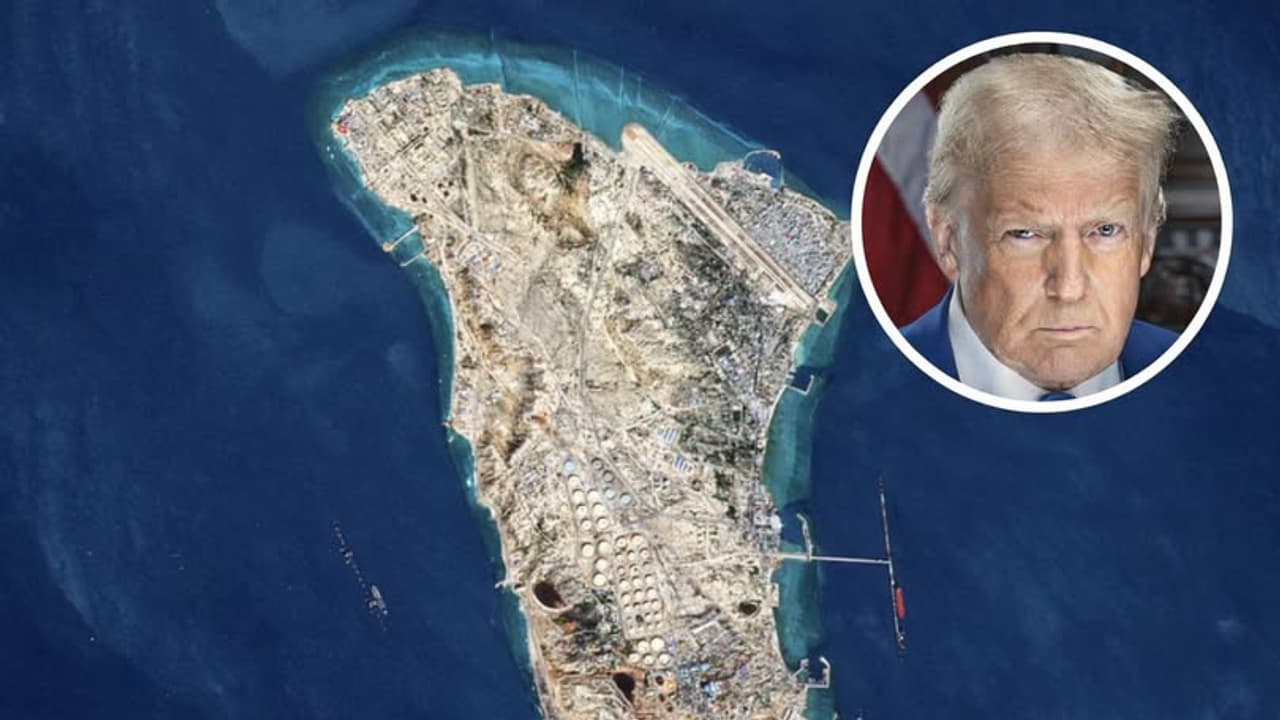
Trump warned that if the situation does not improve, the US could strike several important sites in Iran. These include electric generating plants, oil wells and Kharg Island, which is one of Iran’s most important oil export hubs. He said these sites have not been targeted so far but could be hit if negotiations fail. He also mentioned the possibility of striking desalination plants.
According to Trump, such action would be taken as a response to the deaths of US soldiers and others, which he blamed on Iran’s previous leadership over many years.
Warning signals rising risk of wider Iran conflict
Donald Trump’s warning signals growing pressure on Iran and raises fears of a wider conflict. By threatening strikes on key oil and power sites like Kharg Island, he is trying to push for a quick deal. It also shows the US may be ready to escalate if talks fail, especially over control of the Strait of Hormuz and regional security.
Experts say, a strike there would hit Iran's economy hard. Other islands like Larak, Qeshm and Abu Musa also play key roles in controlling shipping routes, giving Iran a strong position in the Strait of Hormuz and regional waters.
Focus on Strait of Hormuz
Another key issue raised by Trump was the Strait of Hormuz. This narrow waterway is one of the most important routes for global oil transport. He said the strait must be kept “open for business”. Any disruption to shipping through this route could affect oil supplies around the world.
The Strait of Hormuz normally handles around 20 percent of the world’s crude oil and gas shipments. Any tension in this area often leads to global concern.
Iran blames Israel for regional strike
Amid rising tensions, Iran’s military has accused Israel of being behind a recent strike on a desalination plant in Kuwait. This claim has added to the already complex situation in the region, where multiple countries are involved either directly or indirectly.
Rocket attack on Iraq base
In another development, rockets were fired overnight at a military base in Iraq. The base is located inside the Baghdad airport complex and also houses a support centre for the US embassy. Iraq’s defence ministry confirmed the attack but did not immediately provide details about damage or casualties.
Iran reviews nuclear treaty position
Iran has also indicated that it is reviewing its position on the nuclear non-proliferation treaty. A spokesperson from the Iranian foreign ministry said the country is not seeking nuclear weapons.
However, the issue of whether to remain part of the treaty is being discussed in parliament.
This statement has raised fresh concerns among global powers about Iran’s future nuclear policy.
Spain blocks US military use
Spain’s government has taken a strong position by closing its airspace to US planes involved in missions against Iran. It has also denied the use of its bases for such operations. This move highlights growing differences among countries over how to respond to the conflict.
Iran envoy remains in Lebanon
Iran has said its ambassador to Lebanon will continue his work despite being asked to leave the country.
The foreign ministry stated that the embassy in Beirut remains operational. However, Lebanon has accused the envoy of interfering in its internal matters.
Casualties reported in Lebanon clashes
The conflict has also led to casualties in Lebanon. A Lebanese soldier was killed and several others were injured when an Israeli strike hit an army checkpoint in the south. This was the first direct attack on a military post since the conflict began.
At the same time, Israel confirmed that one of its soldiers was killed in combat in southern Lebanon. This brings the total number of Israeli troops killed in the current fighting to six.
Education disrupted amid threats
The American University of Armenia has shifted all classes online after threats linked to the conflict. This decision came after warnings that US-linked institutions in the region could be targeted.
Ukraine signs deals amid tension
In a separate development, Ukrainian President Volodymyr Zelensky said his country signed “historic” agreements with Qatar, Saudi Arabia and the United Arab Emirates. While details were not made public, he said the deals include cooperation on drone defence technology.
Drone attacks in Syria
Syria reported a large-scale drone attack targeting military bases near its border with Iraq.
It is not yet clear who carried out the attack, adding more uncertainty to the situation.
Iran confirms death of commander
Iran confirmed that Revolutionary Guards commander Alireza Tangsiri has died from injuries following an air strike.
Israel had earlier claimed to have targeted him. His death marks a significant loss for Iran’s military leadership.
Strikes on Iranian military sites
Israel said it carried out strikes on several weapons production sites in Iran, including facilities linked to long-range missile systems in Tehran.
These attacks are part of the ongoing military actions between the two sides.
Power restored in Tehran
Following recent strikes that damaged power systems, electricity has been restored in parts of Tehran and nearby areas.
Officials said supply had been disrupted temporarily but has now been brought back.
Fresh strike in Beirut suburb
A new strike hit southern suburbs of Beirut, an area known to be a stronghold of Hezbollah.
This was the first such attack in the area since Friday. Residents had already begun leaving the area after earlier warnings.
UN peacekeeper killed
Indonesia confirmed that one of its peacekeepers was killed in Lebanon. The United Nations said a projectile hit one of its positions.
Three others were also injured in the incident, which took place near the town of Adchit al Qusayr.
Oil prices rise sharply
As tensions increased, oil prices saw a strong rise on Monday. Brent crude, the global benchmark, jumped more than three percent at one point, reaching close to $117 per barrel.
West Texas Intermediate also saw gains, rising to over $101 per barrel.
The rise in oil prices reflects concerns about supply disruptions due to the conflict.
Stock markets show mixed trend
Global stock markets reacted in different ways to the situation. In Europe, London’s market moved slightly higher, while Paris and Frankfurt showed little change.
Energy and mining companies saw gains, with shares of major oil firms rising around two percent.
In Asia, markets closed lower, with Tokyo’s index falling nearly three percent. This was partly due to the stronger Japanese yen affecting exporters.
Currency and metal markets react
The US dollar showed mixed movement, while the Japanese yen gained strength. Analysts said investors were seeking safer options due to uncertainty.
Aluminium prices also rose sharply, climbing around six percent after attacks on major plants in the Gulf raised fears of supply shortages.
Wider conflict fears grow
Experts say the situation is becoming more serious as more groups get involved. Yemen’s Houthi rebels have joined the conflict, launching missiles and drones at targets in Israel.
This raises concerns that the war could spread further, especially in key areas like the Red Sea.
Shipping risks increase
There are also growing risks to global shipping routes. The Bab al-Mandeb strait, which handles about 12 percent of world trade, is now seen as another possible choke point.
Saudi Arabia has already started rerouting some oil shipments to avoid risky areas.
Talks and tensions continue
Pakistan has offered to host talks between the US and Iran in an effort to reduce tensions. However, Iranian officials have accused the US of planning a possible ground attack, adding to mistrust between the two sides.
Uncertain road ahead
As the conflict enters its fifth week, the situation remains uncertain. While talks are ongoing, the risk of further escalation remains high. Trump’s warning has added pressure to the situation, while global markets continue to react to every new development.
For now, the world is watching closely as both diplomatic efforts and military actions continue side by side.
(With inputs from agencies)