Global Markets Slide As Oil Surges Amid Ongoing Middle East War And Hormuz Crisis
Oil prices rose and global stocks fell over Middle East war fears. Despite US delaying action against Iran, uncertainty remains high, especially with tensions in Strait of Hormuz. Markets reacted negatively as conflict continues, affecting trade.
Oil rises while stocks fall amid war fears
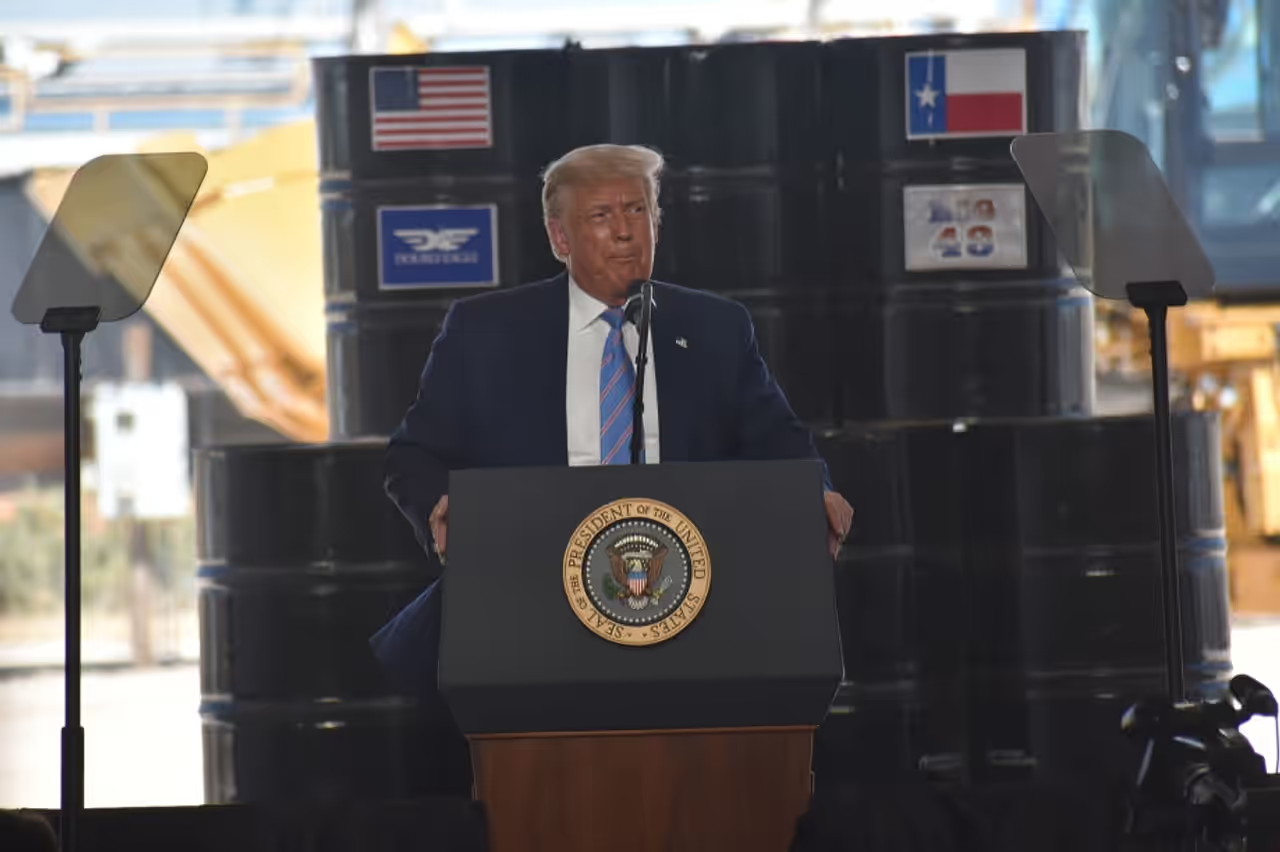
Global markets showed fresh signs of stress on Friday as oil prices climbed and stock markets fell. The shift came as early optimism over US President Donald Trump delaying action against Iran faded quickly.
Brent crude rose by 2.3 percent to $104.17 per barrel, while West Texas Intermediate gained 2.6 percent to reach $97.08. At the same time, major stock markets in the United States and Europe slipped into the red.
Delay in action fails to calm markets
Earlier this week, markets had reacted positively when President Trump delayed a deadline linked to possible strikes on Iran’s energy assets. That move had briefly lowered oil prices and lifted stocks.
However, the mood changed again after the deadline was pushed further to April 6, with little sign of progress. Investors now believe the conflict may continue for a longer time.
Experts say traders are no longer reacting strongly to daily announcements from Washington, as uncertainty remains high.


Strait of Hormuz crisis drives concerns
A key concern for global markets is the Strait of Hormuz, one of the world’s most important oil routes. Iran continues to hold control over the area, and shipping has been affected.
Analysts say the route is effectively closed for some vessels, raising fears about oil supply disruptions.
Iran’s Revolutionary Guards have also warned that ships linked to its “enemies” would not be allowed to pass through the strait. They confirmed turning back three vessels trying to use the route.
Stock markets decline worldwide
The uncertainty hit stock markets across regions. In the United States, the Dow Jones fell 0.9 percent, the S&P 500 dropped 0.8 percent, and the Nasdaq declined 1.0 percent.
European markets also struggled. London’s FTSE 100 was down 0.4 percent, Paris’s CAC 40 fell 0.7 percent, and Frankfurt’s DAX dropped 1.5 percent.
In Asia, Tokyo’s Nikkei closed 0.4 percent lower. However, Hong Kong’s Hang Seng rose 0.4 percent and Shanghai’s Composite index gained 0.6 percent.
War continues with no clear end
The ongoing conflict in the Middle East shows no signs of easing. Iran has continued attacks across the region, while the United States and Israel have carried out airstrikes.
Reports said US-Israeli strikes hit two major steel plants in Iran, including facilities in Khuzestan and Isfahan.
Iran has also warned that buildings housing US troops could become targets.
Humanitarian crisis grows in Lebanon
The war is also causing a major humanitarian crisis. The UN refugee agency said Lebanon is facing a serious situation, with more than one million people forced to leave their homes since early March.
Officials warned that the situation could soon turn into a full-scale catastrophe if conditions worsen.
Kuwait port and other attacks
Kuwait confirmed that its main commercial port, Shuwaikh, was damaged in a drone attack. While there were no casualties, the attack caused material damage.
There were also reports that US and Israeli strikes have damaged at least 120 museums and cultural sites in Iran since the war began.
Diplomatic moves and global reactions
There are signs of possible diplomatic efforts. Reports suggest the United States and Iran may hold direct talks soon, possibly in Pakistan.
At the same time, G7 countries have asked for clarity on US plans regarding Iran. The UK has called for a quick solution to restore stability in the region.
Germany’s foreign minister also said Russia may be hoping the conflict diverts attention from the war in Ukraine.
Economic pressure and rising fuel costs
The rise in oil prices is putting pressure on economies worldwide. Higher energy costs are increasing inflation and affecting daily life.
Several countries have taken steps to manage the situation. Vietnam has cut fuel taxes, India has reduced fuel costs, and Japan is considering easing rules on coal power use.
Spain, Poland and South Korea have also announced support plans, including fuel tax reductions.
China adds to global tension
Adding to market worries, China has launched an investigation into US trade practices. This comes after Washington began probing Chinese exports earlier this month.
This new tension between two major economies has further increased uncertainty in global markets.
Military developments continue
In other developments, Ukraine and Saudi Arabia signed a new air defence agreement during a recent visit by Ukraine’s president.
Meanwhile, Iran has warned civilians to stay away from areas near US forces, raising fears of further escalation.
Outlook remains uncertain
Analysts say market sentiment is likely to stay negative as long as the Strait of Hormuz remains unsafe and the war continues.
With no clear peace plan and ongoing attacks, both investors and governments are preparing for a longer period of instability.
Stay updated with all the latest Business News, including market trends, Share Market News, stock updates, taxation, IPOs, banking, finance, real estate, savings, and investments. Track daily Gold Price changes, updates on DA Hike, and the latest developments on the 8th Pay Commission. Get in-depth analysis, expert opinions, and real-time updates to make informed financial decisions. Download the Asianet News Official App from the Android Play Store and iPhone App Store to stay ahead in business.