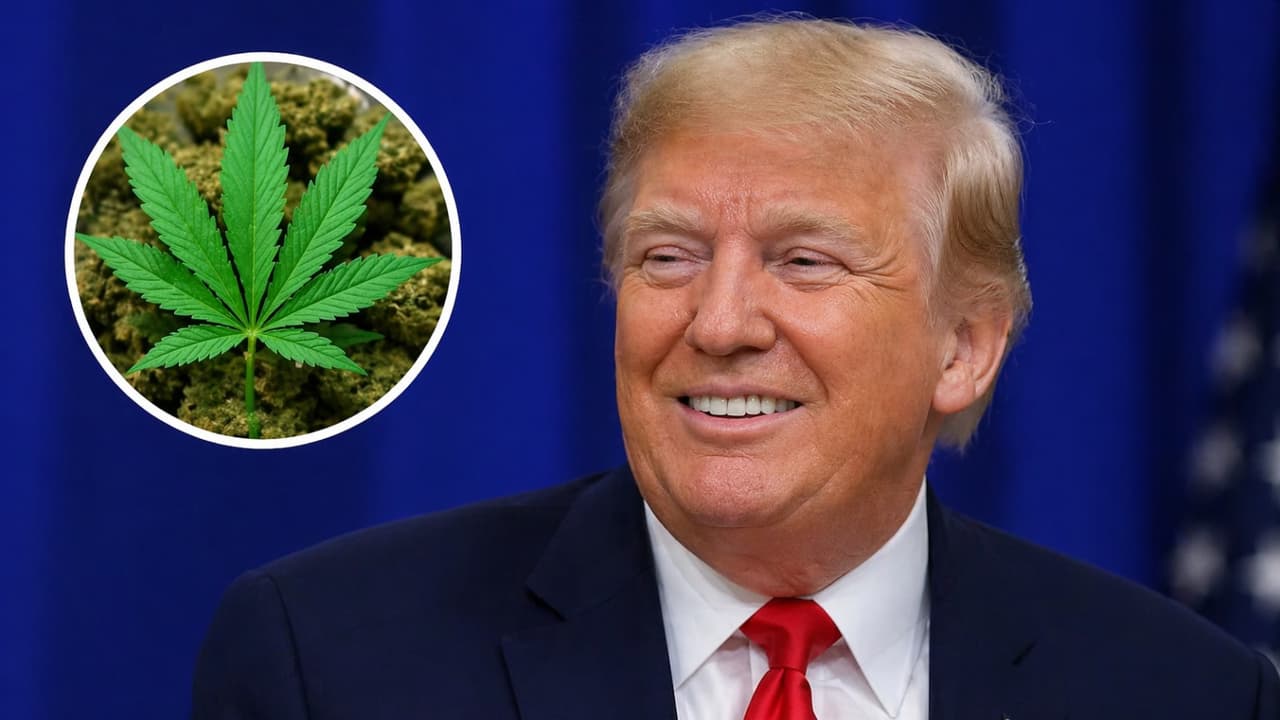
The US has reclassified cannabis from Schedule I to Schedule III, marking a major shift in drug policy. The move, directed by Donald Trump, allows more research and eases rules for medical marijuana. While cannabis remains illegal at the federal level, the change supports state programmes, offers tax benefits to businesses.
The United States has taken a major step in changing how it treats cannabis. The US Department of Justice has officially reclassified marijuana, marking a historic shift in the country’s drug policy. Cannabis, also known as marijuana, has been moved from Schedule I to Schedule III under federal law. This change affects how the drug is studied, taxed, and regulated.

What the reclassification means
Earlier, cannabis was listed as a Schedule I drug. This category is for substances with no accepted medical use and a high risk of abuse, like heroin.
Now, it has been moved to Schedule III. This is the same category as some medicines, including Tylenol with codeine.
Related Articles

Schedule III drugs are seen as less dangerous and can be used for medical purposes under strict rules. This shift allows more flexibility for doctors and researchers.
Role of Trump administration
The move follows action by Donald Trump, who had directed his administration to speed up the process.
He had signed an executive order in 2025 asking officials to reclassify cannabis to improve access and research. Officials later confirmed that the new rule delivers on that promise.
Order signed by acting attorney general
The final order was signed by Todd Blanche.
He said the decision would help expand medical treatment options and improve research. According to him, the new system will give doctors better information and help patients receive improved care.
What changes and what does not
Even after this shift, marijuana is still illegal under federal law. This means it is not fully legal across the United States.
However, the new classification changes how it is regulated. It reduces restrictions on medical marijuana and makes research easier.
It also allows approved cannabis-based medicines to be listed under Schedule III, according to a report by US News.
Impact on states and businesses
The decision is important for states that already allow cannabis use. Around 40 states have medical marijuana systems, while many others allow recreational use.
The new rule supports these programmes by making it easier for licensed producers and sellers to register with the US Drug Enforcement Administration.
It also gives a big financial benefit. Medical marijuana businesses can now deduct expenses from their federal taxes, which was not allowed earlier.
Boost for research and healthcare
Researchers will now find it easier to study cannabis. They will not face penalties for using state-approved marijuana in their work.
This could lead to better understanding of how cannabis works and how it can be used safely.
The move is expected to help patients by improving treatment options and providing clearer medical guidance.
Long history of strict laws
The US has had strict marijuana laws for decades. The ban dates back to the Marijuana Tax Act of 1937.
Over time, many states changed their own rules, allowing medical or recreational use. However, federal law remained strict until now.
Currently, only a few states still fully ban marijuana.
A step, not full legalisation
This change is seen as a big step, but not full legalisation. Cannabis remains illegal at the federal level.
Still, experts say this is one of the most important policy shifts in recent years. It reflects changing views on cannabis and its role in medicine and society.
(With inputs from AFP)