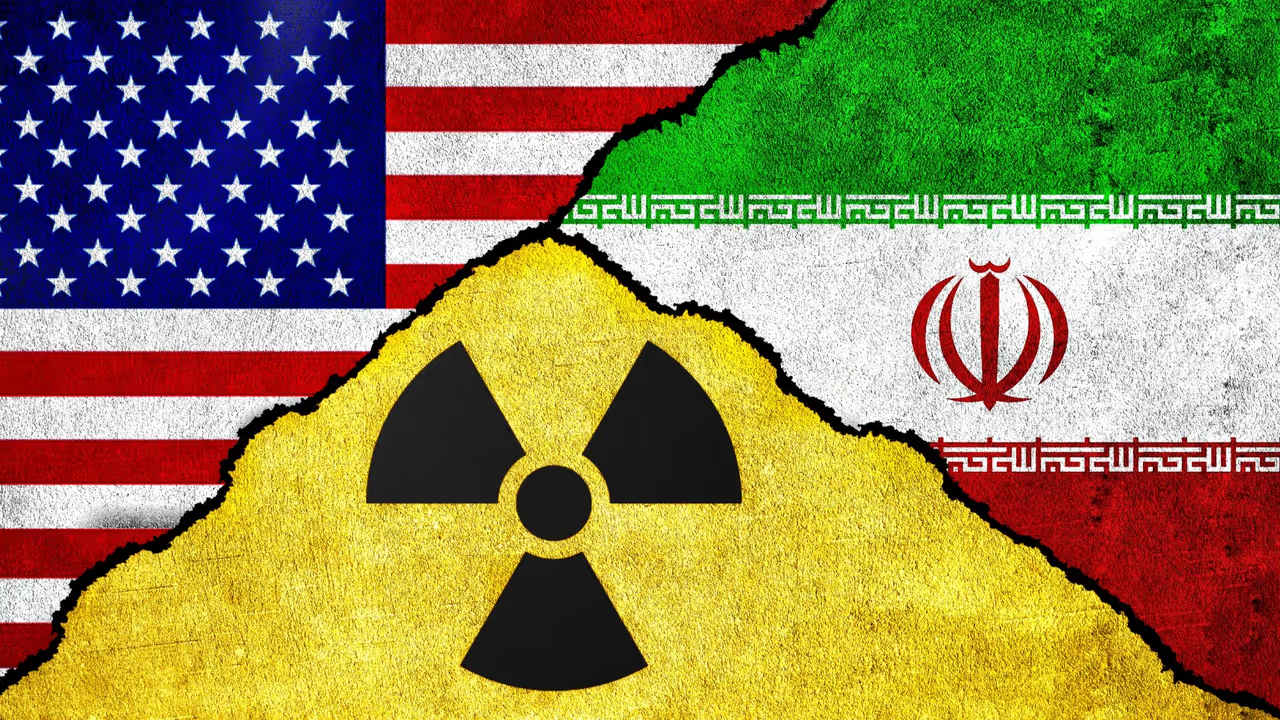
Relations between the United States and Iran have remained tense since the 1979 Islamic Revolution and hostage crisis. Decades of sanctions, military confrontations and disputes over Iran’s nuclear programme deepened hostility.
For more than four decades, relations between the United States and Iran have been defined by mistrust, confrontation, and repeated crises. What began with the shock of the 1979 Islamic Revolution has evolved into a long-running geopolitical rivalry marked by sanctions, military actions, and failed diplomatic efforts.

The latest escalation came on February 28, 2026, when US President Donald Trump announced the launch of "major combat operations" against Iran as Israel also carried out strikes. The move followed weeks of mounting tension and stalled negotiations, adding another chapter to one of the world’s most enduring geopolitical standoffs.
Below is a look at key moments that shaped the deep hostility between Washington and Tehran.
Related Articles

1979: The Hostage Crisis That Changed Everything
The modern confrontation began on November 4, 1979, when student activists stormed the US embassy in Tehran, demanding the extradition of Iran’s deposed monarch, Mohammad Reza Pahlavi, who was undergoing medical treatment in the United States.
The takeover came just months after the establishment of the Islamic Republic of Iran. In total, 52 Americans were held hostage for 444 days, an episode that shocked the world and permanently damaged diplomatic ties.
In April 1980, Washington broke off diplomatic relations with Iran and imposed restrictions on commerce and travel. The crisis finally ended nine months later when the last hostages were released.
Sanctions, Militancy Allegations, and the “Axis of Evil”
Through the 1990s and early 2000s, tensions deepened as the US accused Iran of backing militant groups across the Middle East.
On April 30, 1995, then-US President Bill Clinton announced a complete ban on trade and investment with Iran, accusing it of supporting "terrorism". Washington cited Iran’s alleged backing of regional groups including Hezbollah, Hamas, and Palestinian Islamic Jihad. The restrictions also targeted foreign companies investing in Iran’s oil and gas sector.
The rhetoric escalated further in 2002, when US President George W. Bush declared that Iran, along with Iraq and North Korea, formed an "axis of evil" supporting "terrorism".
Years later, in April 2019, Washington designated Iran’s elite military force, the Islamic Revolutionary Guard Corps, as a "terrorist organisation", further straining relations.
Nuclear Dispute and the Collapse of a Landmark Deal
Concerns about Iran’s nuclear ambitions emerged in the early 2000s after revelations about undeclared nuclear facilities. Tehran repeatedly denied pursuing nuclear weapons, insisting its programme was meant for civilian purposes.
A 2011 report by the International Atomic Energy Agency said Iran had "carried out activities relevant to the development of a nuclear explosive device" until at least 2003, citing what it called broadly credible intelligence.
In 2005, Iranian President Mahmoud Ahmadinejad ended a freeze on uranium enrichment, escalating concerns in Washington and among its allies.
A decade later, a breakthrough came in Vienna, where Iran reached an agreement with six world powers — China, France, Germany, Russia, the United Kingdom and the United States — over its nuclear programme. The deal offered Tehran relief from heavy sanctions in exchange for guarantees it would not build an atomic bomb. It was endorsed by the United Nations.
But the accord collapsed in 2018 when Trump withdrew the United States from the pact and reinstated sweeping sanctions on Iran and companies linked to it. A year later, Iran began stepping back from some of its commitments under the agreement.
Diplomatic efforts to revive the deal struggled for years. Eventually, UN sanctions were reimposed on September 28, 2025, and the accord formally lapsed the following month.
2020: Killing of Qasem Soleimani
Tensions surged dramatically on January 3, 2020, when the United States killed top Iranian general Qasem Soleimani in a strike in Baghdad.
Trump said Soleimani had been planning an "imminent" attack on US diplomats and forces in Iraq. Iran retaliated soon after with missile strikes on bases in Iraq hosting American troops, bringing the two countries to the brink of a broader war.
2025: Nuclear Sites Targeted
The confrontation escalated again in 2025 during a 12-day war between Israel and Iran. On June 21, the United States struck three major Iranian nuclear sites.
Trump said the facilities had been "obliterated", though the true scale of the damage remained unclear at the time.
2026: Naval Build-Up and New Combat Operations
By early 2026, tensions had intensified once more. Trump threatened to strike Iran over what he described as a violent crackdown on a mass protest movement that began in late December 2025. Soon, however, the focus of US pressure shifted back to Iran’s nuclear programme.
Washington deployed what Trump described as a US "armada" to the region, while indirect talks between the two countries resumed under mediation by Oman in early February 2026.
The negotiations revealed deep differences. The United States urged Iran to negotiate a broader agreement to avoid strikes, while Tehran insisted discussions should remain limited to the nuclear issue.
On February 19, Trump warned that he was giving "10, 15 days, pretty much maximum" to reach an agreement, adding that "otherwise bad things happen".
Nine days later, on February 28, he announced the launch of "major combat operations", as Israel also struck Iran — marking the latest escalation in a rivalry that has shaped Middle East geopolitics for more than four decades.