Oil Prices Could Hit $110 As Iran Tensions Threaten Strait Of Hormuz: Experts
Oil markets are under pressure after rising tensions around the Strait of Hormuz following Israel's strike on Iran. Crude prices could rise to 95 to 110 dollars per barrel if Iran disrupts supply routes. The strait carries major share of global trade
Oil Markets On Edge As Strait of Hormuz Faces Rising Tensions: Why The Strait Matters
The Strait of Hormuz has become a key focus after Israel’s strike on Iran. This narrow waterway carries a large share of the world’s seaborne oil and liquefied natural gas. Because so much global energy passes through it, any disruption could quickly affect fuel prices worldwide.
Experts say the strait is one of the most important energy routes on Earth. Even the risk of tension in this area can move markets.
Iran is still among the world’s top oil producers despite years of sanctions. In the 1970s, it was one of the largest producers globally, pumping around six million barrels per day. Today, output is about 3.1 million barrels daily, according to OPEC. Iran also holds one of the world’s biggest crude oil reserves, which keeps it strategically important to global energy markets.
Strait of Hormuz risk to global supply
The biggest threat to oil markets is disruption in the Strait of Hormuz. This narrow waterway links the Gulf to global shipping routes and carries nearly one-fifth of the world’s liquid oil supply. Data from the US Energy Information Administration shows about 20 million barrels of oil moved through it daily in 2024. Even small security risks could raise insurance costs and limit tanker movement.


Oil price risks explained
According to Equirus Securities, as quoted by NDTV report, crude oil prices could rise sharply if Iran responds to the conflict by disrupting supply. The report estimates prices could jump to between 95 and 110 US dollars per barrel if the situation worsens.
Iran produces about 3.3 million barrels of oil per day. This equals roughly 3 percent of global supply. Analysts estimate that every 1 percent supply shock can push prices up by 3 to 5 percent. If Iranian supply alone is disrupted, prices could rise by 9 to 15 percent.
With oil previously near 70 dollars per barrel, that would mean a direct increase of about 6 to 11 dollars, lifting prices to around 76 to 81 dollars even without wider disruption.
Also Read: Israel-US Bomb Iran: What is Trump's Goal? US President Sends Clear Message (WATCH)
Iran’s crude oil is relatively cheap to produce, with extraction costs as low as 10 dollars per barrel. Only a few countries, including Saudi Arabia and the United Arab Emirates, have similar low production costs. Because of this advantage, Iran benefits strongly when global oil prices rise. The country’s economy depends heavily on oil income, especially after US sanctions limited its export markets.
Sanctions have reduced Iran’s export options, but China continues to purchase large volumes of Iranian oil, often at discounted prices. Analysts estimate Iran exports around 1.3 to 1.5 million barrels daily, with most shipments heading to Chinese refineries. Restrictions by the United States have targeted buyers and transport networks, but trade has continued despite pressure.
The geopolitical premium factor
However, markets do not react only to supply loss. If shipping through the Strait of Hormuz is threatened, prices may include what analysts call a geopolitical premium. Equirus estimates this premium could add 20 to 40 dollars per barrel.
Such a rise would push oil close to or beyond 95 to 110 dollars per barrel. This shows how fear and uncertainty can affect prices as much as actual supply cuts.
Crude oil prices have already climbed around 10 percent since the United States began increasing military deployments in the Middle East.
Rising oil prices could push inflation higher worldwide, affecting fuel, transport and food costs. A surge above 100 dollars per barrel would mark the highest levels since early 2022. Higher energy costs could slow global economic growth and create political pressure in countries already facing economic challenges.
Iran’s possible responses
A report by International Crisis Group says Iran has several options short of fully closing the strait. These include harassing oil tankers, restricting navigation during military drills, flying drones near ships, or boarding vessels. Such actions could raise shipping costs and insurance rates without declaring a formal blockade.
Iran could also slow traffic or temporarily limit movement to send a warning signal to markets.
Also Read: When Israel Targeted Gate of Notorious Evin Prison in Tehran
Regional infrastructure faces risk
Neighbouring countries worry that any Iranian retaliation could target critical infrastructure. Analysts warn that missile strikes could threaten energy facilities, power systems and desalination plants in the region. Countries hosting US military bases may be particularly vulnerable if tensions escalate further.
Risks of a full closure
A complete shutdown of the strait would severely disrupt global energy trade. It would likely trigger a naval response led by the United States. At the same time, Iran’s own oil exports would also be affected, which could harm its economy.
Analysts say oil markets often react strongly at first during conflicts, then stabilise as trade routes adjust and supply patterns change. For now, global energy markets remain highly sensitive to developments in the region.
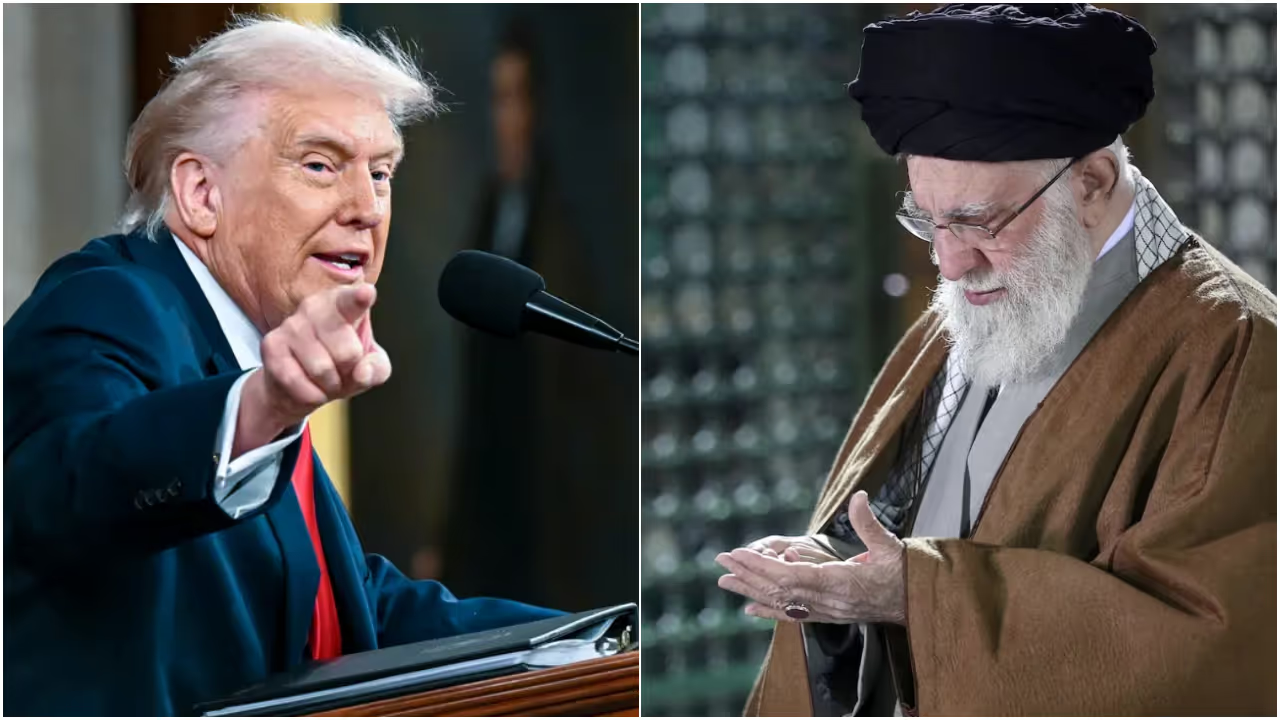
Meanwhile, US President Donald Trump has emphasised that according to United States' policy, in particular his administration, the 'terrorist regime of Iran' can never have a nuclear weapon amid the escalating Israel-Iran conflict.
#WATCH | US President Donald Trump says, "A short time ago, the United States military began major combat operations in Iran. Our objective is to defend the American people by eliminating imminent threats from the Iranian regime, a vicious group of very hard, terrible people. Its… pic.twitter.com/EJNaBlYWCm
— ANI (@ANI) February 28, 2026
In his video address, calling Iran world's number one state sponsor of terror, Trump said tens of thousands of its own citizens were killed on the street by the country over protests.
(With AFP inputs)
Stay updated with all the latest Business News, including market trends, Share Market News, stock updates, taxation, IPOs, banking, finance, real estate, savings, and investments. Track daily Gold Price changes, updates on DA Hike, and the latest developments on the 8th Pay Commission. Get in-depth analysis, expert opinions, and real-time updates to make informed financial decisions. Download the Asianet News Official App from the Android Play Store and iPhone App Store to stay ahead in business.