
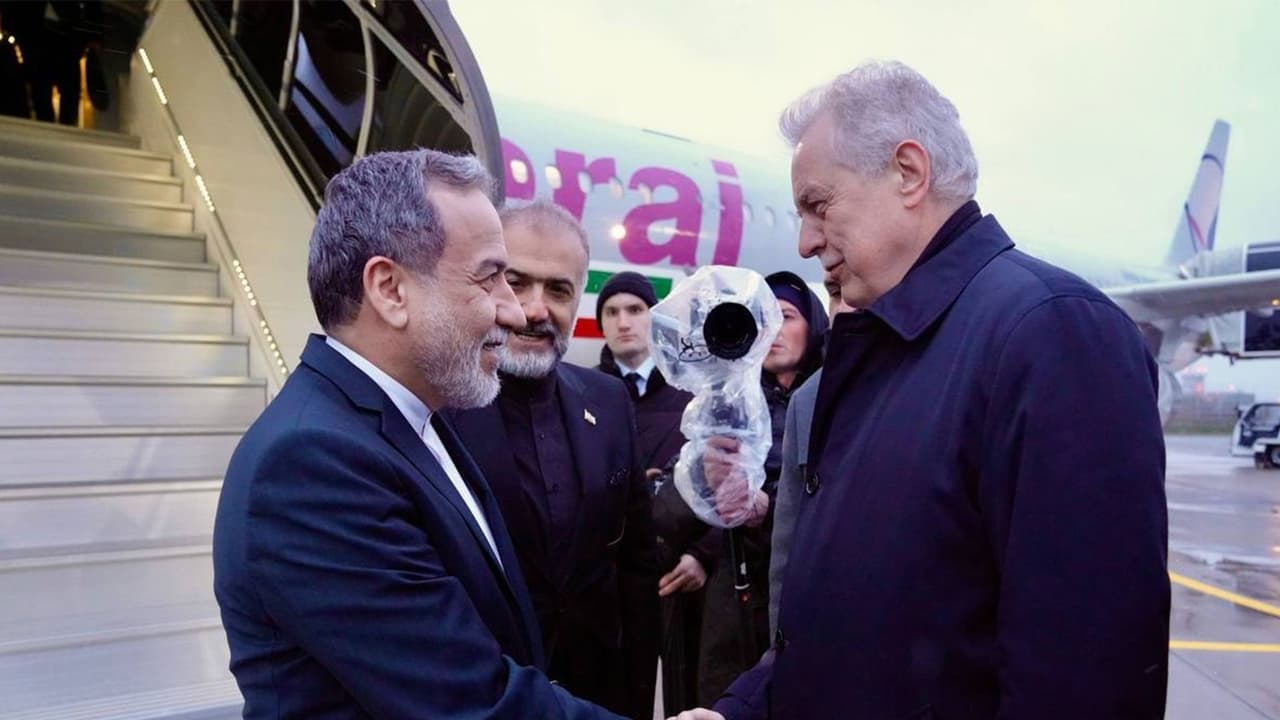
Iran communicates "red lines" on nuclear issues and the Strait of Hormuz to the US via Pakistan. Foreign Minister Araghchi meets Putin in Russia after proposing a new two-stage plan to end the war before starting nuclear talks.
Iranian Foreign Minister Abbas Araghchi has communicated a definitive list of Tehran's "red lines" to be passed to the United States during his recent diplomatic mission to Pakistan, according to Iranian state media outlet Fars. The news agency detailed that these strategic boundaries specifically encompass "nuclear issues and the Strait of Hormuz." However, the report clarified that this "exchange of messages is not related to Iran-US negotiations," but was instead intended to "clarify" the current regional landscape and the specific thresholds Iran is unwilling to cross. While no further particulars were disclosed regarding the contents of the messages, the diplomatic offensive continues in Russia. Araghchi is currently in St Petersburg, where he is scheduled for a high-stakes meeting with President Vladimir Putin. This visit follows a weekend of intensive consultations with key mediators in both Pakistan and Oman.

Upon his arrival in Russia, Araghchi informed state media IRNA that his discussions in Pakistan had focused on the specific conditions under which "Iran-US talks can resume." The move comes as Washington maintains a firm stance on the dialogue process. On Sunday, US President Donald Trump stood by his decision to abort a proposed visit to Pakistan by his special envoys. Trump remarked that Iranian leaders "can call" if they wish to engage in discussions, while simultaneously expressing optimism that the conflict could "come to an end very soon."
Iran's New Two-Stage Proposal
In a significant diplomatic manoeuvre following these red-line clarifications, Tehran has reportedly submitted a "new proposal" to Washington through Pakistani intermediaries. According to a report by Axios, the Iranian offer outlines a framework to "reopen the Strait of Hormuz and end the war," signalling a potential breakthrough in the protracted conflict. This initiative seeks to bridge the gap after the White House cancelled a scheduled visit to Islamabad by envoys Steve Witkoff and Jared Kushner, a move widely interpreted as a sign of "dissatisfaction with Tehran's earlier offer."
Central to the current impasse is the American demand that Iran cease uranium enrichment for a minimum of ten years and relocate its current nuclear stockpile abroad. The framework delivered via Pakistan suggests a "two-stage plan" that seeks to address the maritime crisis and the US naval blockade as a priority. This latest proposal envisions either a "prolonged period" of ceasefire extension or a "permanent end to the war." Under this arrangement, nuclear discussions would "begin only at a later stage," specifically after the maritime passage is cleared and the blockade is removed.
While Axios reports that the White House has officially "received the proposal," it remains "unclear whether the United States is willing to explore it." President Trump expressed his reluctance to deploy a negotiating team in the current environment, stating, "We can do it just as well by telephone. The Iranians can call us if they want."
Sticking Points in US-Iran Standoff
Tehran continues to use its strategic position over the Strait of Hormuz as leverage, while the US maritime blockade of Iranian ports continues to drive "price spikes and market volatility." The Iranian position maintains that Washington must first eliminate "obstacles," most notably the naval blockade, before substantive talks can take place. Conversely, the US remains focused on forcing Iran to scale back its "nuclear ambitions," missile development, and ties to regional groups, illustrating the "wide gaps" that still divide the two nations. (ANI)
(Except for the headline, this story has not been edited by Asianet Newsable English staff and is published from a syndicated feed.)