
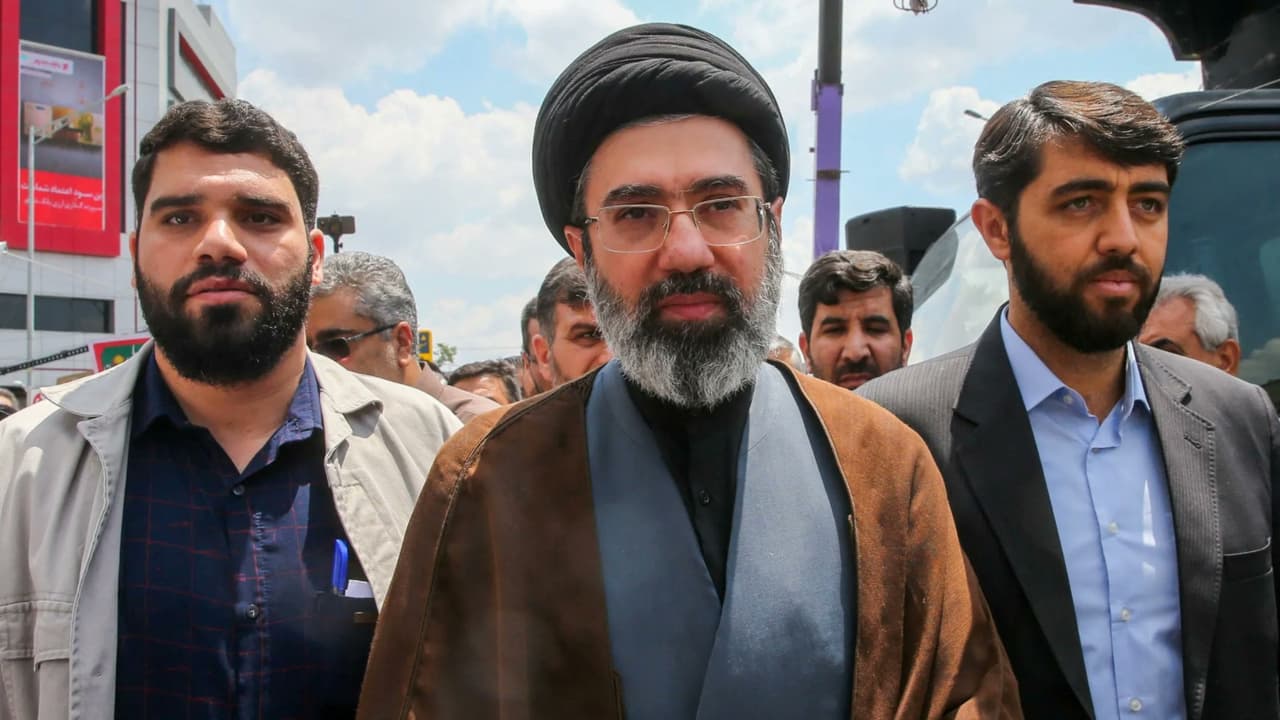
A secret letter reportedly sent to Mojtaba Khamenei by senior insiders reveals deep divisions within Iran's leadership. It warns of severe economic distress and questions the sustainability of Iran's confrontational regional strategy against the US and Israel.
A reported secret letter sent to Mojtaba Khamenei has intensified speculation about deepening divisions within Iran’s leadership at a time when Tehran is facing mounting pressure from both the United States and Israel. The letter, described by multiple reports as an unusually candid warning from senior insiders, reportedly outlines severe economic distress, political fatigue and growing doubts over whether Iran can continue its current regional strategy without risking internal instability.

The revelation comes as Iran continues to project a public image of unity despite signs of stress behind the scenes. While officials in Tehran have repeatedly defended the country’s “resistance” doctrine, the contents of the reported message suggest some within the establishment now believe that approach may be reaching its limits. According to reports, the letter warned that Iran’s economy is under exceptional strain and that prolonged confrontation with Washington and Tel Aviv could worsen domestic pressure.
At the centre of the controversy is Mojtaba Khamenei, who has become one of the most closely watched figures in Iran’s power structure. Though he has maintained a hardline public position, recent developments suggest competing views are emerging inside the ruling system over how to respond to international isolation and regional conflict. Earlier this month, Mojtaba insisted that “resistance will continue against the US and Israel,” reinforcing Tehran’s traditional posture toward its adversaries.
However, the leaked warning appears to tell a different story. Officials cited in reports allegedly cautioned that the country cannot indefinitely absorb the economic cost of sanctions, military confrontation and declining domestic confidence. Some insiders reportedly drew comparisons to 1988, when Iran’s leadership was forced to reassess its wartime strategy during the final phase of the Iran-Iraq conflict. Those historical parallels have added to the sense that Iran may be entering another critical decision point.
Also Read: Iran denies nuclear talks in Pakistan, says minister's visit is bilateral
The timing of the disclosure is particularly sensitive. Diplomatic efforts involving Pakistan and other regional intermediaries are already under way to prevent a broader escalation in the region. At the same time, US officials have continued to pressure Tehran to return to meaningful negotiations over its nuclear programme and regional activities. But leadership divisions inside Iran could make a coherent response more difficult.
Reports also indicate that the Islamic Revolutionary Guard Corps is playing a larger role in decision-making as civilian institutions struggle to shape policy. Analysts say the growing influence of military commanders could complicate diplomacy, especially if hardliners see compromise as a sign of weakness. Recent assessments suggest the IRGC has tightened control over key state functions, leaving Iran’s political leadership with less room to manoeuvre.
That internal struggle has created two competing narratives. Publicly, Iran continues to present itself as defiant. Privately, the reported letter suggests some senior figures fear that defiance alone may no longer be enough. The concern appears to be less about ideology and more about sustainability — whether Iran can continue its current path without triggering deeper economic or political consequences at home.
For observers across the region, the letter matters because it hints that the biggest challenge to Iran’s strategy may not come from foreign enemies alone, but from within its own governing establishment. If the report is accurate, it suggests parts of the leadership are beginning to question whether confrontation remains the best path forward.
Whether Mojtaba Khamenei treats the warning as a call for change or chooses to double down on resistance could shape the next phase of Iran’s relationship with the US, Israel and the wider Middle East. For now, the reported letter has opened a rare window into a leadership that rarely allows its internal tensions to become visible.
