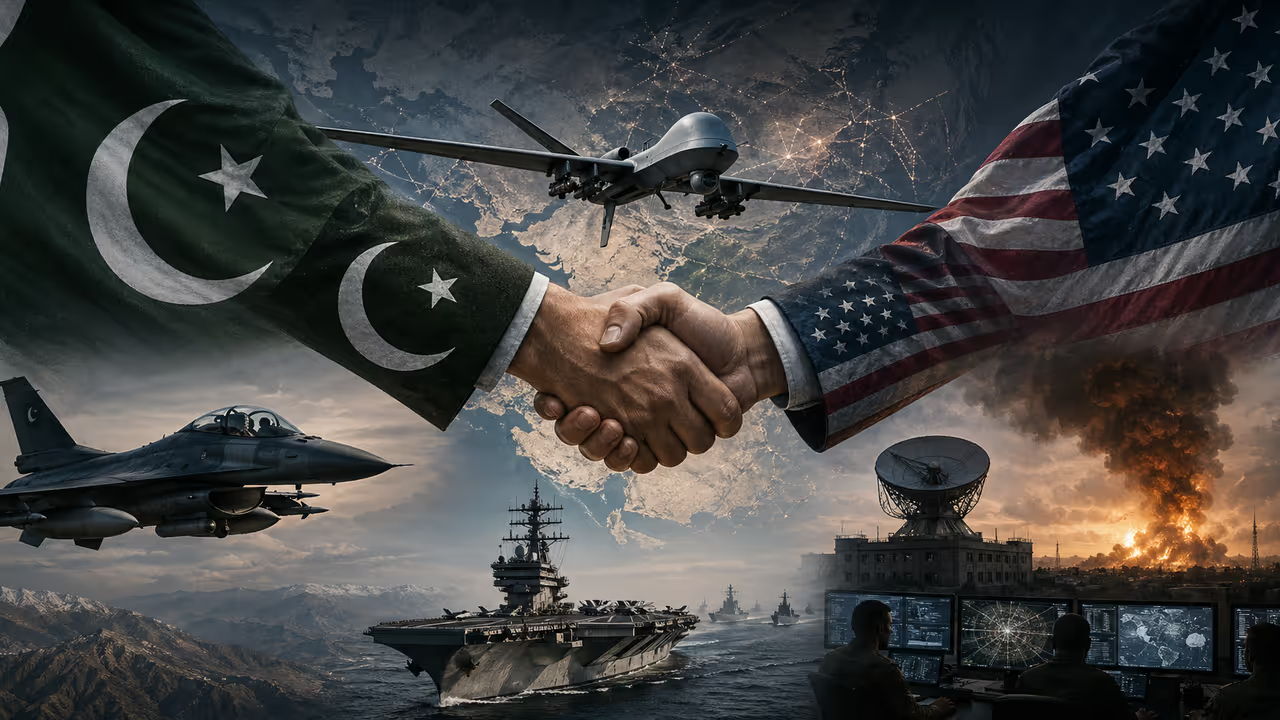
Pakistan projects neutrality on Iran, but intelligence claims suggest covert support to US operations. From airspace access to naval intel, is Islamabad playing a dangerous double game?
New Delhi: Islamabad's public neutrality masks a covert military partnership that may be reshaping the West Asia conflict. While Pakistan's foreign minister has been shuttling between Tehran and Riyadh preaching restraint, and Prime Minister Shahbaz Sharif has been condemning US strikes on Iran as violations of international law, a very different story may be unfolding behind closed doors.

The Covert Support Allegations
Multiple intelligence assessments circulating in regional security circles allege that Pakistan has been providing covert but material military support to US operations against Iran.
Even if the posts in circulation on social media are to be believed, it is among the most consequential acts of strategic deception in South Asian history.
Related Articles

The allegations are specific. Pakistani airspace is said to have been made available for US ISR operations and the basing of assets, including the MQ-9B armed surveillance drone.
Pakistan Air Force F-16s are alleged to have flown in active support of US carrier operations in the Arabian Sea. And perhaps most explosive of all, Pakistani naval assets are said to have been passing the positional data of Iranian vessels, including dhows operating beyond Pakistan's Exclusive Economic Zone, to American forces for targeting.
This comes even as Pakistan publicly maintains a policy of non-involvement and claims to support dialogue as the only sustainable path to peace. Pakistani defence authorities have specifically dismissed claims about US drones transiting Pakistani airspace as "entirely baseless and misleading."
A Familiar Strategic Playbook
But denial, as students of Pakistani strategic history will know, is part of the toolkit. During the Soviet-Afghan War, Pakistan denied for years that it was the CIA's primary conduit for arms to the Mujahideen. The pattern of public disavowal combined with covert operational alignment is not new. It is, in fact, a Pakistani institutional speciality.
The Technology Link: F-16 Upgrades
The technological evidence is suggestive. In December 2025, Washington approved a $686 million Foreign Military Sale to upgrade Pakistan's F-16 fleet, a package centred on Link-16 tactical data links and Mode 5 IFF cryptographic systems.
These are NATO-standard coalition warfare tools. They enable Pakistani aircraft to operate safely and seamlessly alongside American assets in shared airspace. The timing, coming months before the February 2026 outbreak of full-scale hostilities, raises questions that Islamabad has not publicly answered.
Strategic Gains for Islamabad
The strategic logic for Pakistan is not difficult to construct. With Gulf states, Turkey, and even the United Kingdom refusing Washington's basing access, the geometric value of Pakistan's western airspace and Arabian Sea coastline to US operations becomes immense.
For Islamabad, the currency of covert cooperation translates directly into arms packages, diplomatic leverage, and the restoration of its status as America's indispensable South Asian partner, a status badly shaken by the May 2025 India-Pakistan conflict and deepening US-India ties.
The Iran Factor: A Risky Gamble
The risks are equally stark. Iran shares a 900-kilometre border with Pakistan. It has demonstrated both the will and capability to conduct cross-border strikes, as seen when Iranian missiles hit Balochistan in January 2024.
An Iran that believed itself betrayed by a neighbour publicly claiming solidarity would have a powerful motivation and multiple vectors to retaliate. For now, Islamabad maintains its diplomat's mask. The mask, however, is beginning to slip.