Israel’s missile defence system is reportedly under pressure as interceptor stocks run low amid Iranian strikes. US officials warn the shortage could worsen as Tehran introduces cluster missiles into the conflict.
Israel’s long-range missile defence network is facing mounting pressure as Iranian strikes continue, with US officials warning that the country may be running “critically low” on ballistic missile interceptors amid the ongoing conflict.

The concern, first reported by CNN and confirmed by American officials speaking to Semafor, comes as Israel struggles to keep pace with sustained missile launches from Iran and its regional proxies.
Also read: Netanyahu's office denies assassination rumours amid AI video claims
Related Articles

Interceptor Stocks Already Stretched
According to US officials, Israel entered the current conflict with limited interceptor reserves, largely because of heavy usage during last year’s hostilities with Iran.
The country had already drawn significantly from its stockpiles following the “12 Days War” in June, leaving its long-range missile defence systems under strain even before the current escalation began.
American officials acknowledged that Washington had been aware of the situation for months.
“It’s something we expected and anticipated,” one US official told Semafor.
While Israeli air defences remain operational, the growing intensity of Iranian missile launches is forcing the system to work at near-maximum capacity.
Iran Expanding Missile Capabilities
The pressure on Israel’s air defence could soon increase further.
Iran is reportedly preparing to deploy cluster ballistic missiles, a development that could complicate interception efforts. Cluster munitions release multiple sub-munitions, potentially overwhelming defensive systems designed to stop single incoming warheads.
If used extensively, such weapons could make it significantly harder for Israel to neutralise incoming threats.
Interceptors Remain the Most Reliable Shield
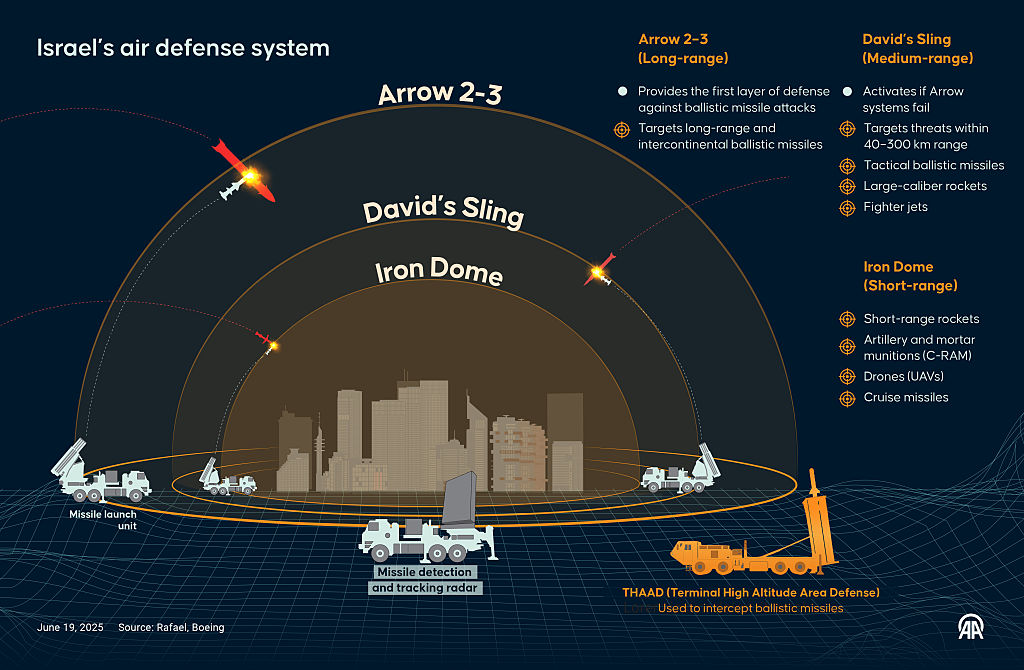
Despite alternative defensive options, interceptors remain the backbone of Israel’s missile defence strategy.
“There are other ways to defend against Iranian missiles, like the use of fighter jets, but interceptors are among the most reliable weapons against these kinds of long-range strikes,” officials said.
Israel’s well-known Iron Dome system is designed primarily to intercept short-range rockets, meaning longer-range ballistic threats rely on more advanced systems such as Arrow, David’s Sling and other interceptor platforms.
For now, US officials say Israel is trying to adapt.
“Israel is coming up with solutions” for the shortage, one official said.
US Stockpiles Under Scrutiny
Questions about interceptor availability have also sparked debate in Washington.
US President Donald Trump insisted that American supplies remain abundant.
“US stockpiles of interceptors are ‘virtually unlimited’,” Trump claimed.
However, analysts have cast doubt on that assertion. Experts cited by the New York Times have long warned that US inventories may be lower than the military would prefer, particularly if conflicts escalate simultaneously in multiple regions.
Data from the Centre for Strategic and International Studies suggests the United States already expended more than 150 THAAD interceptors during the June 2025 conflict, roughly a quarter of its inventory at the time.
In the current conflict alone, the US reportedly fired $2.4 billion worth of Patriot interceptors in just the first five days of fighting.
Pentagon Ramps Up Production
With missile defence systems seeing unprecedented use, Washington has moved to increase production.
In January, defence contractor Lockheed Martin announced plans to substantially increase THAAD missile production, a step aimed at replenishing inventories and supporting allies.
Despite concerns, US officials insist the military remains fully prepared.
Chief Pentagon spokesman Sean Parnell said the US has “everything it needs to execute any mission at the time and place of” Trump’s choosing.
White House press secretary Karoline Leavitt also sought to reassure the public.
US stockpiles, she said, were “more than enough” to defeat Iran “and beyond.”
Leavitt added that the president was ensuring the United States continued “strengthening” the Armed Forces, while urging defence contractors to accelerate weapons production.
Also read: Strait of Hormuz Open, But Not for US, Israeli Ships: Iran Minister
Decline in Iranian Drone and Missile Attacks
According to the White House, joint US-Israeli operations have significantly reduced the scale of Iranian attacks.
“Iranian drone attacks are down 95 per cent and ballistic missile attacks are down 90 per cent,” Leavitt claimed.
The figures were presented as evidence that coordinated military action has weakened Iran’s ability to strike Israeli territory.
Emergency Weapons Transfers to Israel
The US has also continued supplying Israel with additional military equipment.
Last week, Trump approved the sale of 12,000 “BLU-110A/B general purpose, 1,000-pound bomb bodies” to Israel.
The administration bypassed Congress to authorise the transfer, citing the “emergency” Israel and the US face in the Middle East.
Washington has previously provided interceptor missiles and other defensive systems to Israel as part of military aid packages.
War Shows No Immediate Signs of Ending
Despite the ongoing escalation, Trump has said the conflict could end relatively soon.
The president said the war should end “soon”, but added that both the US and Israel were prepared to fight “as long as necessary” to achieve their objectives.
Iran, however, appears to be preparing for a prolonged confrontation.
Speaking to CNN last week, Iranian officials said Tehran now sees no viable diplomatic path forward and is “digging in for a long fight.”
Continued Strikes Across the Region
Even as US officials claim Iran’s missile production capacity has been severely degraded, attacks continue.
Defence Secretary Pete Hegseth said Iran’s “entire ballistic missile production capacity” has been “functionally defeated.”
Yet on Friday, several locations in Israel were hit by Iranian cluster bombs, though authorities reported no casualties.
Meanwhile, the conflict continues to widen geographically.
Trump authorised strikes on military bases on Kharg Island, though key Iranian oil infrastructure was left untouched. At the same time, Israel is reportedly preparing to expand its ground invasion of Lebanon, raising fears of a broader regional war.
As both sides dig in, the strain on missile defence systems — and the race to replenish them — could become one of the defining challenges of the conflict.