Dubai is scrambling to preserve its image as a safe haven despite Iran's onslaught, with influencers rallying behind the government's message as authorities crack down on those sharing footage of strikes.
Dubai is scrambling to preserve its image as a safe haven despite Iran's onslaught, with influencers rallying behind the government's message as authorities crack down on those sharing footage of strikes.

For decades, the Gulf was seen as an oasis of safety in a tumultuous Middle East, with the United Arab Emirates branding itself the safest country in the world and boasting of its very low crime rates.
But that image has now been shattered.
Related Articles

Iran has fired over 1,800 missiles and drones at the Emirates, more than any other country targeted by Tehran in the conflict, upending its aura of tranquillity despite its air defence intercepting a vast majority of the projectiles.
Dubai-based influencers have showcased support for the government and invoked a sense of national belonging -- hammering home the message that the country was as safe as ever.
Kuwaiti-American reality star Ebraheem Alsamadi, known from "Dubai Bling", said in a video that he would stay in the UAE despite US consular advice, calling it "the safest country in the world, and nothing can change that".
"This has been my home for the past 16 years and I'm not going to leave it in 16 seconds... I will stand by this country as it stood by me," he added.
Authorities have also doubled down on their messaging as fears grow that war could do long-term damage to Dubai's reputation and its economy.
Dubai's Instagram account shared an emotional song to its 5.8 million followers that says "Dubai is safe, will always be safe".
Safety had long been inseparable from the city's identity.
"Those in charge of that strategy are now debating how to evolve it in the face of this obvious insecurity, but for now are deferring to their habits," said Ryan Bohl, a geopolitical analyst at Rane Network.
The UAE is also, he said, "hoping the war will be short enough that people will not associate war with the country. And one of the best ways to do so is to minimise the impact of the conflict on the UAE itself".
Safeguarding reputation
Roughly 90 percent of people living in the UAE are foreigners, a crucial workforce for diversifying the economy away from oil towards tourism and services.
Retaining and attracting foreign talent remains key to that programme.
The tourism sector is acutely susceptible to security issues, but "different tourists from different parts of the world have different risk tolerances," Bohl said.
To combat further fallout, authorities have doubled down on pushing an image of normality during the war.
In the early days of the war, UAE President Mohamed bin Zayed Al Nahyan walked with his massive entourage through Dubai Mall.
At flagship tourist sites like Dubai Mall and JBR beach, foot traffic has reduced to a trickle as visitors have fled the country.
Emaar, a major real estate developer that runs famous shopping centres including Dubai Mall, has warned shops and restaurants against closing or operating at reduced hours during the war.
"Such actions undermine public order, create unnecessary concern and adversely affect the reputation and economic standing of the United Arab Emirates," the company said, in a note sent to the shops seen by AFP.
Sharing rumours
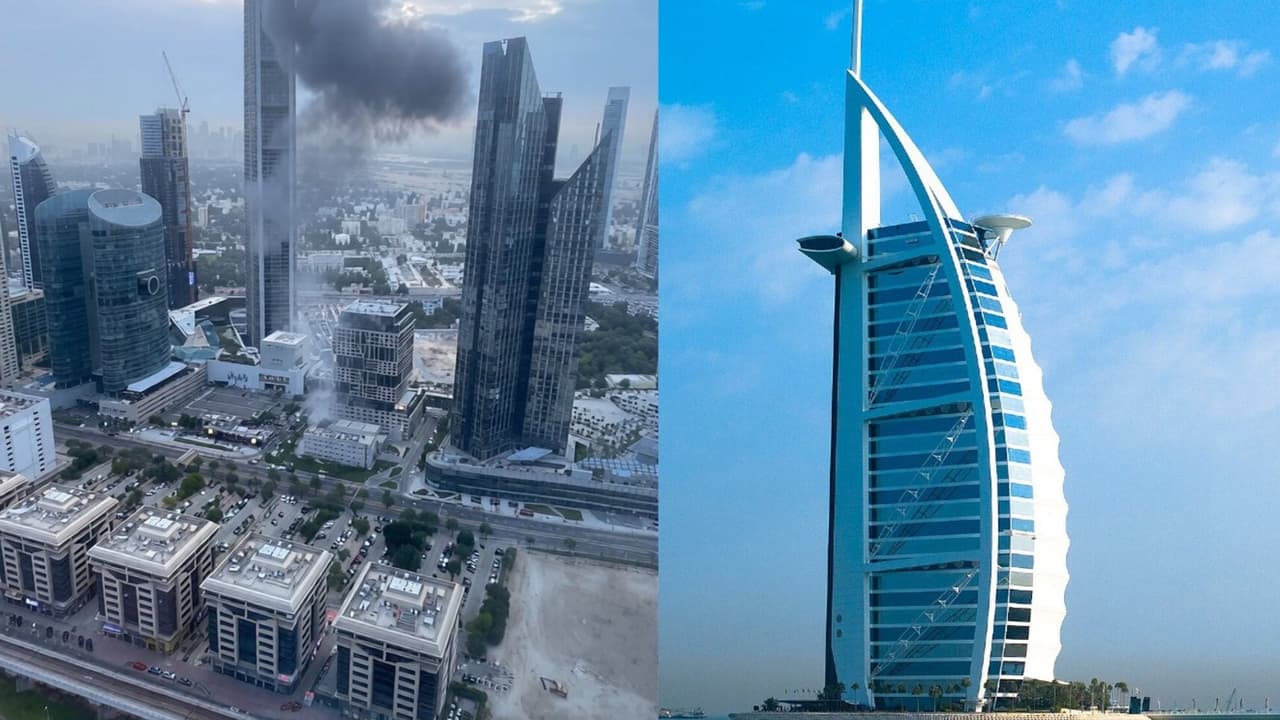
Footage of drone strikes and smoke billowing above the city has been shared widely, while fleeing tourists recounted tales of escaping Dubai under fire to international media.
To avert further reputational damage, authorities moved swiftly.
Dubai police warned against "sharing rumours" but also "photographing or sharing security or critical sites".
Other Gulf countries have taken similar measures, with Qatar arresting more than 300 people.
The UAE attorney general ordered the arrest and urgent trial of a number of people for publishing videos of interceptions or "misleading, fabricated content".
The Emirati crackdown has sparked backlash after Western media covered the arrests.
This strategy "will backfire for specific audiences, particularly Westerners and others from democracies who are used to having freedom of expression," said Bohl.
This week, many companies evacuated Dubai's financial district as Iran threatened US and Israel-linked economic targets.
It will be key for the UAE, and especially Dubai, which cannot rely on oil for revenue, to showcase that it is still safe for investments.
"If major investors, particularly in infrastructure, technology, real estate, etcetera, no longer believe that their investments are safe this would have a much more significant impact and the diversification plans of the UAE," he said.
(Except for the headline, this story has not been edited by Asianet Newsable English staff and is published from a syndicated feed)