
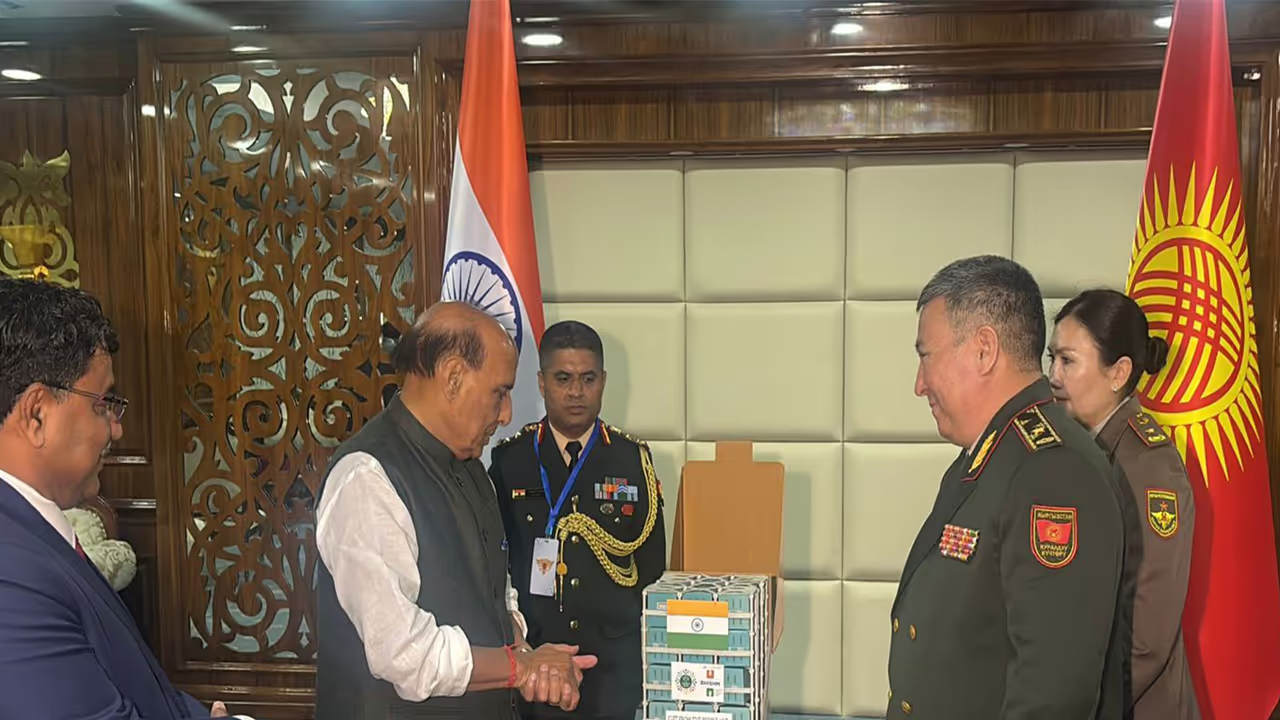
Defence Minister Rajnath Singh gifted two indigenously built BHISHM Cube modular trauma care systems to Kyrgyzstan. The cubes, part of Project Aarogya Maitri, are designed for rapid deployment to provide medical aid during emergencies.
Defence Minister Rajnath Singh on Tuesday gifted two sets of BHISHM Cube modular trauma care systems to his Kyrgyzstan counterpart, Major General Mukambetov Ruslan Mustafaevich, showcasing India's commitment to humanitarian aid.

The 'Bharat Health Initiative for Sahyog Hita & Maitri' (BHISHM) Cubes were presented during a bilateral meeting between the Defence Minister and the Kyrgyz leader in Bishkek.
The indigenously built cubes facilitate treatment within the golden hour, delivering the first line of treatment and safeguarding precious lives.
BHISHM Cube: Design and Capability
Part of Project Aarogya Maitri, the BHISHM initiative is an innovative emergency medical aid programme. At its core are compact, portable "mini cubes" filled with essential medicines and equipment, designed for rapid deployment in various emergencies. The BHISHM system is highly modular and scalable, where 36 mini cubes combine to form a mother cube, and two mother cubes create a full BHISHM Cube. Each complete cube can support medical care for up to 200 cases, including surgical procedures.
A standout feature of the BHISHM Cube is its rapid deployment capability; in mass casualty incidents, the entire unit can be set up within 12 minutes, bridging the crucial gap between primary and definitive care during the critical "golden hour" of emergencies.
The cube comprises 72 easily transportable components, designed for versatile delivery methods, including hand-carry, bicycle, or even drone transport. These cubes are built to withstand harsh conditions, being robust, waterproof, and lightweight. Their flexible configuration allows deployment in diverse emergency scenarios, ensuring a swift response to crises via airdrop or ground transportation.
Advanced Technological Integration
Further, advanced medical equipment within the cube is RFID-tagged for efficient management. A state-of-the-art software system, accessible via a provided tablet, allows operators to quickly locate items, monitor usage and expiry dates, and maintain readiness for future deployments.
The BHISHM Cube also integrates cutting-edge technologies such as Artificial Intelligence and data analytics. It enhances disaster response by facilitating effective coordination, real-time monitoring, and efficient management of medical services in the field. (ANI)
(Except for the headline, this story has not been edited by Asianet Newsable English staff and is published from a syndicated feed.)