
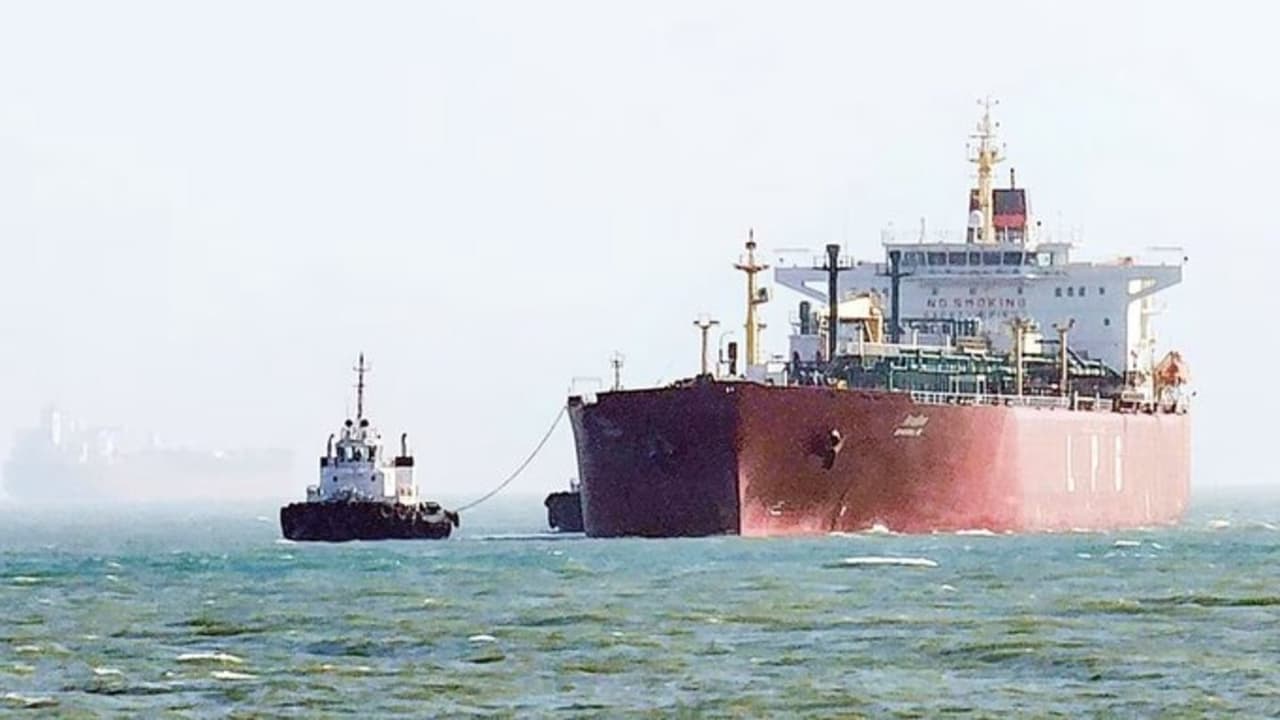
The Strait of Hormuz, a critical chokepoint for 20% of global oil, is vital to India, which imports over 80% of its crude oil, much of it from the Gulf. Regional tensions threaten to disrupt this supply, potentially harming India’s economy.
Why The Strait Of Hormuz Matters To India
The Strait of Hormuz has once again become one of the most closely watched waterways in the world as escalating tensions in West Asia raise concerns over a possible maritime blockade and a wider global energy crisis. The narrow stretch of water, located between Iran and Oman, connects the Persian Gulf to the Gulf of Oman and the Arabian Sea. It is considered one of the world’s most critical oil transit chokepoints because nearly 20 percent of global petroleum liquids and a significant share of liquefied natural gas shipments pass through it every day.

For India, the strait carries extraordinary importance. India imports more than 80 percent of its crude oil requirements, and a substantial portion of that supply comes from Gulf producers including Iraq, Saudi Arabia, the UAE, Kuwait and occasionally Iran-linked shipments. Any disruption in the Strait of Hormuz can have a direct impact on India’s economy by increasing crude prices, pushing up transportation costs and triggering inflation across multiple sectors.
Recent military tensions in the region sparked fears that commercial shipping could be halted or severely disrupted. However, despite those concerns, Indian oil and gas vessels have continued reaching ports on India’s western coast. According to the India Today report, tankers carrying crude from Iran’s Kharg Island have still managed to dock in Mumbai and other ports even as security concerns intensified in the Gulf.
One such vessel, carrying tens of thousands of tonnes of crude, reportedly completed its journey despite the regional uncertainty. This has raised an important question — if the strait is under intense scrutiny and possible restriction, how are Indian ships still getting through?
Also Read: Iran calls India 'reliable partner', assures safe passage via Hormuz
The Maritime Routes Ships Can Still Use
Experts cited in the report say Indian vessels can still move through the region because geography and international maritime law leave limited but viable options for commercial navigation. Ships loading crude from Kharg Island, Iran’s principal oil export terminal, can use carefully planned sea lanes that reduce the risk of interception.
One possible route involves vessels sailing close to Iran’s coastline before moving southeast toward the Gulf of Oman. By staying near territorial waters, ships may remain under legal protection because foreign naval forces cannot simply stop or seize merchant vessels inside another nation’s waters without a major diplomatic escalation. Under the principle of “innocent passage,” commercial ships are generally allowed to pass through territorial waters as long as they do not engage in military or hostile activity.
Another route allows ships to travel along the Iranian coast until they reach waters near Chabahar Port. From there, they can move into the Arabian Sea and head directly toward India’s western ports such as Mumbai, Kochi, Mangalore or Jamnagar. This route avoids some of the most heavily monitored parts of the shipping corridor while still remaining commercially practical.
A former naval officer quoted in the report explained: “From the Gulf of Oman, they can head directly to India's ports, Mumbai, or Kochi, or any other port in India.”
This means even if tensions remain high in the strait itself, once ships clear the immediate danger zone, they can continue their voyage to India without facing the same level of threat.
The report also notes that the US Navy or allied forces may monitor shipping traffic, but a complete shutdown of commercial shipping is much harder to enforce than many assume. Geography makes any airtight blockade extremely difficult because vessels can still use narrow legal corridors to continue moving.
Also Read: 10 Indian ships exit Strait of Hormuz, 14 remain in Persian Gulf
Why A Full Blockade Is So Difficult
While headlines often focus on the possibility of a complete closure of the Strait of Hormuz, maritime specialists say such a blockade would be extraordinarily complicated in practice. The strait is only about 33 kilometres wide at its narrowest point, but the legal shipping channels are even narrower. Those lanes pass through both Iranian and Omani territorial waters, making direct military intervention politically sensitive.
A foreign navy can patrol international waters, but once a tanker moves into territorial waters, stopping it becomes a legal and diplomatic challenge. Any aggressive attempt to seize or block a civilian vessel could trigger international backlash and potentially widen a regional conflict.
The India Today report points out that Indian vessels can also benefit from diplomatic coordination. India has maintained strategic ties with Gulf countries while also strengthening maritime security cooperation with multiple regional powers. That gives New Delhi more room to negotiate safe passage for commercial vessels during periods of tension.
Insurance remains another major factor. Even when ships can technically sail, shipping companies often hesitate because war-risk insurance premiums can rise sharply during conflict. Those additional costs can make every voyage more expensive. Still, Indian refiners appear willing to absorb some of that burden to protect long-term supply security.
Officials have also been closely monitoring Indian vessels in the region. Several Indian-flagged or India-bound ships were recently tracked in Gulf waters, and authorities are maintaining constant communication with operators to ensure crews remain safe.
The larger concern is not whether one or two ships can still reach India, but what prolonged instability could mean for future energy supplies. Even without a formal blockade, repeated threats in the Strait of Hormuz can disrupt schedules, raise freight charges and create uncertainty in oil markets.
For India, the ability of ships to continue reaching Mumbai despite rising tensions offers short-term relief. But it also highlights how vulnerable the country remains to geopolitical events unfolding thousands of kilometres away in one of the world’s most strategically important waterways.
Also Read: US Navy intercepts Iranian oil tanker amid blockade of Iranian ports
