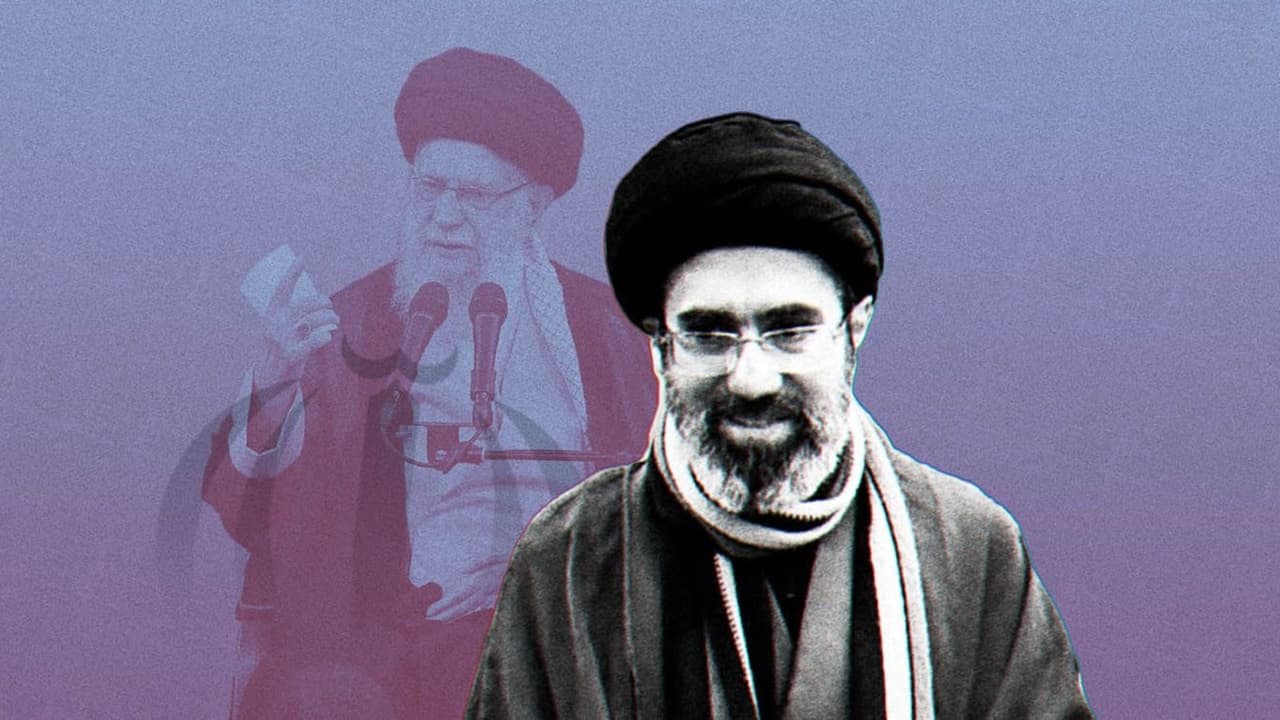
Mojtaba Khamenei has become Iran's new Supreme Leader, succeeding his late father, Ayatollah Ali Khamenei. For decades, he built a powerful network within Iran’s security and political establishments from behind the scenes, despite holding no major public office.
The rise of Mojtaba Khamenei as Iran’s new Supreme Leader marks one of the most dramatic and controversial transitions in the history of the Islamic Republic. For decades he remained largely out of the public spotlight, rarely holding official office or making prominent political appearances. Yet behind the scenes he built a formidable network of influence that spanned Iran’s clerical establishment, security forces and political elite.

Now, amid an escalating regional war and deep political uncertainty, Mojtaba Khamenei has stepped into the role once held by his father, Ayatollah Ali Khamenei, positioning himself at the center of Iran’s power structure.
A Low-Profile Figure Close to Power
Born in 1969 in the holy city of Mashhad, Mojtaba Khamenei is the second son of Iran’s late Supreme Leader, Ayatollah Ali Khamenei. He studied Islamic theology in the seminaries of Qom, Iran’s main center of Shiite religious learning, and holds the clerical rank of Hojjatoleslam. However, he has never achieved the higher rank of Ayatollah, which traditionally lends greater religious authority to those leading the Islamic Republic.
Related Articles

Despite his relatively modest clerical credentials, Mojtaba gradually emerged as one of the most influential figures inside Iran’s political system. Rather than occupying public offices, he worked behind the scenes within the Office of the Supreme Leader, often acting as a trusted adviser and intermediary for his father.
Over time he became widely described as a “gatekeeper” to the elder Khamenei—someone who controlled access to the Supreme Leader and helped shape decisions at the highest levels of the Iranian state.
This behind-the-scenes role gave Mojtaba enormous informal power, even though he did not hold a prominent political title.
Building Influence Within Iran’s Power Networks
Throughout the late 1990s and 2000s, Mojtaba quietly expanded his influence inside the country’s powerful political and security institutions. Analysts say he developed strong ties with senior clerics, wealthy businessmen and, most importantly, the Islamic Revolutionary Guard Corps (IRGC) — the elite military force that plays a major role in Iran’s economy and regional military operations.
These connections allowed him to become a key power broker in Iranian politics. According to analysts, he helped coordinate political alliances and influence major decisions within the regime, even while maintaining a deliberately low public profile.
Reports have also suggested he played a role in supporting conservative political factions and strengthening ties between Iran’s religious leadership and the security apparatus. His growing influence within these networks helped lay the groundwork for his eventual rise to leadership.
By the early 2010s, Mojtaba Khamenei was widely viewed as one of the most powerful figures in Iran despite holding no formal position.
Controversies and Sanctions
Mojtaba Khamenei’s growing influence has not been without controversy. Critics inside and outside Iran have accused him of wielding excessive power without accountability, particularly during periods of political unrest.
The United States sanctioned Mojtaba Khamenei in 2019, accusing him of representing his father in political matters and working closely with Iranian security forces to advance the government’s regional and domestic policies.
Opponents have also linked him to the government’s response to mass protests, including demonstrations that followed the disputed 2009 presidential election. While such allegations have circulated widely, they have never been officially confirmed by Iranian authorities.
Nonetheless, Mojtaba’s reputation as a powerful behind-the-scenes operator has fueled ongoing debate about transparency and accountability within Iran’s leadership.
Also Read: ‘Not A Good Idea’: US Alarmed As Israel Strikes 30 Iranian Fuel Depots In Massive Blitz
From Insider to Successor
The question of who would succeed Ayatollah Ali Khamenei had long been one of the most sensitive issues in Iranian politics. After serving as Supreme Leader for more than three decades, the elder Khamenei’s eventual succession was expected to shape the future of the Islamic Republic.
That moment arrived abruptly in early 2026 when Ayatollah Ali Khamenei was killed during strikes linked to the escalating conflict between Iran, Israel and the United States. The sudden power vacuum triggered an urgent search for a successor within Iran’s ruling establishment.
Under Iran’s constitution, the Assembly of Experts—the clerical body responsible for selecting the country’s Supreme Leader—holds the authority to appoint the next leader. After deliberations, the assembly announced Mojtaba Khamenei as the new Supreme Leader on March 8, 2026.
The decision marked a historic moment for Iran, effectively resulting in the first hereditary-style transfer of supreme leadership since the Islamic Republic was founded in 1979.
Leadership During a Time of War
Mojtaba Khamenei’s ascent comes at a time when Iran faces one of the most serious crises in its modern history. The country is currently involved in a widening regional conflict with Israel and the United States, a war that has already resulted in significant casualties and widespread instability.
The war began after joint US-Israeli strikes targeted Iranian facilities and killed Ayatollah Ali Khamenei, triggering retaliation and escalating hostilities across the Middle East.
In response, Iran launched missile attacks on Israeli cities and US military bases in the region, while Israel and its allies continued to strike Iranian targets. The ongoing conflict has plunged the region into uncertainty and heightened fears of a broader war.
Mojtaba’s leadership will therefore be defined not only by domestic challenges but also by the strategic decisions he makes during this conflict.
Also Read: ‘Mutual Decision’: Trump Says Iran War End Will Be Decided With Netanyahu
Domestic Pressures and Public Sentiment
Beyond the external conflict, Mojtaba Khamenei faces significant challenges within Iran itself. Years of economic hardship, international sanctions and political restrictions have fueled widespread dissatisfaction among segments of the population.
Many Iranians have expressed frustration with corruption, economic inequality and limited political freedoms. These grievances have periodically erupted into protests across the country.
As the new Supreme Leader, Mojtaba must navigate these domestic pressures while maintaining support from key institutions such as the Revolutionary Guards and the clerical establishment.
A Controversial Dynastic Moment
The appointment of Mojtaba Khamenei has sparked debate both inside Iran and internationally because it represents a rare dynastic-style transition in a system that was originally founded on revolutionary principles rejecting hereditary rule.
Critics argue that the move reflects the consolidation of power among a small group of political and religious elites. Supporters, however, say Mojtaba’s long experience within Iran’s political networks makes him well positioned to lead during a time of crisis.
Regardless of the debate, his rise represents a pivotal moment for the Islamic Republic.
A Leader Shaped by Secrecy and Power
For most of his life, Mojtaba Khamenei operated far from the public eye. Yet through years of careful networking and strategic alliances, he positioned himself at the center of Iran’s power structure.
Now, as the new Supreme Leader, he inherits not only the authority once wielded by his father but also the enormous challenges facing Iran today—from regional war to internal political pressures.
How Mojtaba Khamenei navigates these crises will determine not only the future of his leadership but also the direction of the Islamic Republic in the years to come.