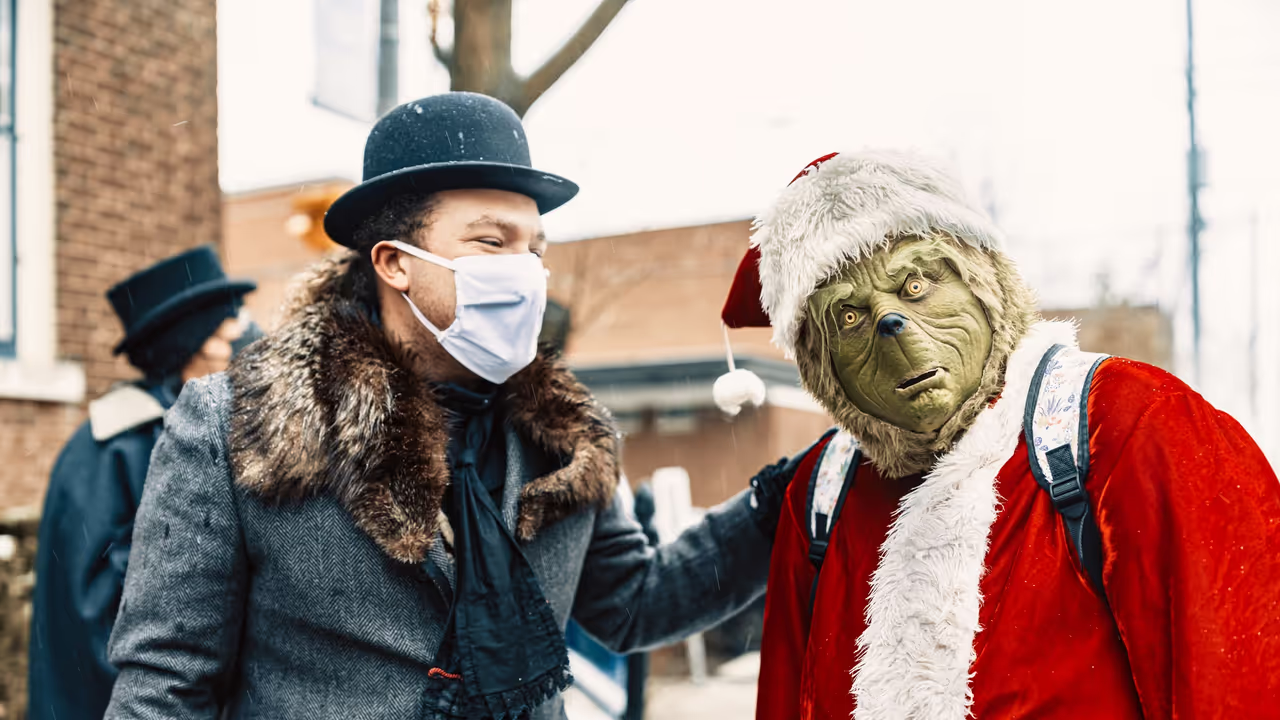
An anatomist has analysed the Grinch’s anatomy to uncover what animal he most resembles. The Christmas villain appears to be a mix of monkey, dog, cat and owl, with traits that explain his movement, senses and famous transformation.
He may be one of Christmas’s most recognisable characters, but the Grinch has always defied biological classification. With his green fur, snub nose, yellow eyes and exaggerated expressions, he seems unlike any real animal. Now, an anatomist has taken a scientific look at the festive villain to uncover what might be hiding beneath that famous scowl.

Lucy Hyde, a lecturer in anatomy at the University of Bristol, used her expertise to imagine what the Grinch would look like on a dissection table and the answer is far from simple.
A Patchwork of Familiar Animals
According to Hyde, the Grinch is best understood as a hybrid rather than a single species. His anatomy appears to borrow traits from monkeys, dogs, cats and owls, blending features in a way that explains both his movements and behaviour.
Related Articles

His skull, for example, would likely combine primate and canine traits, with a short snout, high cranium and powerful jaws capable of producing his iconic sneer. His teeth would resemble a chimp’s sharp canines for tearing, sturdy molars for grinding, and incisors well suited for nibbling festive treats.
Broad cheekbones would support large facial muscles, allowing for the dramatic expressions that define his personality.
Built for Sensing and Sneaking
The Grinch’s large, forward facing eyes suggest a creature adapted for low-light conditions, similar to owls and cats. Their yellow colour, combined with a constantly twitching nose, points to heightened vision and smell ideal for spying on unsuspecting Whos.
His nose structure would also be adapted to cold mountain air, with complex internal bones designed to warm each breath. Whisker like facial hairs, similar to those of cats, could help him sense movement nearby.
A Flexible Body and a Changing Mind
Hyde suggests the Grinch’s spine would resemble a cross between a gibbon and a cat long, flexible and highly mobile. This would explain his slouched posture, coiled movements and ability to move quietly. Like a cat, he would likely walk on his toes, softening each step.
Inside the skull, his brain offers clues to his personality. Smaller frontal lobes could explain his poor impulse control and lack of empathy early in the story, while well developed regions for memory, sound and coordination reflect his cleverness and planning skills.
As for his famously “growing heart,” Hyde notes this is best understood as a metaphor not a literal organ change, but a shift in emotional and social awareness.
In the end, the Grinch’s anatomy tells a deeper story: one of transformation. The same body that powered mischief ultimately learns kindness, proving that even the grumpiest creature can change.