
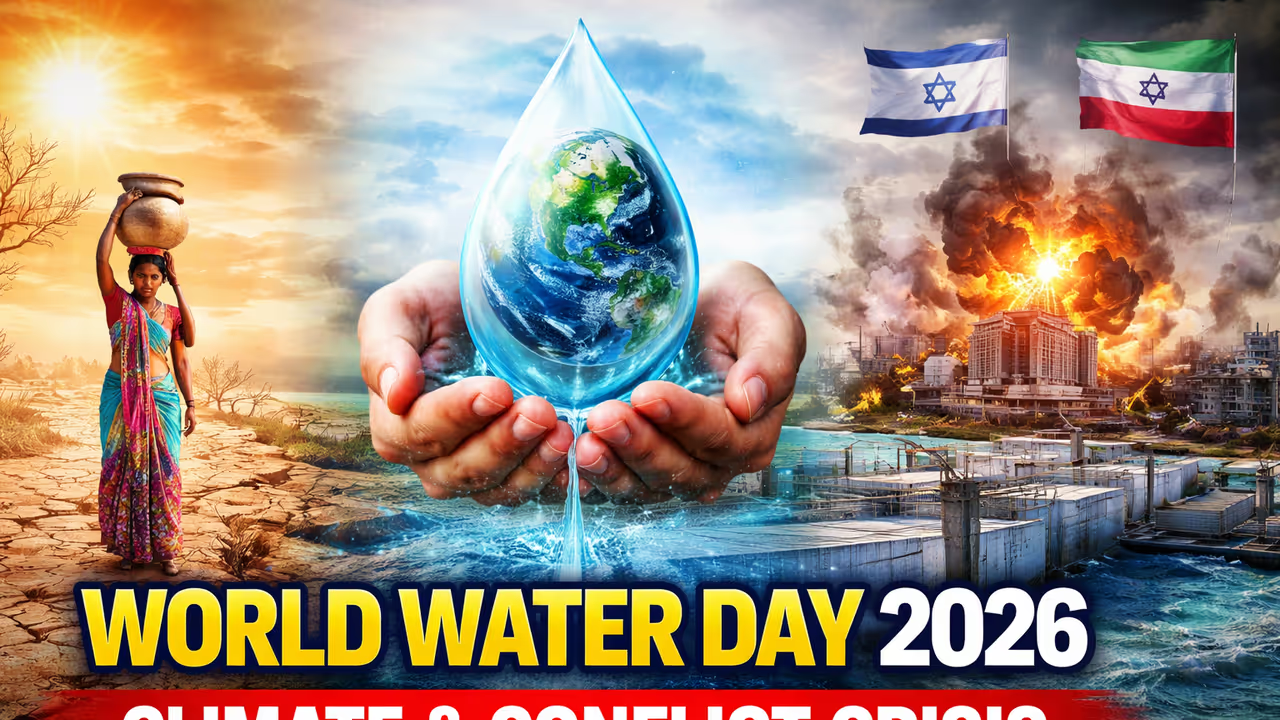
The global water crisis, highlighted by World Water Day 2026, is worsening due to climate change and conflict. Climate change disrupts water cycles, leaving over 2 billion people without safe water. Geopolitical conflicts, such as between Israel and Iran, now involve damaging critical water infrastructure, exacerbating shortages.
World Water Day 2026, observed on March 22, highlights the worsening global water crisis under the theme “Where Water Flows, Equality Grows.” The message underscores how access to water is deeply linked to health, livelihoods, and social equity. However, climate change is rapidly destabilising this balance, making water increasingly scarce and unpredictable across the world.

Rising temperatures are disrupting the natural water cycle, leading to erratic rainfall, prolonged droughts, and intense floods. Glaciers, which serve as crucial freshwater sources for millions, are melting at alarming rates, threatening long-term water availability. As a result, over 2 billion people globally already lack access to safe drinking water, and this number is expected to rise as climate impacts worsen.
Water quality is also deteriorating. Floods can contaminate clean water supplies, while droughts concentrate pollutants, making water unsafe for consumption. These effects are particularly severe in developing countries with limited infrastructure. The crisis also deepens inequality—women and girls often bear the burden of fetching water, spending hours each day that could otherwise go toward education or work.
Also Read: World Water Day 2026: Understanding Virtual Water and Your Footprint
How the Israel-Iran Conflict Is Worsening Water Scarcity
Beyond climate change, conflict is emerging as a major force intensifying the water crisis. The ongoing tensions between Israel and Iran have introduced a dangerous new dimension—targeting and damaging critical water infrastructure.
Recent strikes have reportedly hit key facilities, including a desalination plant in Iran’s Qeshm Island, disrupting water supply to several villages. In a region already facing extreme water stress, such attacks can have immediate and devastating humanitarian consequences. Many Middle Eastern countries rely heavily on desalination for drinking water, making these facilities vital for survival.
The environmental impact of war is equally alarming. Attacks on oil and industrial sites have led to pollution, with reports of “black acid rain” contaminating air, soil, and water sources. Such damage not only reduces the availability of clean water but also harms ecosystems and agriculture.
Experts warn that water is increasingly becoming a strategic asset in conflicts—sometimes even described as a “geopolitical commodity that decides the war.” The destruction of water systems, combined with already scarce resources, creates a dangerous cycle where conflict worsens water shortages, and shortages fuel further instability.
Also Read: World Water Day: PM Modi urges strong commitment to conserve water
A Growing Humanitarian and Global Stability Challenge
The consequences of the water crisis extend far beyond thirst. Water scarcity directly impacts food production, public health, and economic stability. Agriculture, which depends heavily on reliable water supply, suffers during droughts, leading to crop failures, rising food prices, and loss of livelihoods.
In regions facing severe shortages, communities are often forced to migrate in search of water, increasing the risk of displacement and social conflict. The Middle East, including Iran, is among the most water-stressed regions globally, with years of overuse, mismanagement, and climate pressures pushing systems toward collapse.
Globally, experts warn of a looming “water bankruptcy,” where demand far exceeds sustainable supply. Depleting groundwater, shrinking wetlands, and polluted rivers are pushing ecosystems to their limits. Without urgent intervention, the crisis could have cascading effects on global health, economies, and peace.
World Water Day 2026 serves as a stark reminder that water is not just a resource—it is fundamental to survival, equality, and stability. Addressing the crisis will require global cooperation, sustainable water management, and the protection of critical infrastructure, especially during conflicts. As climate change and geopolitical tensions intensify, ensuring access to clean water is becoming one of the most urgent challenges of our time.
Also Read: World Water Day: CM Dhami calls for conservation of Uttarakhand's legacy
