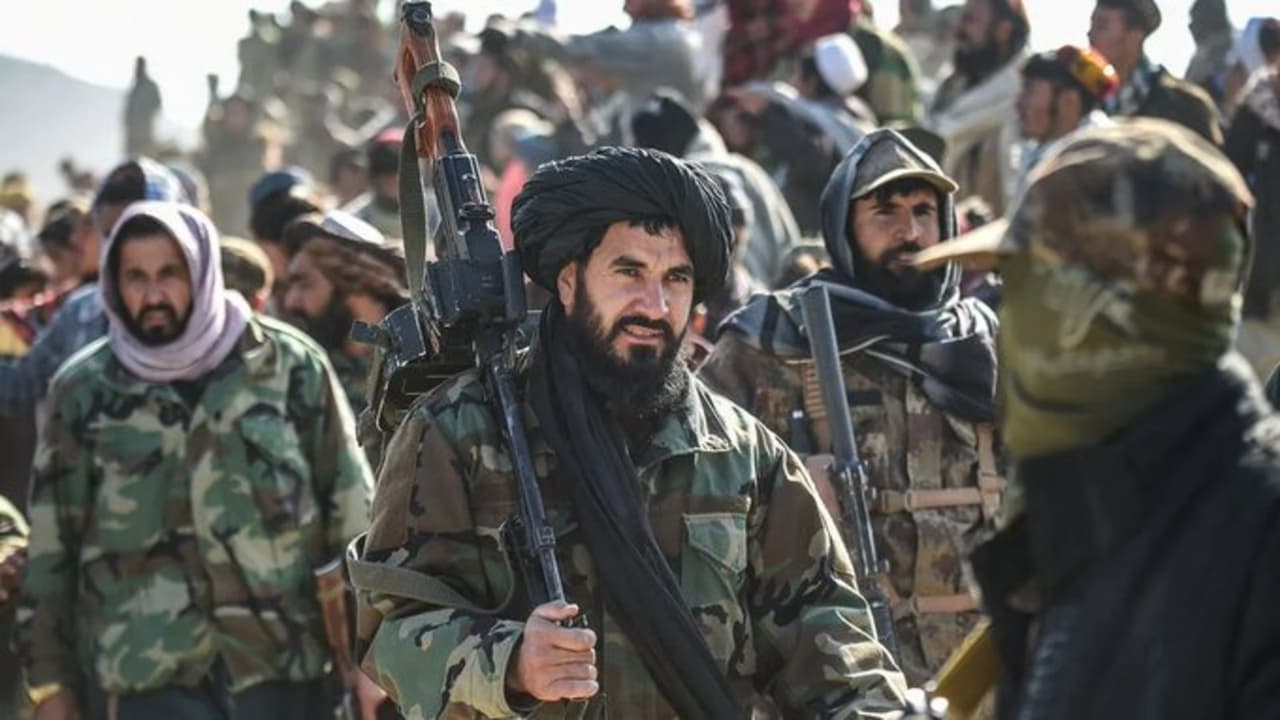
Afghanistan faces dual crises: Pakistan’s declared “open war” and Iran’s conflict shutting trade routes. With borders closed and refugees returning, the Taliban regime risks economic collapse and humanitarian disaster.
On February 27, Islamabad formally escalated tensions by declaring an “open war” against Afghanistan. Pakistan launched Operation Ghazab Lil Haq, framing it as a counterterrorism campaign against the Tehreek-e-Taliban Pakistan (TTP). Islamabad accuses the Afghan Taliban of sheltering the TTP, which it claims was responsible for over 2,500 Pakistani deaths in 2024.

The situation worsened in late 2025 when the TTP acquired advanced weaponry left behind by Western forces, raising fears in Pakistan of a more capable insurgency. In response, Pakistan shifted from sporadic cross-border strikes to sustained military operations. On February 22, Pakistani airstrikes hit alleged TTP hideouts in Khost and Paktika provinces.
Local reports, however, confirmed heavy civilian casualties. The United Nations Assistance Mission in Afghanistan verified that between late February and early March, at least 56 civilians were killed and 129 injured, most of them women and children.
Related Articles

Pakistan has since expanded its targets to include Taliban assets, striking a unit linked to ‘Supreme Leader’ Hibatullah Akhundzada in Kandahar. In retaliation, Taliban border forces shelled Pakistani military outposts, shutting down all eight major border crossings, including Torkham and Spin Boldak. The Durand Line has effectively become a war zone.
Iran Conflict Blocks the Western Corridor
As Pakistan’s trade route became unreliable in late 2025, Afghanistan pivoted westward, increasing reliance on Iran. Bilateral trade surged to $1.6 billion in the second half of 2025, surpassing trade with Pakistan. Much of this was routed through Iran’s Chabahar port, developed with Indian investment, which allowed Afghanistan to bypass Pakistan entirely.
That strategy collapsed when war erupted in Iran. On February 28, Israeli and U.S. strikes triggered a sustained naval and aerial campaign. U.S. carrier groups enforced a partial blockade on Iranian ports, halting maritime trade in the Gulf of Oman. Afghan shipments through Chabahar were stranded. Khan Jan Alokozay of the Afghanistan Chamber of Commerce confirmed that “loading has stopped” and “everything is on hold.”
This chokehold has left Afghanistan physically cut off from global markets. With Pakistan hostile and Iran paralyzed, the Taliban regime has no reliable trade corridor.
Humanitarian Fallout
The economic isolation has triggered a humanitarian crisis. Iran, which hosts over 4.5 million Afghans, accelerated forced repatriations as the war intensified. UNHCR reports that 1,700 Afghans are returning daily, fleeing bombardment and economic collapse. Afghanistan, already struggling to feed its population, now faces an influx of displaced families.
The U.N. Office for the Coordination of Humanitarian Affairs estimates that 17.4 million Afghans are food insecure. With both trade routes blocked, supply chains are collapsing. Analysts warn of localized famine. The Taliban government, heavily reliant on customs duties, is losing revenue as border trade halts.
Internal Strains Within the Taliban
The crisis has exposed divisions within the Taliban leadership. Pragmatists in Kabul favor negotiating with Pakistan to reopen trade, while hardliners in Kandahar view concessions as betrayal. If the Taliban abandon the TTP under pressure, many fighters could defect to Islamic State Khorasan Province, intensifying internal insurgency. If they continue fighting Pakistan, economic collapse looms.
Regional Implications
China’s Belt and Road ambitions are also at risk. Beijing has invested in Afghanistan as a potential bridge for regional trade, including projects like the Mes Aynak copper mine. But with Afghanistan squeezed between conflicts, it is no longer a bridge, it is an island.
The international community faces urgent choices. Humanitarian corridors through Central Asia may be the only way to prevent famine. For the Taliban, the decision is stark: negotiate with Pakistan or preside over a starving, fragmented nation.
Afghanistan’s isolation, once a survival mechanism, has become a trap. With both eastern and western routes closed, the regime’s promise of stability is unraveling. The coming months will determine whether Afghanistan can withstand the dual pressures of war and economic strangulation, or collapse under them.