Long-range PrSMs used in combat for the first time as US-Israel strike Iran. Bodies recovered from sunk Iranian warship; oil flows drop, Israel plans weeks of further attacks.
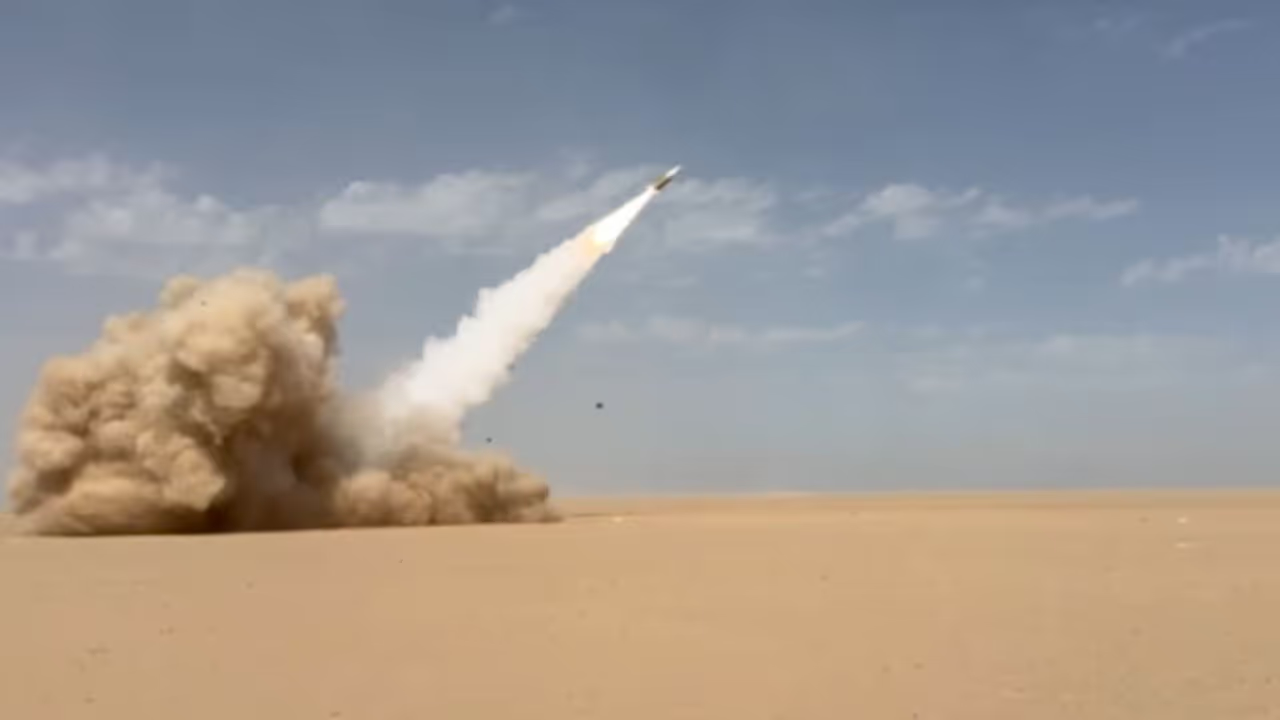
The use of long‑range Precision Strike Missiles (PrSMs) in combat for the first time has added a new dimension to the rapidly escalating war involving Iran, the United States and Israel. As the conflict enters its fifth day, developments across the region—from the Strait of Hormuz to Sri Lanka’s coast—are underscoring how quickly the situation is evolving.

PrSMs Debut in Combat During Operation Epic Fury
In what officials described as a historic first, long‑range Precision Strike Missiles (PrSMs) were deployed during Operation Epic Fury, marking their first known use in real combat conditions. The missiles are designed to strike targets deep inside enemy territory with high precision, significantly expanding the reach of modern battlefield operations.
“I just could not be prouder of our men and women in uniform leveraging innovation to create dilemmas for the enemy.” – Adm. Brad Cooper, CENTCOM Commander.
Related Articles

Military analysts say the deployment signals a shift toward deeper, faster strikes aimed at disrupting command structures, missile infrastructure and logistics far from the frontline.
Oil Traffic Through Hormuz Plunges
The broader war has already begun affecting global energy flows. Oil tanker traffic through the Strait of Hormuz has dropped dramatically—by around 90 percent—according to energy market intelligence firm Kpler.
Iranian forces claim they now have “complete control” of the strategic waterway, a major artery for global oil and gas supplies. The claim came after US President Donald Trump said the US Navy was prepared to escort oil tankers through the channel if necessary.
Bodies Recovered After Iranian Warship Sinks
Meanwhile, the human toll of the conflict is becoming clearer after an Iranian warship was sunk off Sri Lanka’s coast.
“We have collected 87 bodies, and a search is still on for the others who are still missing,” a Sri Lankan navy official told AFP.
Authorities say 32 survivors have been accounted for, while 61 sailors remain missing after the frigate IRIS Dena sank following what officials say was likely a US torpedo strike.
Meanwhile, the US Central Command confirmed: “US forces have struck or sunk to the bottom of the ocean more than 20 ships from the Iranian regime. Last night, CENTCOM added a Soleimani-class warship to the list.”
Israel Plans Weeks of Additional Strikes
The conflict shows no immediate signs of slowing down. According to reports, Israel’s military is preparing for at least one or two more weeks of operations targeting Iranian infrastructure and military sites.
The Times of Israel reported that the military aims to strike “thousands” of additional targets across Iran during the next phase of the campaign. Explosions were reported again in parts of Tehran as fresh waves of strikes began.
Funeral for Ali Khamenei Postponed
In another significant development, the funeral of Iran’s supreme leader Ali Khamenei—initially scheduled for Wednesday evening—has been postponed.
State television said the delay was due to expectations of an “unprecedented turnout.” Authorities also confirmed that deliberations are ongoing over who will succeed Khamenei.
Rising Casualties Reported in Iran
Iran’s official IRNA news agency reported that US‑Israeli strikes have killed 1,045 people since the war began, including military personnel and civilians. However, the figure has not been independently verified.
The war’s ripple effects are now being felt across multiple countries:
Israel launched strikes in southern Lebanon after ordering evacuations south of the Litani River as it expanded operations against Hezbollah.
Air raid sirens sounded in Jerusalem after Iran launched missile barrages that Israel says were intercepted.
NATO defense systems intercepted a missile heading toward Turkey, prompting a warning from Ankara about the risk of a wider regional conflict.
Iran’s Revolutionary Guards said they struck armed opposition groups in Iraq’s autonomous Kurdish region.
The UAE reported intercepting three missiles and 121 drones, while Qatar said it shot down 10 drones and two missiles.
The geopolitical fallout is also intensifying beyond the battlefield. Spain’s Prime Minister Pedro Sanchez publicly opposed the war after Washington threatened to cut trade ties with Madrid for refusing to allow US aircraft to use Spanish bases for strikes on Iran.
Financial markets, which initially reacted sharply to rising oil prices and the threat to shipping routes, showed some signs of stabilisation in Europe after heavy losses earlier in Asia.
(With inputs from AFP)