
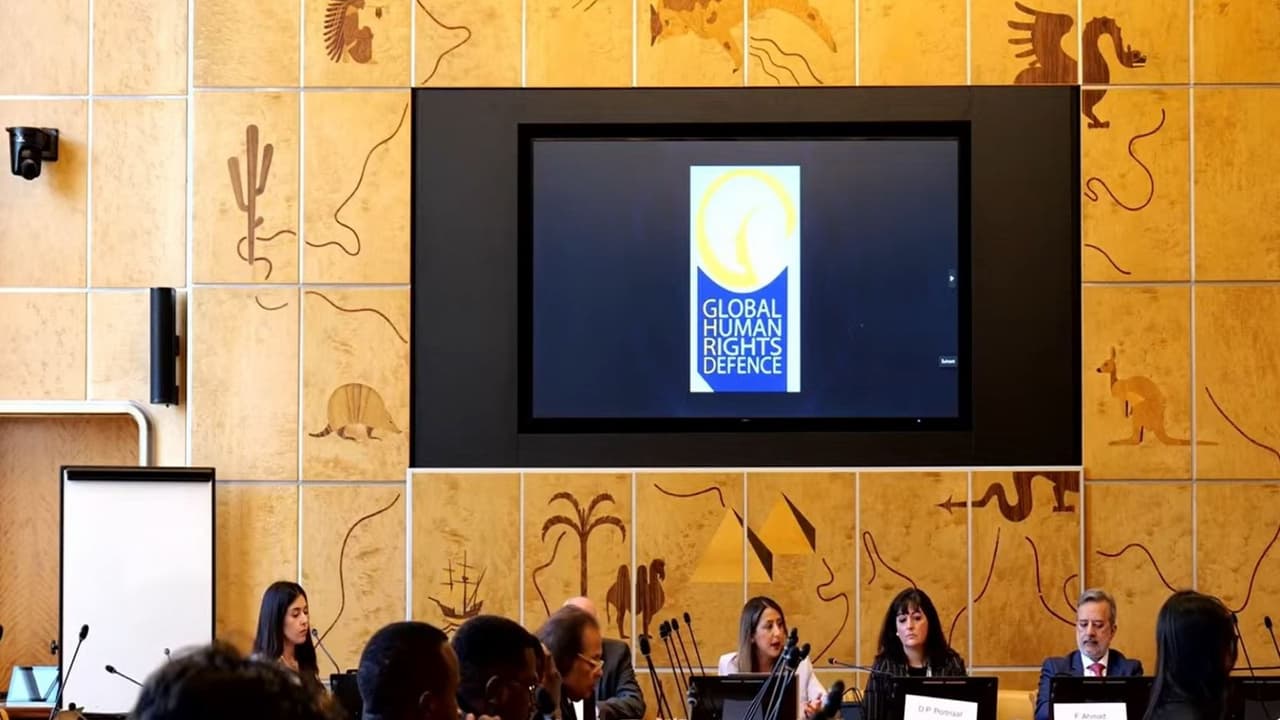
A UNHRC side event hosted by GHRD highlighted the use of blasphemy laws to persecute minorities in Asia. The session discussed the severe human rights implications and called for reforms to align religious laws with international standards.
A high-level side event, titled "Blasphemy Laws and the Persecution of Minorities in Asia: Human Rights Implications and Paths Forward", was convened at the Palais des Nations during the 61st United Nations Human Rights Council (UNHRC) session on Friday. Organised by Global Human Rights Defence (GHRD), the session addressed the increasing use of blasphemy provisions to target religious, ethnic, and belief-based minorities across Asia.

Minorities Targeted Across Asia
The event highlighted that while international law protects freedom of thought and expression, blasphemy provisions frequently contradict these guarantees, often carrying penalties as severe as the death sentence. Key communities identified as particularly affected include Christians, Hindus, and Ahmadis in Pakistan, the Baha'i community in Iran, and women and girls in Afghanistan.
Expert Urges Action and Research
Speaking at the session, Dina Perla Portnaar, Author, Speaker, and Humanist, shared insights from her long-time research on these legal frameworks. Acknowledging the importance of addressing these issues, Portnaar stated, "I truly value this initiative; it has been, among many depressing developments in use, one of the good things for people." She expressed her gratitude to the council, saying, "I would really like to thank the National Human Rights Council for this opportunity."
Legislative Scrutiny and Global Research
Portnaar emphasised the need to scrutinise the entire legislative lifecycle, asking, "When do you question the approach, meaning the process from design to implementation and so on?" Addressing the global nature of the crisis, she noted, "This is also what needs research from other countries; this involves everyone."
Mechanisms for Survivor Support
Discussing the mechanics of support, she asked, "What is this initiative?" and defined it as a "means of providing survivors accessible information about mechanisms, processes, and rehabilitation." Portnaar further advocated for "inclusive channels" to empower victims, stressing the need for platforms "for them to provide input without raising unrealistic expectations."
A Call for Reform
The event concluded with a call for UN engagement and state-level reforms to align religious laws with international human rights standards.
(Except for the headline, this story has not been edited by Asianet Newsable English staff and is published from a syndicated feed.)