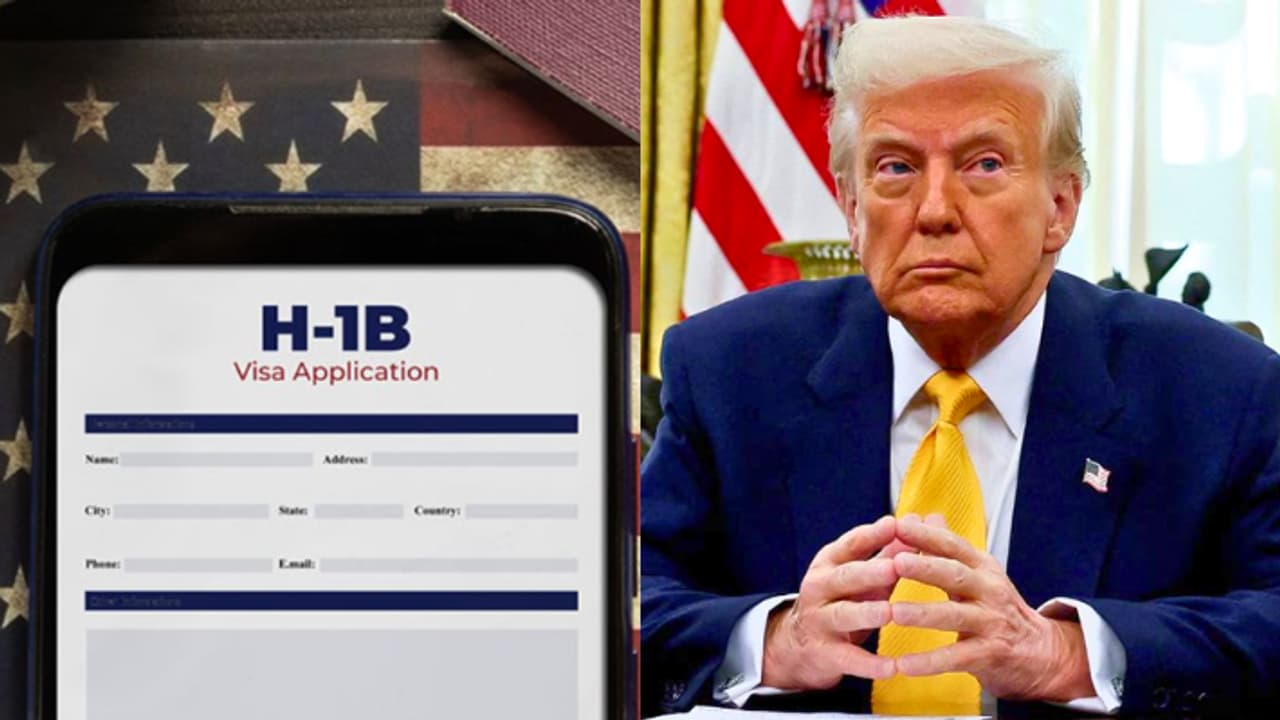
Trump's proposed $100,000 H-1B visa fee could heavily impact Indian IT firms like TCS, Infosys and Cognizant. The cost would apply mainly to overseas hires. Analysts expect fewer visa applications, more offshore hiring and major recruitment changes.
US President Donald Trump's renewed crackdown on immigration, especially on the H-1B visa programme, is expected to have a serious impact on Indian IT companies such as Tata Consultancy Services (TCS), Infosys and Cognizant. At the centre of the concern is a proposed $100,000 fee for fresh H-1B workers recruited from outside the United States.

Analysts say this single move could cost these companies hundreds of millions of dollars and force major changes in how they hire staff and deliver services to US clients.
What is the proposed $100,000 H-1B fee
Under the proposal, companies would need to pay a fee of $100,000 for each new H-1B worker hired from abroad. This applies mainly to workers who need to attend US consulates overseas for visa approval.
Related Articles

This fee would be the toughest restriction placed so far on the hiring of skilled foreign workers under the Trump administration. The aim, according to officials, is to reduce reliance on foreign labour and encourage companies to hire more American workers.
Why Indian IT firms are most affected
A Bloomberg News analysis shows that Indian IT outsourcing and staffing companies rely heavily on overseas H-1B hires. Firms like TCS, Infosys and Cognizant often bring skilled workers from India to serve US clients.
Between May 2020 and May 2024, about 90% of new H-1B approvals for these companies were for workers recruited from outside the US. This means the proposed fee would apply to most of their new visa hires.
International staffing firms that act as intermediaries for US companies would also be hit hard by the change.
The scale of the financial impact
The numbers highlight how large the impact could be. According to the Bloomberg analysis:
Infosys would have paid the $100,000 fee for more than 10,400 workers. This accounts for over 93% of its new H-1B approvals in the period studied. The total cost could have crossed one billion dollars. TCS would have paid the fee for around 6,500 workers, covering 82% of its new H-1B approvals.
Cognizant would have faced charges for more than 5,600 workers, making up 89% of its new H-1B hires.
Such costs could significantly affect profit margins and long-term business planning.
How the H-1B programme works
The H-1B visa programme allows foreign professionals with at least a bachelor’s degree to work in the US. It has long been the main entry route for skilled workers in fields like technology and engineering.
Each year, only 85,000 H-1B visas are available. Large technology and IT services firms usually secure a large share of these visas.
Critics from both major US political parties argue that some companies use the programme to avoid hiring American workers at higher wages. However, H-1B rules require companies to pay industry-standard wages. In many cases, even entry-level H-1B workers earn more than the US median salary.
What the data shows about overseas hiring
Bloomberg’s data analysis found that more than 40% of new H-1B approvals over the past four years went to workers applying from abroad, not to international students already studying in the US.
This explains why the proposed fee would hit outsourcing firms harder than US-based technology companies that hire more local graduates.
Expected changes in hiring strategy
Experts believe companies will respond by cutting back on H-1B applications and hiring more staff outside the US.
Immigration lawyer Jonathan Wasden, who advises many IT employers, said companies are already changing course. He warned that truly exceptional talent overseas could miss out on US opportunities due to the high cost.
Analysts expect more work to be shifted offshore, especially to India, where many skilled professionals are based.
Industry response and legal challenges
Some companies say the immediate impact may be limited. A Cognizant spokesperson said the firm has already reduced its dependence on visas and now uses them only for select technology roles that support its US workforce.
Infosys pointed to earlier comments by CEO Salil Parekh, who said the company needs limited visa sponsorship for US staff and can continue serving clients without disruption.
IBM, which hired 88% of its H-1B workers from abroad, said it has adjusted its immigration strategy to ensure it has the right skills to meet client needs.
Meanwhile, the US Chamber of Commerce and several US states have filed legal challenges against the proposed fee. A court hearing is expected to decide whether the fee will be paused or allowed to proceed.
Why the fee was introduced now
IT firms previously benefited from an online H-1B lottery system introduced in 2020. This allowed companies to register workers at very low cost, leading to a surge in applications.
By fiscal year 2024, registrations rose to 758,000 eligible entries. US officials later said some IT consultancies had manipulated the system. This led to changes in the lottery rules.
White House spokesperson Taylor Rogers said the new fee would stop companies from 'spamming the system' and help protect American wages.
What comes next for the H-1B programme
Market experts say the impact will become clearer in the next visa lottery. Ron Hira, a political scientist who has criticised the H-1B system, said the key question is whether the new rules lead to higher-skilled and higher-paid hires.
Legal technology firm Lawfully estimates that next year’s H-1B lottery entries could drop by 30% to 50%. Companies are expected to avoid registering workers who need overseas visa processing until there is clarity on the fee.
For Indian IT firms, the message is clear. The era of low-cost access to US visas is ending. Companies will need to adapt by investing more in offshore teams, local US hiring, and new delivery models to stay competitive.