
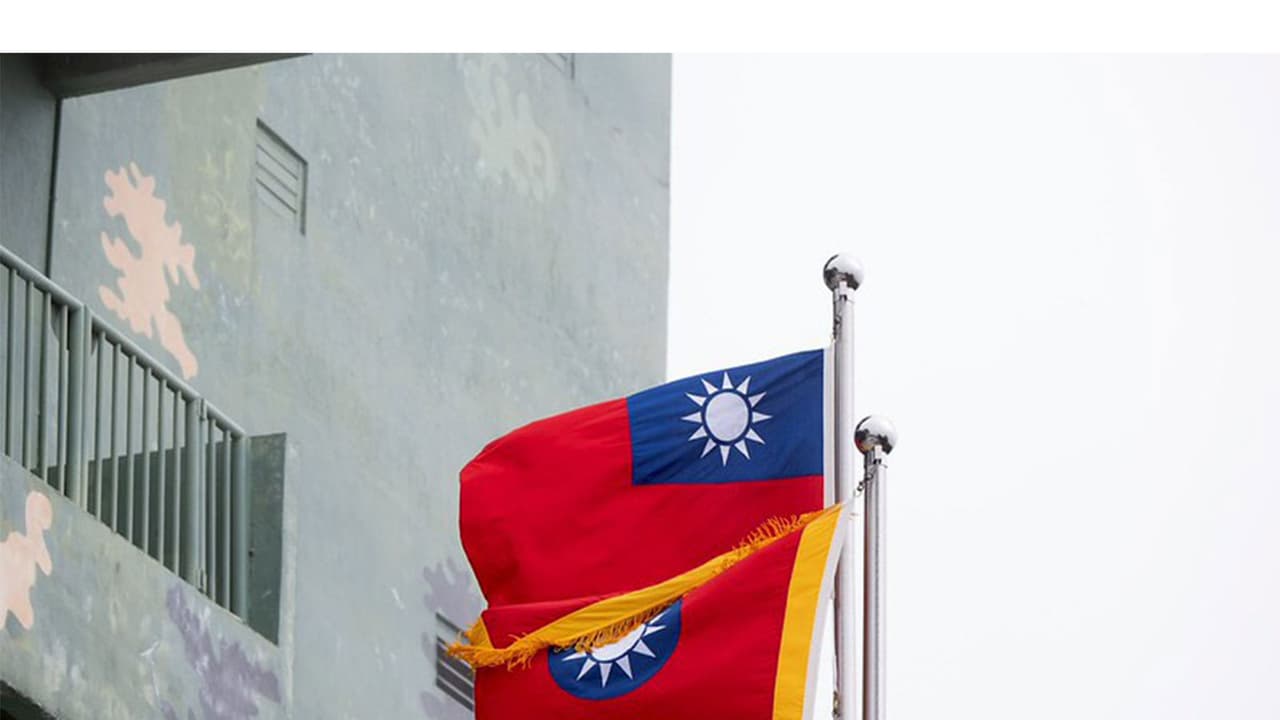
Taiwan's Foreign Minister Lin Chia-lung urged democratic nations to treat the First Island Chain as a unified strategic front. He called for a coordinated 'democratic shield' to deter rising authoritarian aggression from China.
Taiwan's Foreign Minister Lin Chia-lung, highlighting what he described as rising authoritarian aggression from China, has urged democratic nations to rethink their regional security approach by treating the First Island Chain as a unified strategic front and building a coordinated deterrence system, as reported by The Taipei Times.

According to The Taipei Times, speaking at the "Shield of Democracy: The First Island Chain Social Resilience Cooperation Forum" in Taipei, Lin emphasised that the region stretching across the Taiwan Strait, East and South China seas, and key maritime passages should no longer be seen as fragmented zones. Instead, he said it now represents a single, critical frontline in the defence of global democratic values. The forum, organised by the Formosa Republican Association along with Taiwan's Ministry of Foreign Affairs' Drone Diplomacy Task Force, focused on strengthening cooperation among regional democracies, including Taiwan, Japan, South Korea, the Philippines, and the United States.
A 'Collective Democratic Shield'
Lin argued that China's actions, ranging from military intimidation and economic coercion to disinformation campaigns, are not isolated but part of a broader, coordinated strategy. In response, he called for a "collective democratic shield" that integrates surveillance, joint operations, and shared resilience mechanisms.
The Role of Technology and Integrated Systems
He highlighted the importance of uncrewed systems such as drones, describing them as essential tools for both defence and civilian governance. These technologies, he said, can support maritime security, disaster response, infrastructure monitoring, and logistics, thereby strengthening preparedness in both peace and conflict scenarios.
Beyond hardware, Lin stated that robust supply chains and integrated systems linking research, production, training, and deployment are vital to ensuring effective deterrence, as highlighted by The Taipei Times. Without such coordination, even advanced military capabilities could falter in times of crisis.
Deterrence as a Path to Sustainable Peace
Lin clarified that the initiative's goal is to prevent war by demonstrating credible defensive strength, not to provoke conflict. "Sustainable peace depends on deterrence," he noted, adding that stability is more likely when authoritarian regimes recognise the limits of their ambitions, as reported by The Taipei Times. (ANI)
(Except for the headline, this story has not been edited by Asianet Newsable English staff and is published from a syndicated feed.)