
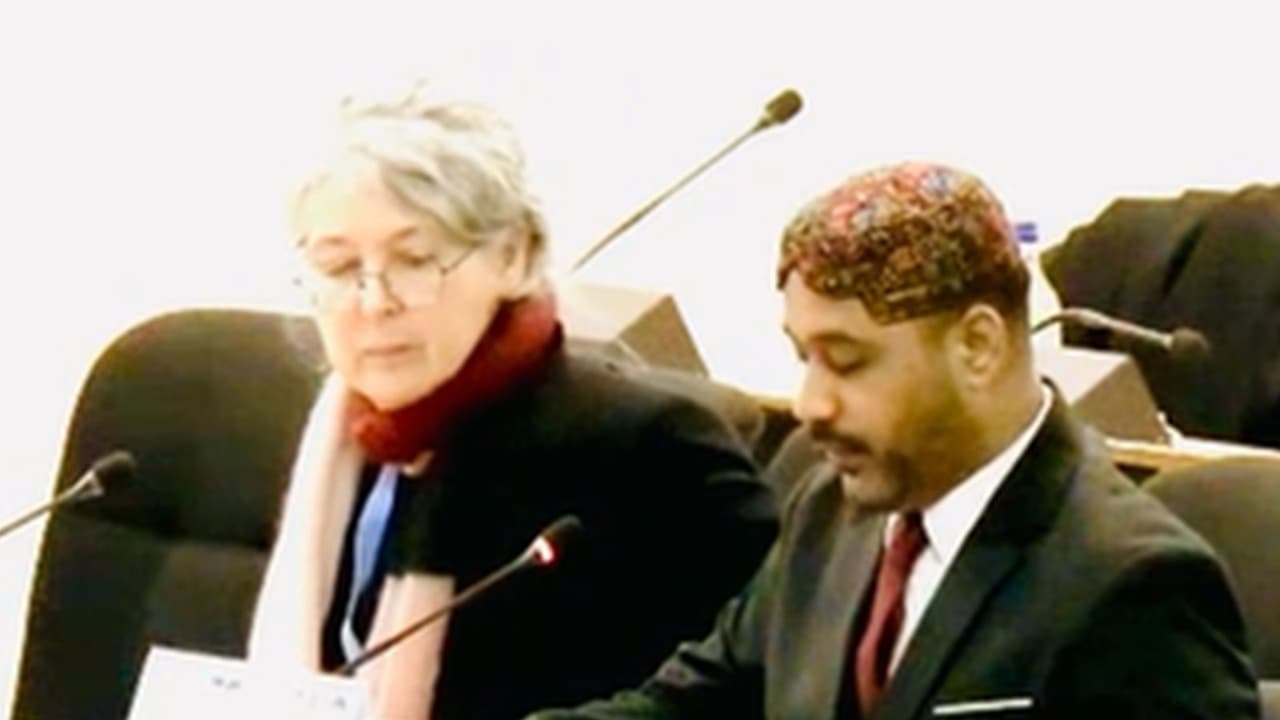
At the UNHRC, JSFM chairman Sohail Abro criticized Pakistan's human rights record, alleging suppression of Sindhi activists. He demanded a UN-supervised referendum for Sindh's self-determination, citing disappearances and killings.
At the 61st session of the United Nations Human Rights Council (UNHRC), Sohail Abro, chairman of the Jeay Sindh Freedom Movement, in his oral statement, strongly criticised Pakistan's human rights record and called for a United Nations-supervised referendum on Sindh's political future He urged the international community to recognise what he described as the Sindhi nation's right to self-determination.

Allegations of Political Repression
Abro alleged that Pakistan has systematically suppressed Sindhi political activism through enforced disappearances, extrajudicial killings, and political intimidation. Abro claimed that several Sindhi political figures have been victims of extrajudicial killings over the years. He cited the deaths of prominent activists, including Bashir Khan Qureshi, Shafi Muhammad Karnani, and Muzaffar Bhutto, stating that their cases symbolise what he described as a wider pattern of repression against nationalist voices in Sindh.
Enforced Disappearances and Missing Persons
The activist further alleged that more than one hundred Sindhi political workers remain missing. Among those he named were Talib Laghari, Ayub Kandhro, and Ejaz Gaho. According to Abro, enforced disappearances have persisted for decades in the province, with more than 3,500 individuals reportedly disappearing at different times during the past twenty-five years.
Broader Ethnic Grievances in Pakistan
During his remarks, Abro also linked the Sindhi issue to grievances voiced by other ethnic groups within Pakistan. He said that communities, including the Baloch, Pashtun, Seraiki, Gilgiti, and Kashmiri peoples, are facing similar challenges. He referenced the case of the father of BNM Chairman Dr Naseem Baloch, who he said remains missing. He also mentioned that Baloch activist Dr Mahrang Baloch is currently imprisoned, while Pashtun leader Ali Wazir is under detention, and PTM leader Manzoor Pashteen has faced legal pressure.
Economic and Environmental Concerns
In addition to political concerns, Abro raised issues related to economic and environmental grievances in Sindh. He alleged that water diversion projects affecting the Indus River threaten the region's resources and warned about what he called demographic engineering through mass settlement and land occupation.
Appeal for UN-Supervised Referendum
Concluding his address, Abro appealed to the United Nations Human Rights Council to facilitate a peaceful and democratic referendum in Sindh. He proposed that the vote be conducted among residents whose families moved to Sindh before 1954 so that the Sindhi people could determine their political future in accordance with international law.
(Except for the headline, this story has not been edited by Asianet Newsable English staff and is published from a syndicated feed.)