
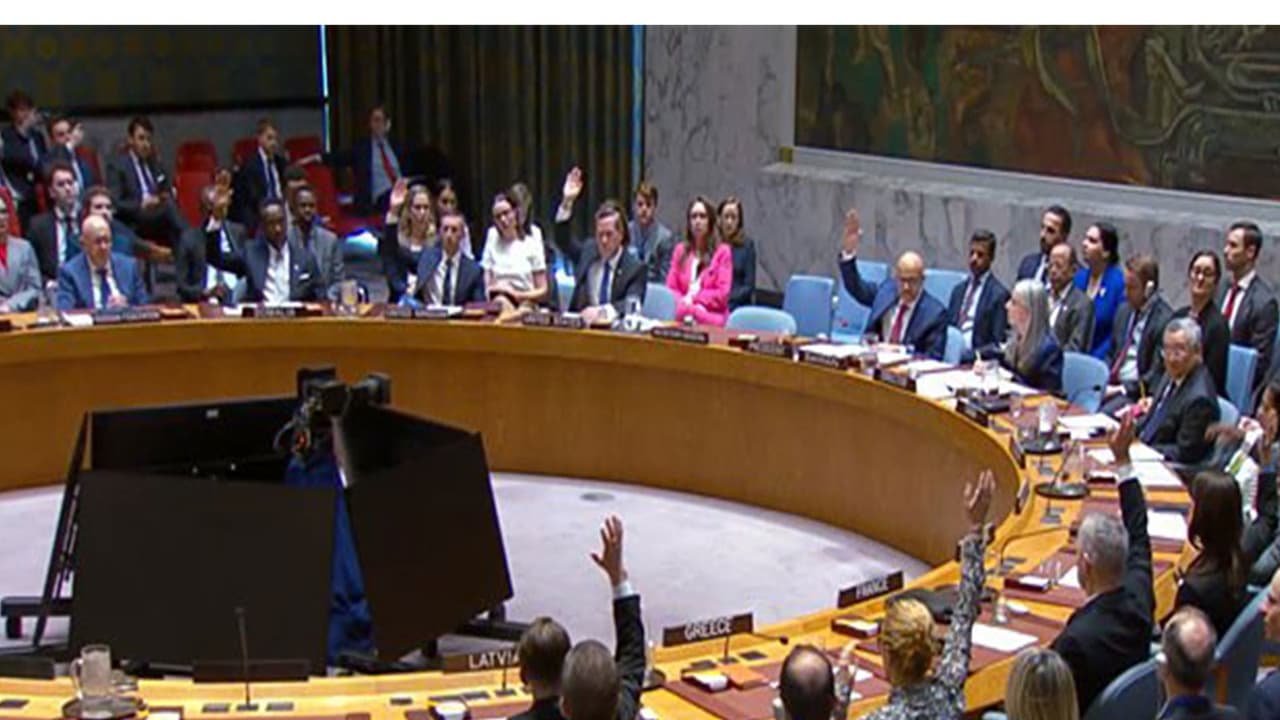
Russia and China have vetoed a Bahrain-backed UN Security Council resolution aimed at reopening the Strait of Hormuz. The resolution, which demanded Iran cease all attacks on commercial vessels, failed despite receiving 11 votes in favour.
Russia and China vetoed a Bahrain-backed UN resolution aimed at reopening the Strait of Hormuz. A resolution that was already diluted to secure their abstentions. The 15-member council saw 11 votes in favour, two against (China and Russia), and Pakistan and Colombia abstained from voting.

The resolution demanded Iran immediately cease all attacks against merchant and commercial vessels and any attempt to impede transit passage or freedom of navigation in the Strait and further calls for the cessation of attacks against civilian infrastructure, including water infrastructure and desalination plants, as well as oil and gas installations. The draft text was proposed by Bahrain in close coordination with fellow Gulf Cooperation Council members Kuwait, Oman, Qatar, Saudi Arabia and the United Arab Emirates, as well as with Jordan.
Diplomatic Fallout and Reactions
After the resolution was blocked, Abdullatif bin Rashid Al Zayani, Minister for Foreign Affairs of Bahrain, expressed regret that the Council failed to adopt the draft resolution. "Failing to adopt this resolution sends the wrong signal to the world, the people of the world -- a signal that threats to international waterways can pass without any decisive action by the international community," he said.
Russia said that the resolution constituted a "fundamentally erroneous and dangerous approach" to the situation in the region. Ambassador Vassily Nebenzia of the Russian Federation objected to the "no mention" of "illegal attacks" by the US and Israel on Iran.
China said that the draft resolution "failed to capture the root causes and the full picture of the conflict in a comprehensive and balanced manner". "The Security Council should not rush to vote on a draft resolution when serious concerns have been raised by members," Ambassador Fu Cong of China said.
US said that it stands with the people of the Gulf; by contrast, China and the Russian Federation "sided with a regime that seeks to intimidate the Gulf into submission". "The Strait of Hormuz is too vital to the world to be used as a hostage, to be choked, to be weaponised by any one State," said Ambassador Michael Waltz of the United States.
Trump's Statements Escalate Tensions
This comes after US President Donald Trump issued a series of provocative statements on his Truth Social platform, suggesting a monumental shift in the geopolitical landscape. In those posts, he warned of potential unprecedented destruction while simultaneously hinting at a transition of power within Iran.
"A whole civilisation will die tonight, never to be brought back again. I don't want that to happen, but it probably will," Trump wrote, reflecting the gravity of the ongoing military standoff amidst reports of US strikes on Kharg Island and other strategic Iranian infrastructure. The President ended his message with a note of support for the Iranian populace, writing, "God Bless the Great People of Iran!" as the world awaits the outcome of the 8:00 PM Eastern Time deadline. (ANI)
(Except for the headline, this story has not been edited by Asianet Newsable English staff and is published from a syndicated feed.)