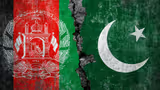
Pakistan-Afghanistan tensions have escalated into “open war” after deadly cross-border attacks. Pakistan launched a major offensive, including airstrikes on Afghan cities, targeting militant groups it says are sheltered in Afghanistan.
Tensions between Pakistan and Afghanistan have dramatically escalated into what Pakistani officials are calling an “open war,” following a series of deadly cross-border attacks, retaliatory airstrikes, and mounting casualties on both sides. The latest developments mark one of the most serious confrontations between the two neighbours since the Taliban regained power in Kabul in 2021.

The crisis intensified after Afghanistan’s Taliban-led forces reportedly launched large-scale cross-border assaults targeting Pakistani military installations along the disputed Durand Line. Afghan officials claimed their forces killed at least 55 Pakistani soldiers and captured several military posts in retaliation for earlier Pakistani airstrikes inside Afghan territory.
In response, Pakistan launched a major military offensive named Operation Ghazab Lil Haq (translated as “Righteous Fury”), aimed at countering what it described as “unprovoked aggression” by Afghan forces. Islamabad stated that its counterattacks killed dozens of Taliban fighters, destroyed multiple border posts, and captured key positions and ammunition depots.
Related Articles

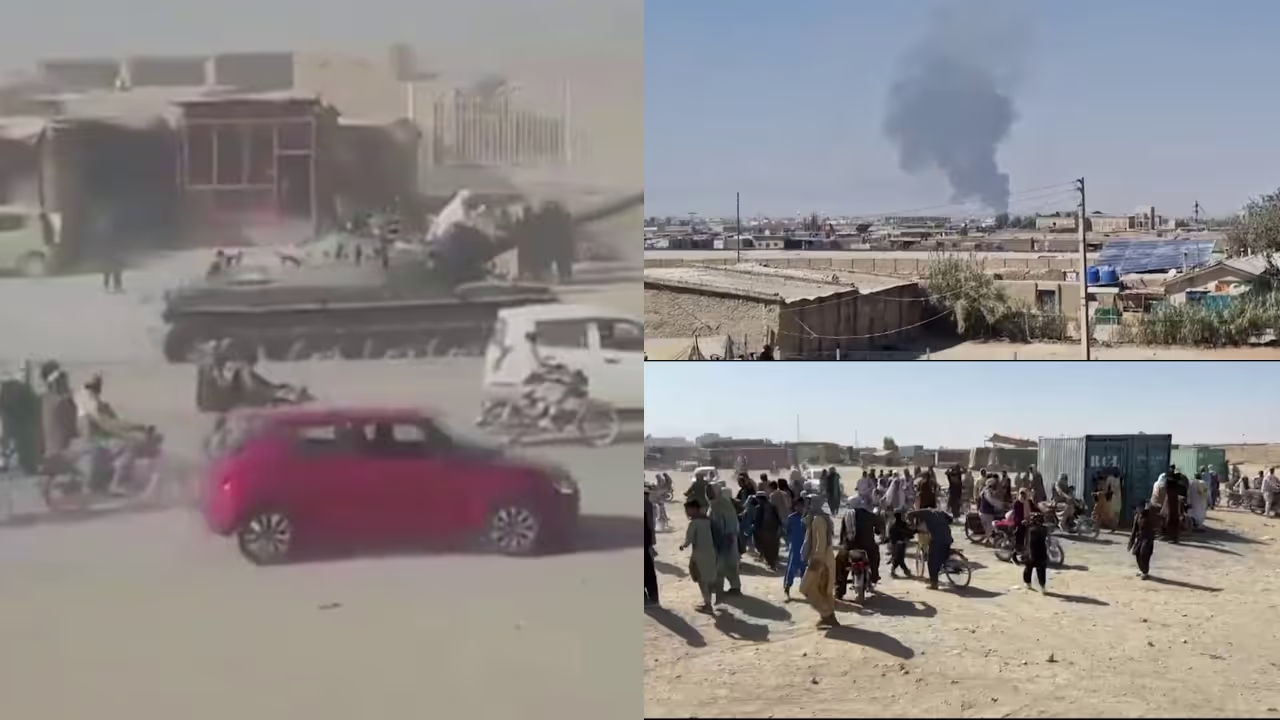
The situation escalated further when Pakistan carried out airstrikes targeting key Afghan cities, including Kabul, Kandahar, and Paktia. Explosions were reported in Kabul, with Afghan authorities condemning the strikes as violations of sovereignty and accusing Pakistan of targeting civilian areas.
Pakistan, however, has defended its actions as necessary retaliation against militant threats. It accuses Afghanistan of harboring groups such as the Tehreek-e-Taliban Pakistan (TTP), which Islamabad blames for a surge in terror attacks within its borders. Afghan authorities have repeatedly denied these allegations, insisting that Pakistan is using military force instead of diplomatic engagement.
The roots of the current conflict lie in weeks of rising hostilities. Earlier in February 2026, Pakistan conducted airstrikes in eastern Afghanistan targeting alleged militant camps linked to the TTP and Islamic State affiliates. While Pakistan claimed to have eliminated dozens of militants, Afghan officials said the strikes killed civilians, including women and children, further fueling anger in Kabul.
Subsequent border clashes saw repeated exchanges of fire, with both sides accusing each other of initiating violence. Pakistan reported “unprovoked firing” from Afghan Taliban forces, while Afghanistan maintained it was responding to Pakistani aggression.
The rhetoric has now intensified sharply. Pakistan’s Defence Minister Khawaja Asif publicly declared the situation as an “open war,” signaling a shift from limited skirmishes to a broader military confrontation.
The ongoing violence has also had a severe humanitarian impact. Civilians have been caught in the crossfire, with injuries reported in border areas and refugee camps. Evacuations have taken place near key crossings such as Torkham, while international organisations, including the United Nations, have urged both countries to exercise restraint and return to dialogue.
This latest escalation reflects deeper, long-standing tensions between Islamabad and Kabul. Pakistan has consistently demanded that Afghanistan prevent militant groups from operating on its soil, while Afghanistan accuses Pakistan of violating its sovereignty through repeated airstrikes. The lack of trust and failure of past ceasefire agreements have further worsened the situation.
As military operations continue and both sides trade heavy accusations, fears are growing that the conflict could spiral into a prolonged regional crisis. With neither side showing signs of backing down, the Pakistan-Afghanistan border remains one of the most volatile flashpoints in South Asia today.