
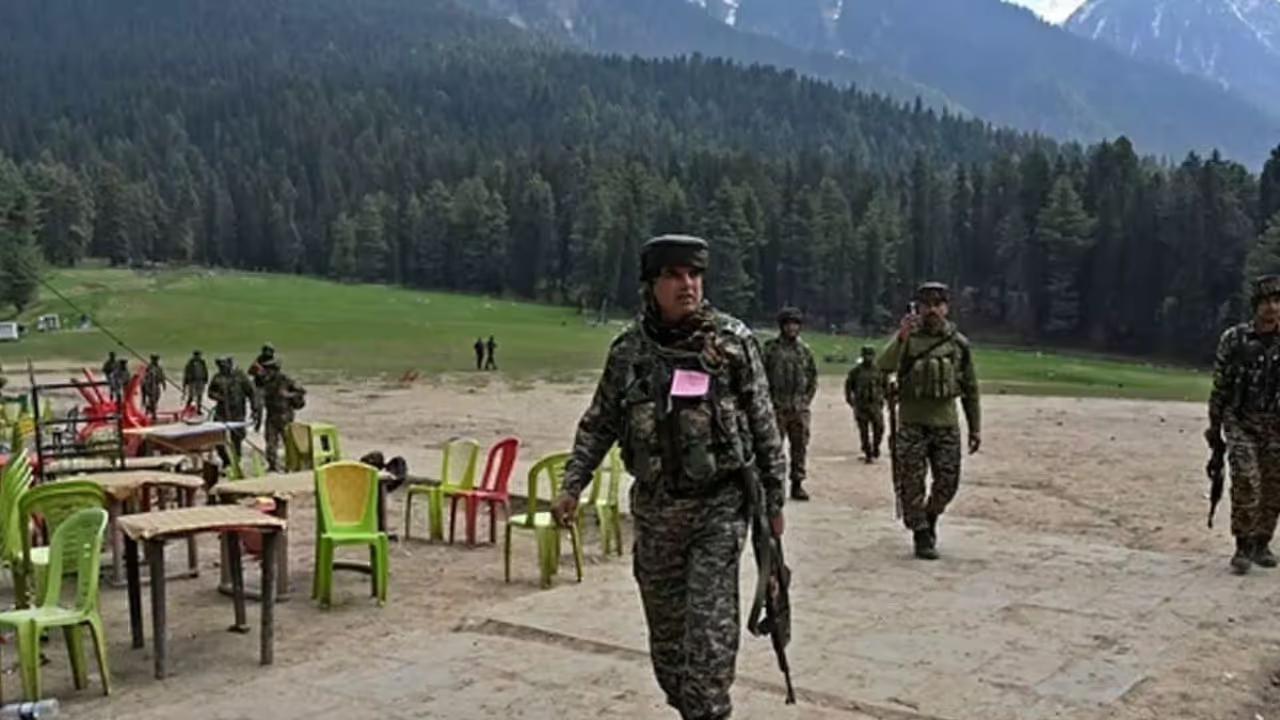
Defence expert Hemant Mahajan says India's strong military response to the Pahalgam attack was successful, but Pakistan persists with terrorism as a low-cost strategic tool, necessitating a sustained comprehensive strategy from India.
A year after the April 22, 2025, Pahalgam terror attack, defence expert Hemant Mahajan has said that India's strong military response delivered results, but Pakistan continues to depend on terrorism as a strategic tool.

India's Swift and Decisive Military Response
Reviewing the developments, Mahajan said India reacted swiftly, launching a multi-domain offensive that targeted terror infrastructure across the border. "India reacted in a very fast manner and launched a multi-domain war," he said, adding that several terror camps were destroyed and heavy militant casualties were inflicted. He noted that Pakistan's attempts to shield these camps failed, while its retaliatory strikes on Indian airfields were effectively neutralised. "India's subsequent strikes on Pakistani airbases caused significant damage," he added.
Mahajan highlighted that India's decision to end operations after achieving its objectives reflected strategic clarity. "We ensured that our aim of the war was very clear and went in for conflict termination after achieving objectives," he said, contrasting it with prolonged global conflicts lacking exit strategies.
Pakistan's Continued Reliance on Terrorism
Despite the success, he raised concerns over the lack of meaningful international pressure on Pakistan. While global reactions condemned the attack, he described them as largely symbolic.
He also stressed that cross-border terrorism in Jammu and Kashmir persists because it remains a "low-cost, high-impact strategy" for Pakistan, despite strong counter-infiltration measures by Indian forces.
Future Strategy and Diplomatic Challenges
On diplomacy, Mahajan said India has made its case globally but cautioned that it has limits when dealing with countries like Pakistan. "Diplomacy is effective to an extent, but there are limitations," he stated.
Looking ahead, he called for a sustained and comprehensive strategy using all instruments of national power, military, economic, and covert, to counter Pakistan's support for terrorism.
He also pointed to Pakistan's internal instability, including unrest and economic stress, but warned that these challenges alone may not deter its current approach.
(Except for the headline, this story has not been edited by Asianet Newsable English staff and is published from a syndicated feed.)