
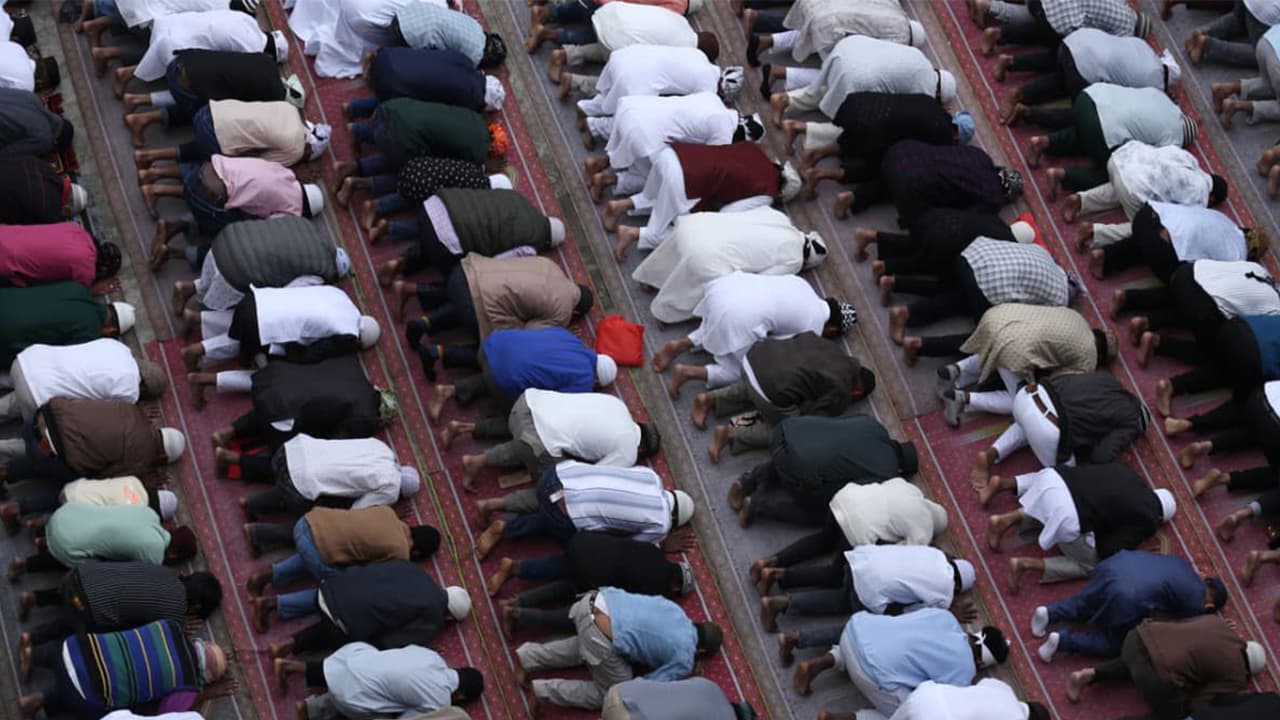
Muslims in Nepal celebrated Eid-Al-Fitr with mass prayers at Kathmandu's Jame Mosque, marking the end of Ramadan. The festivities included exchanging greetings, feasting on sweets, and reinforcing values of charity and community.
Hundreds of followers of Islam gathered in Nepal on Saturday morning at the Jame Mosque as they mark Eid-Al-Fitr, as they end a month-long fast of Ramadan.

After offering special prayers, the attendees exchanged blessings with each other. There is a tradition of eating and serving special sweet dishes on this occasion.
Celebrations and Personal Accounts
"We underwent thirty days long Roza, on the day of Eid, we gather for the mass Namaz," Rihan, one of the attendees told ANI.
"After the Namaz, we meet with friends and relatives, hug each other and exchange wishes. We also feast on the sweets at home," Rihan added.
"After the Namaz of Eid, we exchange greetings with each other. After this, we have various delicacies and sweets prepared at home. Today, it's 'Mithi Eid' that's why sweets are preferred more," Sohail, another Namaz attendee, told ANI.
The Spirit and Meaning of Eid
Eid, celebrated after the discipline of fasting (Roza), self-restraint, and devotionally performed prayer rituals, is a symbol of spiritual purity and elevation.
The festival teaches people the lessons of restraint, patience, and self-control.
The 'Iftar' and collective prayers organised on this occasion strengthen the spirit of unity and coexistence in the nation and community.
The tradition of charity and assistance fosters compassion and sympathy towards the helpless, the poor, and those in need of support.
The tradition of saying 'Chand Mubarak' or 'Eid Mubarak' upon sighting the Eid moon is not just a greeting but an inspiring custom expressing mutual harmony and brotherhood.
Eid-ul-Fitr is not only a religious festival but also a symbol of social harmony and cultural solidarity. The unique tradition of wearing new clothes, offering prayers, and embracing each other to exchange greetings further strengthens social bonds.
A Symbol of Harmony and Social Values
The custom of preparing and sharing special dishes help keep alive the tradition of sharing collective happiness, while the practice of charity and assistance helps make society just and compassionate.
This festival aims to embrace the values of fraternity, reconciliation, and collectivism.
The fundamental purpose of religion is humanity. No religion accepts discrimination; rather, it encourages sacrifice, purity, non-violence, public welfare, wisdom, and good deeds.
Religion inspires people to be honest, industrious, and dutiful. Faith in religion provides people with patience and courage during adversity.
Harmony, good conduct, and coordination are the pillars for building a civilised society. In this view, Eid-ul-Fitr motivates us to move forward not only in religious faith but also on the path of social justice, equality, and coexistence.
Historical Context and Practices
On the occasion, the government announced a public holiday for Saturday, today, the Home Ministry stated.
Eid-Al-Fitr- Arabic for "the feast of the breaking of the fast"- is when the Muslims return to regular eating cycles after undergoing vigorous fasting of one month. On this day, the Muslims typically enjoy a small breakfast ahead of morning prayers and then visit friends and relatives, where a lavish feast is served. Gifts are also exchanged with clothes the most popular presents.
The annual celebration of Eid-ul-Fitr is marked by the Prophet Mohammed in 624 CE following a victory in battle.
After a month of abstaining from food, drink, and other physical needs during daylight hours, Eid marks a time of festivity, where Muslims express their gratitude for the strength and patience shown during Ramadan.
Eid reinforces the values of charity, kindness, and compassion. In addition to giving Zakat, many people choose to help others by providing meals, clothing, and support to those less fortunate, reflecting the Islamic principles of empathy and care for others.
Eid-ul-Fitr, a major Islamic festival, holds deep significance in promoting love, charity, social solidarity, and spiritual devotion. The tradition of fostering stronger bonds between communities has made this celebration even more meaningful. (ANI)
(Except for the headline, this story has not been edited by Asianet Newsable English staff and is published from a syndicated feed.)