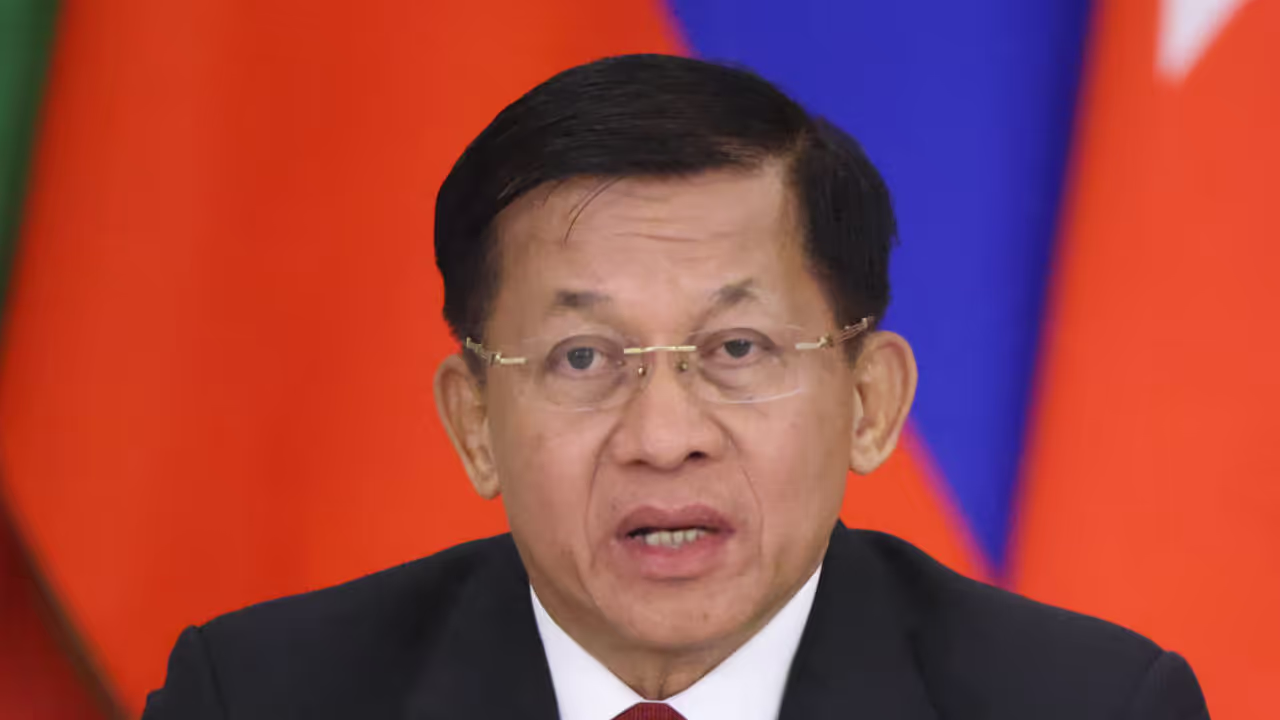
Myanmar junta chief Min Aung Hlaing tightens grip on power, transitioning from military ruler to likely president after a controversial election, despite global condemnation and an ongoing civil war.
Myanmar's Min Aung Hlaing was months from mandatory retirement as a general when he changed strategy, deposed the democratic government and replaced it with a military junta that he headed himself. The bespectacled officer became military chief in 2011, just as Myanmar broke with its history of iron-fisted martial rule and began an experiment with democracy.

He spent a decade jostling with civilian leaders before mounting his coup five years ago, jailing Nobel Peace Prize laureate Aung San Suu Kyi and triggering a vicious civil war that is still being fought.
After a series of co-ordinated moves on Monday -- following a landslide win for pro-military parties in a heavily restricted election overseen by the junta -- he is set to become the country's president, prolonging his rule in civilian garb.
Related Articles

Until now, his official title in state media has been "State Security and Peace Commission Chairman Commander-in-Chief of Defence Services Senior General Thadoe Maha Thray Sithu Thadoe Thiri Thudhamma Min Aung Hlaing".
The 69-year-old was nominated in the lower house of parliament as a candidate for vice-president. Three candidates will be chosen, and one will be elected president. Analysts say his defeat is inconceivable.
A former spymaster dubbed Min Aung Hlaing's "eyes and ears" replaced him as military chief, ensuring a loyal ally at the head of the armed forces.
The developments come after Min Aung Hlaing presided over the country's annual Armed Forces Day parade at the weekend, festooned with his many military and civilian awards.
Tanks, multiple rocket launchers and even mini-submarines on lorries trundled through the streets as the military put on its biggest show of force in years.
The incoming government had been "legitimately elected by the people", he said, and the military would support it "with the aim of strengthening and sustaining the multi-party democracy system".
But the vote was widely condemned. Criticising it was illegal, and, according to the Asian Network for Free Elections, parties that won 90 percent of seats at the last polls in 2020 -- including Suu Kyi's hugely popular National League for Democracy -- were unable to take part after having been dissolved.
In addition, a quarter of the seats in parliament are reserved for the armed forces under a constitution drafted during a previous period of military rule.
Art teacher
Min Aung Hlaing is a member of the Dawei ethnic group, who are often seen as part of Myanmar's Burmese majority but have a distinct cultural identity.
He spent his early childhood in central Myanmar, where his father was head of the arts department at a teacher training college, he told an interviewer in 2020.
He studied law at university before enrolling in officer training school on his third attempt.
Rising through the ranks, he burnished his credentials by leading a campaign against an ethnic rebel insurrection around crucial trade crossings with China.
His predecessor, Than Shwe, ruled Myanmar for nearly two decades, but it was Min Aung Hlaing's rare fate to be a top general under civilian command, albeit with the military still playing a key role in politics.
Even before the coup, Min Aung Hlaing was persona non grata in many countries for commanding a 2017 military crackdown on the Rohingya ethnic minority that drove about 750,000 people into Bangladesh.
He was banned from Facebook for stoking hate speech, heavily sanctioned and the International Criminal Court's chief prosecutor is seeking his arrest for crimes against humanity.
There is no official death toll for Myanmar's civil war, and estimates vary widely.
According to non-profit organisation Armed Conflict Location & Event Data (ACLED), which tallies media reports of violence, as many as 90,000 have been killed on all sides since the coup.
That number almost certainly includes conscripts the military has begun forcibly recruiting to bolster its ranks.
Min Aung Hlaing steadfastly denies allegations of human rights abuses.
(Except for the headline, this story has not been edited by Asianet Newsable English staff and is published from a syndicated feed.)