
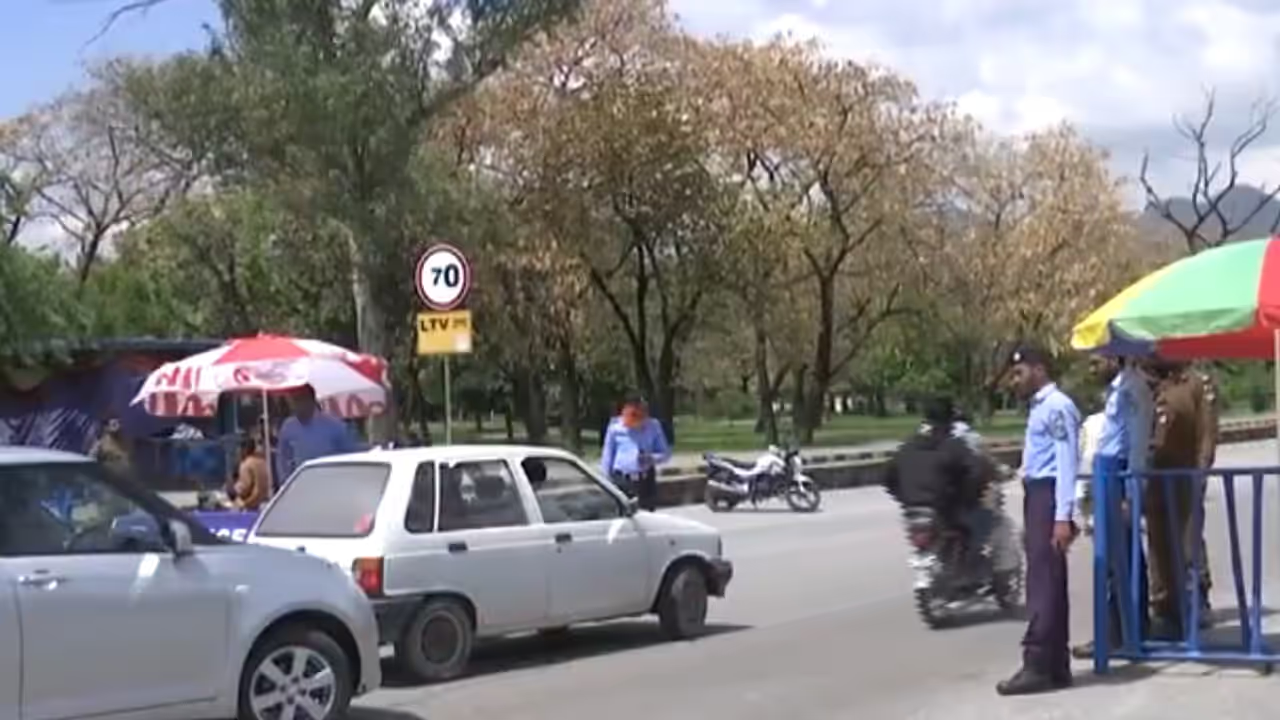
Islamabad is hosting crucial peace talks between the US and Iran, prompting a massive security lockdown that has disrupted the city. Acting as a mediator, Pakistan facilitates the negotiations, which follow a fragile ceasefire and aim to prevent a wider regional war.
Pakistan’s capital Islamabad has been transformed into a high-security fortress ahead of crucial peace talks between the United States and Iran, with sweeping restrictions disrupting daily life across the city. Authorities have imposed strict traffic curbs, shut schools and markets, and declared public holidays to ensure airtight security for the high-stakes negotiations.

The talks come on the back of a fragile two-week ceasefire between Washington and Tehran, following weeks of escalating conflict in the Middle East. Pakistan, which has positioned itself as a key mediator, is hosting the negotiations in a bid to prevent a wider regional war and stabilise global energy markets.
Security arrangements in Islamabad have been unprecedented. Roads leading to the capital’s sensitive “red zone” — housing Parliament, embassies, and key government offices — have been blocked with containers, while checkpoints have been set up across the city. A viral update noted: “Blocked roads leading up to Islamabad’s red zone… as the Pakistani capital gears up to host the U.S. and Iran for peace talks.”
Another on-ground update highlighted the scale of disruption, stating: “Traffic curbs, schools, markets shut: Islamabad turns fortress for US-Iran talks.”
The Pakistani government has also secured its airspace, deploying aircraft and tightening surveillance to ensure the safe arrival of foreign delegations.
Delegations from both countries are expected to arrive amid tight security, with US Vice President JD Vance leading the American side. The negotiations aim to build on the ceasefire and address contentious issues such as the Strait of Hormuz, sanctions, and regional stability.
Despite the heavy security and diplomatic push, uncertainties remain, especially with ongoing tensions involving Israel and Lebanon. The outcome of the Islamabad talks is seen as critical in determining whether the fragile truce can evolve into a lasting peace.
