
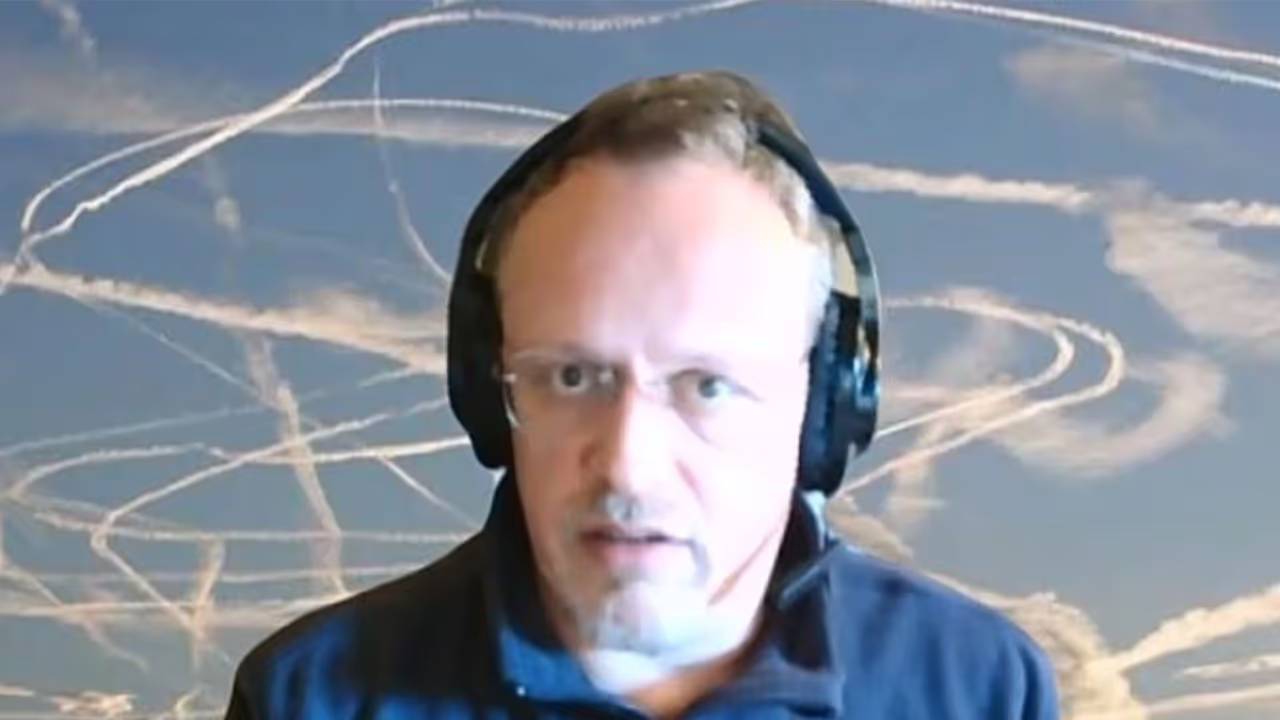
Analyst Tom Cooper says Iran's military has significant redundancy, allowing it to sustain missile launches despite airstrikes. He compares its use of underground bases to Viet Cong guerrilla tactics, suggesting a potential for a prolonged conflict.
Austrian aerial warfare analyst and historian Tom Cooper has said that Iran's continued missile launches despite sustained airstrikes point to significant redundancy and resilience in its military infrastructure, raising the possibility of a prolonged conflict. Responding to a question on whether the situation indicates a shift towards a war of attrition, Cooper said Iran's strategy resembles guerrilla tactics seen in past conflicts.

'Viet Cong' Tactics and Underground Fortresses
"Look, Iranians are fighting like Viet Cong in South Vietnam of the '60s," he said in an interview with ANI. He explained that, much like the extensive tunnel networks used during the Vietnam War, Iran has developed underground systems to sustain its operations. "Nowadays, Iranians are doing that but for their missiles and UAVs. That means they have so many missile bases under the ground," he noted.
Resilience and Redundancy
While such facilities can be identified, destroying them remains a major challenge. "They are obviously easy to find with help of satellite reconnaissance--but penetrating and destroying them has proven next to impossible with usually available means, or the means in hands of Israelis and Americans," Cooper said. He added that even advanced weaponry may not guarantee success. "They could theoretically destroy them using this giant... GBU-57 super bunker-buster... but even that is not certain," he said, pointing to the limited number of such munitions available.
Highlighting the depth of Iran's military preparedness, Cooper stressed the extent of redundancy built into its system. "Iran has... so much built-in redundancy that they can really continue like this for weeks longer," he said.
Background to the Escalation
His remarks follow the significant escalation in West Asia that erupted after the US-Israeli strikes on Iran on February 28, which resulted in the death of Iran's former Supreme Leader Ayatollah Ali Khamenei and senior military figures. This prompted retaliatory drone and missile strikes by Iran against Israel and US assets in the Gulf nations. (ANI)
(Except for the headline, this story has not been edited by Asianet Newsable English staff and is published from a syndicated feed.)