
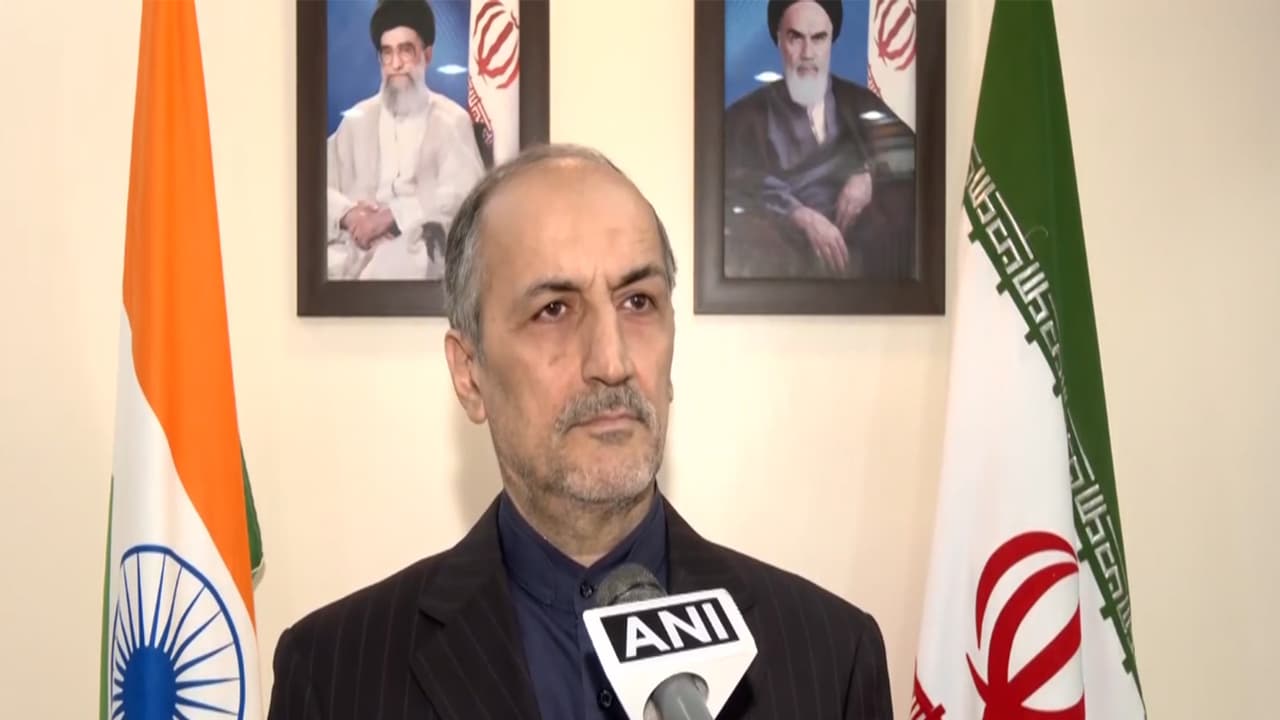
Iran's Consul General in Mumbai, Saeid Reza Mosayeb Motlagh, called on the international community to hold 'war initiators' accountable. He stated Iran acted in self-defence and blamed aggressors for the West Asia conflict and economic crisis.
Hold 'War Initiators' Accountable
Iran's Consul General in Mumbai, Saeid Reza Mosayeb Motlagh, said that the international community should engage in talks with the parties that initiated the war and ask them to cease such acts. Motlagh, while talking to ANI, called upon all countries to make the aggressor act in accordance with the Charter of the United Nations and international law.

"They should play an active role by engaging in dialogue with the party that initiated the war and compel it to cease such actions worldwide. This issue is not limited to Iran. Throughout history, it has been witnessed repeatedly... In the past, they have destroyed whichever country they chose, using harsh measures... Today, however, they are confronted with a nation that stands resolutely in opposition. We therefore call on all countries, in accordance with the Charter of the United Nations and international law, to hold them accountable, compel them to respond, and ensure that they do not carry out such unilateral actions against any country again," he said.
Economic Crisis and Self-Defence
On being asked about Iran's role in the current worldwide economic crisis due to the West Asia conflict, Motlagh said, "Those who attacked us are responsible, and we have acted solely in self-defence. Despite our warnings and full awareness of the wartime conditions, they still chose to attack us. They should have considered the consequences of war."
He added, "Iran is one of the world's oil-producing countries, and sanctioning it has an impact on the global market. Second, these sanctions reflect a long-standing pattern of hostility toward Iran that dates back many years. Today, this hostility has intensified to the point of armed confrontation and direct attacks on Iran. Naturally, these underlying factors have had a substantial influence on the outbreak of the current conflict and the challenges the world is facing today."
Strait of Hormuz and Negotiations
When asked about Iran's threats to close the Strait of Hormuz, Motlagh said that Iran did that only for hostile countries. He said, "The war they have imposed on us has affected our very existence. It is an existential war, requiring us to mobilise all our capabilities in response. However, out of consideration for people around the world, for example, for the people of India, we have not closed the Strait. It has only been restricted to hostile countries and for their interests, including companies associated with them. Due to the wartime situation, it is a highly dangerous passage."
On the global surge in oil prices amid the conflict, he said, "We are ready for negotiations, but the necessary conditions must be fulfilled. Otherwise, in a few months, they will attack us again and subject us to the same challenges."
Motlagh said that Iran also seeks dialogue-based solutions and diplomacy. "Our country has shown from the outset that it seeks dialogue-based solutions and diplomacy. However, our adversaries have demonstrated that they are not committed to dialogue... Having attacked us without any legitimate legal justification or valid objective, they have subjected us to a broad crisis and significant pressures, and they must be held accountable. The conditions set forth by our national authorities must be fulfilled."
US President Trump's Statement
Meanwhile, US President Donald Trump on Monday said Iran has agreed not to possess a nuclear weapon. Trump continued, "Now, Iran has one more opportunity to end its threats to America and our allies, and we hope they take it. Either way, America and the entire world will soon be much safer."
He also said that they have annihilated Iran's defence industrial base and its Navy. (ANI)
(Except for the headline, this story has not been edited by Asianet Newsable English staff and is published from a syndicated feed.)