
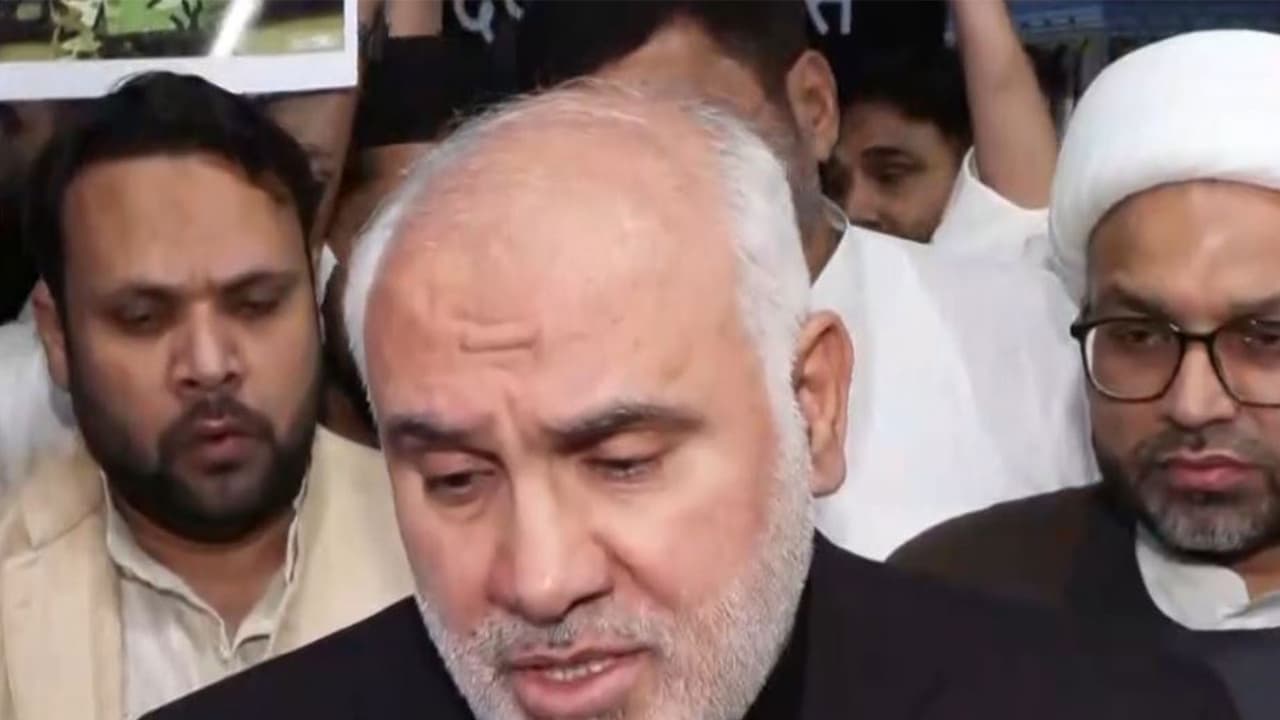
Amid the West Asia conflict, Iran's Ambassador to India confirmed that Tehran will grant safe passage to Indian-bound vessels through the critical Strait of Hormuz, citing the strong friendship and common interests between the two nations.
Iran Assures Safe Passage for Indian Vessels
Iran's Ambassador to India, Mohammad Fathali, on Friday confirmed that Tehran will provide safe passage to vessels bound for India through the Strait of Hormuz amid the ongoing conflict in West Asia, citing the longstanding friendship and shared interests between the two countries.

Answering a question on whether Iran would allow Indian-bound ships safe transit through the Strait, which is one of the critical routes for global energy trade, Fathali said, "Yes. Because India and I are friends. You can see in the future and I think that after two or three hours. Because we believe that. We believe that Iran and India are friends. We have common interests; we have a common fate."
He emphasised the mutual responsibility between the two nations, adding, "Suffering of the people of India is our suffering and vice versa. And for this reason, the government of India help us, and we should help the government of India because we have a common fate and common interest."
Fathali further stated that Tehran has instructed its embassy in India to facilitate the Indian government, ensuring smooth operations amid the ongoing regional conflict. "We believe as ambassadors in India that we have a common fate in the region and for this reason all the high-ranking officials from Iran instructed the embassy of Iran in India to pave the way for the Indian government," he added.
Strait Status and Call for De-escalation
Earlier today, Abdul Majid Hakeem Ilahi, Representative of Iran's Supreme Leader in India, said that his country never wanted the Strait to be blocked, but "some ships are still passing".
Noting that Iran has not closed the strategically significant Strait of Hormuz and ships are unable to pass through the strait amid the prevailing situation in West Asia, Ilahi told ANI that world leaders should put pressure on US President Donald Trump to stop the war against his country and that the people across the world are suffering due to the rise in oil prices.
"Iran has not closed the Strait. It remains open; however, due to current conditions and circumstances, ships are unable to pass through the Hormuz. Otherwise, Iran never wanted the Strait to be closed or blocked. Some (ships) are still passing through," the representative said.
"Those who initiated this war are the very ones who must stop it... Many people across the world are suffering due to this war. World leaders must unite and exert pressure on the President of the United States, urging him to put an immediate stop to this unjust war," he added.
Background of the Conflict
The current round of conflict in West Asia, which started on February 28, has witnessed fighting between Israel and the United States on one side and Iran on the other.
The conflict escalated following the killing of 86-year-old Iran's Supreme Leader, Ayatollah Ali Khamenei, in joint military strikes by the US and Israel, after which Iran, in its retaliation, targeted Israeli and US assets in several Gulf countries and Israel, causing disruption in the waterway and affecting international energy markets and global economic stability.
Due to the conflict in the region, the Strait of Hormuz, a critical transit route for global energy supply, has reportedly been rendered inoperational. (ANI)
(Except for the headline, this story has not been edited by Asianet Newsable English staff and is published from a syndicated feed.)