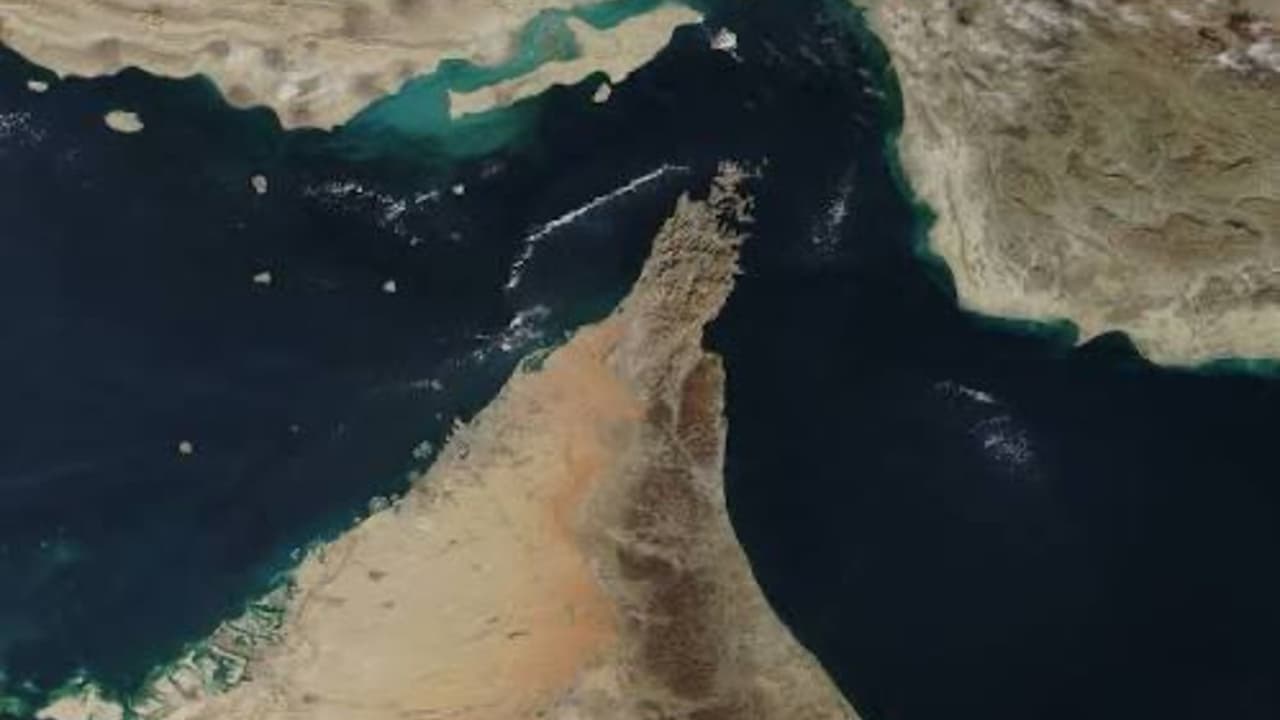
Iran has closed the Strait of Hormuz, escalating regional tensions despite a recent US-brokered ceasefire. Tehran cited Israeli airstrikes in Lebanon as a violation of the truce, a claim the US and Israel dispute. The blockade of the vital waterway, through which nearly 20% of global oil passes, disrupts shipping and threatens energy supplies.
Iran has once again shut down the strategically vital Strait of Hormuz, dramatically escalating tensions in West Asia just hours after agreeing to a fragile ceasefire with the United States. The move came in direct response to deadly Israeli airstrikes on Lebanon, which Tehran claims violated the terms of the truce.

The Strait of Hormuz, through which nearly 20% of the world’s oil supply passes, has become the central flashpoint in the ongoing conflict involving Iran, Israel, and the US. Iran’s decision to halt maritime traffic has triggered fresh fears of a global energy crisis, with dozens of oil tankers stranded and shipping routes disrupted.
According to reports, Israeli strikes in Lebanon killed over 180 people, with Iran arguing that such attacks breached the ceasefire framework. However, Israel has maintained that its military operations in Lebanon targeting Hezbollah are not covered under the truce.
Related Articles

US President Donald Trump, who played a key role in brokering the temporary two-week ceasefire, reacted strongly to the developments. In a stark warning issued earlier, he said, “A whole civilization will die tonight”, underscoring the high stakes if diplomacy failed.
Trump had earlier agreed to pause US military action on the condition that Iran ensured the “complete, immediate, and safe opening” of the Strait of Hormuz. He described the ceasefire as a major diplomatic win, calling it a “total and complete victory”.
Despite these assurances, Iran’s latest move to reimpose the blockade highlights the fragility of the agreement. Tehran has reportedly demanded strict control over shipping routes and even proposed tolls on vessels passing through the strait, signalling its intent to assert authority over the critical waterway.
The situation is further complicated by conflicting interpretations of the ceasefire terms. While Iran insists the truce includes a halt to Israeli actions in Lebanon, both the US and Israel have denied this, creating a dangerous diplomatic gap.
Global leaders have expressed concern over the rapidly deteriorating situation. Several countries are now coordinating efforts to ensure safe passage through the strait, while urging all parties to return to negotiations and prevent further escalation.
The renewed closure of the Strait of Hormuz underscores how quickly the region can spiral back into crisis. With ceasefire talks hanging in the balance and military actions continuing on multiple fronts, the risk of a wider conflict — and a severe disruption to global oil supplies — remains alarmingly high.