
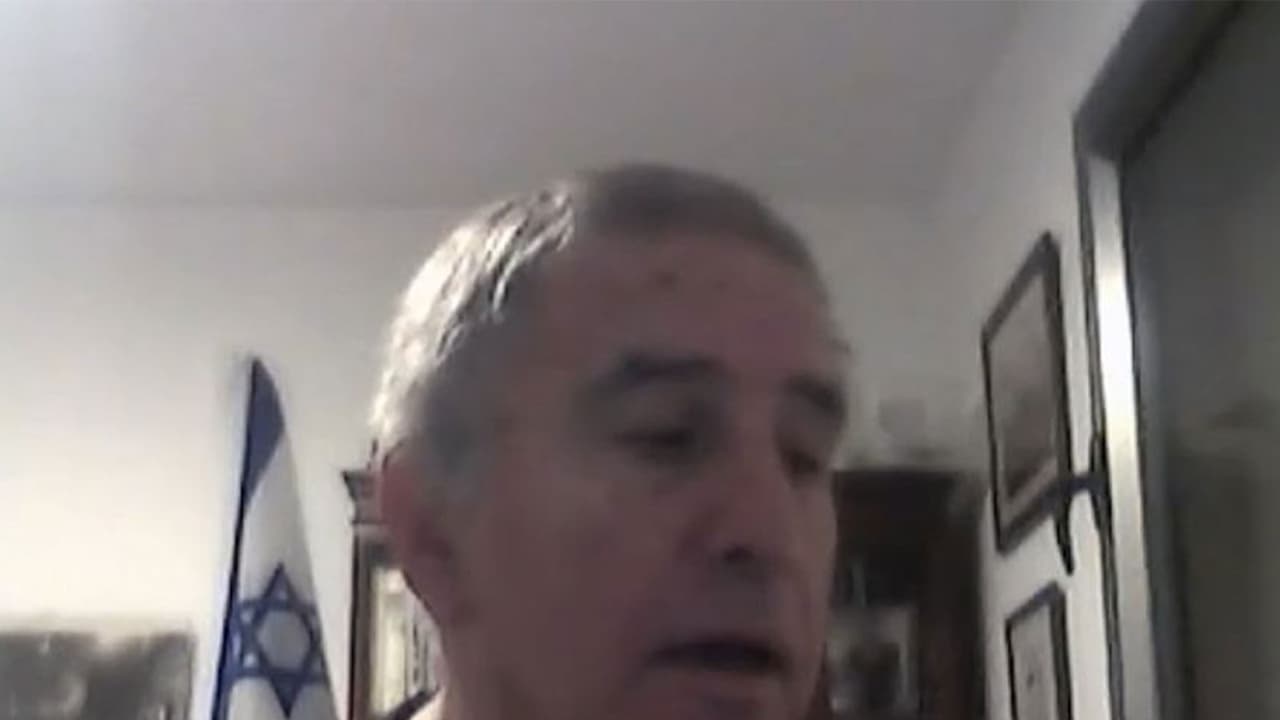
Former Israeli Ambassador Daniel Carmon asserts the conflict with Iran is a global and regional problem, not just a bilateral issue, citing attacks on other West Asian nations and Iran's alleged goal to create regional turmoil.
Iran a 'Global and Regional Problem'
Former Israeli Ambassador to India, Daniel Carmon, has said that the confrontation with Iran "cannot be viewed" as a bilateral dispute between Tel Aviv and Tehran, asserting that the issue is regional and global in nature, with implications stretching across West Asia and beyond. He said that the conflict is not limited to Israel and Iran, and one must look at and be aware of.

Speaking to ANI on Sunday on the ongoing Israel-Iran conflict, Carmon said, "Iran is not an Israeli problem. Iran is a global and a regional problem... You cannot detach the confrontation with Iran's sponsoring terrorism and developing ballistic missiles and nuclear capabilities, and detach it only to a bilateral conflict between Iran and Israel." He further claimed that Iran's actions have affected several countries in the region. "The Iranians are attacking the neighbouring countries that are part of our region. We have seen damage in Dubai, Saudi Arabia, Qatar, Bahrain, Kuwait, and even Jordan," he said, highlighting that the fallout of the hostilities is not confined to Israel alone.
Iran's Goal to 'Bring Turmoil to the Region'
Explaining why Iran may be targeting Middle Eastern countries, Carmon suggested that there might be an indirect will to bring turmoil to the region, and maybe to revive the ancient Sunni-Shia confrontation. "There might be an indirect will to bring turmoil to our region and maybe to revive the ancient Sunni-Shia confrontation. Maybe this is a way to pressure the US to end the attack because regional neighbours are being attacked. It is so obvious that this is not limited to Israel and Iran. It is something we must look at and be aware of," he said.
Concerns Over New Iranian Leadership
On the death of Iran's Supreme Leader Ayatollah Ali Khamenei, Carmon said the leadership question extends beyond a single individual. "It's not only Khamenei. It is a list of 3 to 5 other leaders of the defence and political establishment in this terrorist regime. They nominated Ahmad Vahidi. Vahidi is a terrorist who has led terrorist attacks throughout the past 30 years... He is the guy who is going to lead the IRGC (Islamic Revolutionary Guard Corps) ... It reinforces the fact that this regime must be changed, taking away its capabilities to pose a threat to the region, including Israel," he said.
Impact on Global Supply Chain
Carmon also highlighted concerns over disruptions to the global supply chain amid the conflict but expressed optimism that the situation would not be permanent. "The world cannot stay indifferent to those developments, but those developments are not a permanent situation... When this is eliminated as a regime and changed by a peaceful one, I'm sure that West Asia or the Middle East will have much better days," he said.
India's Role in the Conflict
On India's role in the escalating tensions, the former envoy said, "I am sure that India does not have a role."
Background: US-Israel Joint Strikes
The remarks come amid heightened tensions in West Asia following joint missile strikes titled Operation Roaring Lion/Operation Epic Fury by Israel and the United States on Iran on February 28. Explosions were reported in Tehran and other major cities, with US President Donald Trump and Iranian state media confirming that Iran's Supreme Leader Ayatollah Ali Khamenei was killed in the strikes, alongside his daughter, grandchild, daughter-in-law, and son-in-law. (ANI)
(Except for the headline, this story has not been edited by Asianet Newsable English staff and is published from a syndicated feed.)