
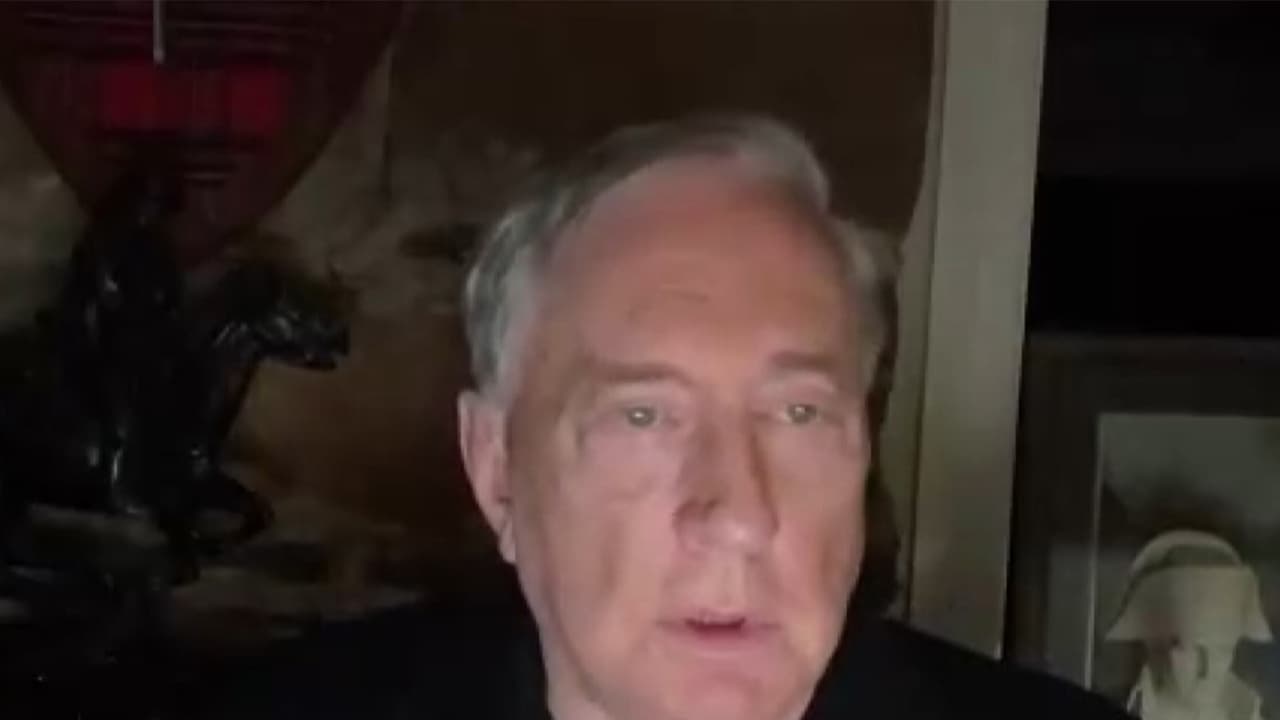
Retired US Colonel Douglas Macgregor warns the US conflict with Iran is a 'catastrophe' risking a global food security crisis. He says Trump's policy could reverse the 'green revolution' by disrupting energy supplies and is urging de-escalation.
'Reversing the Green Revolution'
Highlighting the stakes, he said, "We're reversing the green revolution. I mean, that's the biggest concern I have. This is the great thing that we introduced to the world, and we're destroying it." He cited warnings from an expert in the agricultural sector, adding, "If he (Trump) stops now, right now, we can probably arrest the most dangerous tendencies. We're going to suffer for several months, but we're going to get through this. But if he continues down the road that he wants to go on right now, another two or three weeks of this, it will take us years to recover."

Energy Disruption: 'A Catastrophe'
Macgregor stressed that the crisis is rooted in disruptions to global energy markets. "Cheap energy is the lifeblood of civilisation. It always has been," he said, noting that the industries reliant on petroleum are already facing shutdowns. "Plastic companies can't produce. We now have various countries bidding for oil. Tankers that were headed to Europe suddenly turned around and went back to Japan and Korea. This is a catastrophe," he added.
Critique of US Strategy and Lack of De-escalation
Questioning the broader US strategy and emphasising on the situation of the Strait of Hormuz Macgregor said, "The only thing that we can point to at this stage are really two things that he (Trump) talks about. He continues to talk about preventing Iran from ever developing or fielding a nuclear weapon, though he tells us that he obliterated the nuclear development on his last strike in June. Yeah. And, he wants the Strait of Hormuz to be open and says he's not prepared to cooperate or discuss anything with the Iranians until they open the Strait."
He also criticised longstanding narratives of "terrorism" in Iran by Israeli PM Netanyahu, stating, "We were being treated to the usual litany of Netanyahu talking points, demonising Iran as the world's greatest sponsor of terrorism and all this. Anybody who has any sort of background in the area knows that's nonsense. We can look for terrorists in a number of places, but we haven't found very many in Iran."
Macgregor expressed disappointment that the speech did not signal a path toward de-escalation. "There were many of us that hoped that he would somehow or another say, look, we've done all we can do. We want the Strait to be open for the world. It's in the interest of the global economy that this strait be open as quickly as possible. And so we are ending this conflict. And we're prepared to talk in the future with the Iranian government, whatever it is, but that didn't happen," he said.
He pointed to worsening conditions in global trade routes, saying, "Commercial traffic has dropped to 95 per cent. Now, we've seen some uptick in the recent few days. It's obvious that if you are unfriendly to Iran, if you are hostile to Iran, if you are somewhere or another connected to us, you're the enemy, you're not going to get through. But otherwise, it's quite clear that the Iranians are trying to accommodate the rest of the world. I think we should do the same thing."
'Stepping on the Gas Pedal' Towards Crisis
Using a metaphor, Macgregor warned of accelerating economic risks. He said, "The president has turned the global economy into an automobile that is racing down the side of a hill at about 100 miles per hour. It is on a collision course with a reinforced concrete wall. A prudent man would put the brakes on. Instead, he is stepping on the gas pedal. Things are going to get a lot worse from here."
Global Repercussions and Misunderstanding of Markets
He also challenged Trump's assertions on energy independence, saying that the president "does not understand the global market for oil", giving the example of US State California, which, according to him, "imports most of its oil", while emphasising that there are "47 products out there that depend upon petroleum."
Macgregor reiterated the scale of the crisis, warning that without a change in course, the world could face "a greater catastrophe down the line," with impacts felt across regions including India, Africa and Asia. (ANI)
(Except for the headline, this story has not been edited by Asianet Newsable English staff and is published from a syndicated feed.)