Iran has allowed India-flagged tankers to pass through the Strait of Hormuz after talks between External Affairs Minister S Jaishankar and Iran's Foreign Minister Abbas Araghchi, according to a report by NDTV.
Iran has allowed India-flagged tankers to pass through the Strait of Hormuz after talks between External Affairs Minister S Jaishankar and Iran's Foreign Minister Abbas Araghchi, according to a report by NDTV. Following the development, at least two Indian tankers, the Pushpak and the Parimal, are reported to be passing safely through the strategically critical strait, even as vessels from the US, Europe, and Israel continue to face restrictions.

A Liberian-flagged tanker hauling Saudi Arabian crude, captained by an Indian, also cleared the Strait of Hormuz two days ago and has berthed at the port of Mumbai. It became the first India-destined vessel to safely transit the waterway, where maritime traffic has all but halted since the US and Israel attacked Iran.
According to Iranian state media, Iran has intensified its restrictions on the passage of ships through the Strait of Hormuz amid ongoing US-Israeli strikes. Iran says vessels not serving the interests of the United States and Israel can sail through safely.
Related Articles

IRGC Commander: Get Iran's Nod to Pass Strait of Hormuz or Be Hit
The commander of Iran's Islamic Revolution Guards Corps (IRGC) Naval Force has said that vessel seeking to sail through the Strait of Hormuz must obtain Iran's approval; otherwise, it could become a target of Iranian attacks.
Rear Admiral Alireza Tangsiri said that two ships that had ignored Iran's warnings were targeted in the Strait on Wednesday. "Were the ships assured of safe passage through the Strait of Hormuz? This should be asked of the crews of the vessels Express Rome and Mayuree Naree, who today, trusting in empty promises, ignored the warnings and intended to cross the Strait, but were caught. Any vessel intending to pass must obtain permission from Iran," the Iranian general said in a post on X.
Why Strait of Hormuz Matters
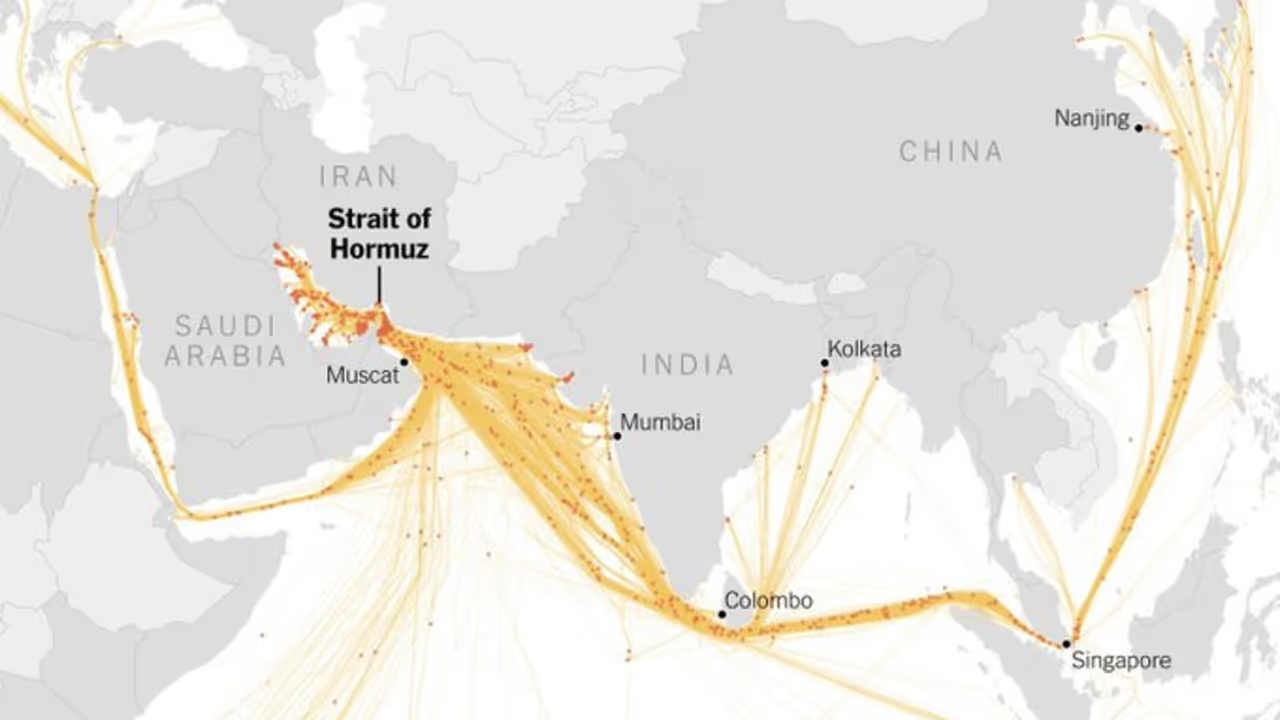
More than 20 million barrels of crude oil pass daily through the narrow channel separating the Iranian coast from Oman. That volume represents roughly a fifth of global oil consumption and nearly a quarter of all seaborne oil trade. A significant share of the world's liquefied natural gas also moves through the same passage.
When that flow falters even briefly, the consequences cascade across financial markets, supply chains and household budgets around the world.
Iran's military can reach all of the Strait of Hormuz and its approaches with anti-ship cruise missiles that it developed off Chinese-made weapons, according to mapping by the US Defence Intelligence Agency.
(With inputs from ANI)