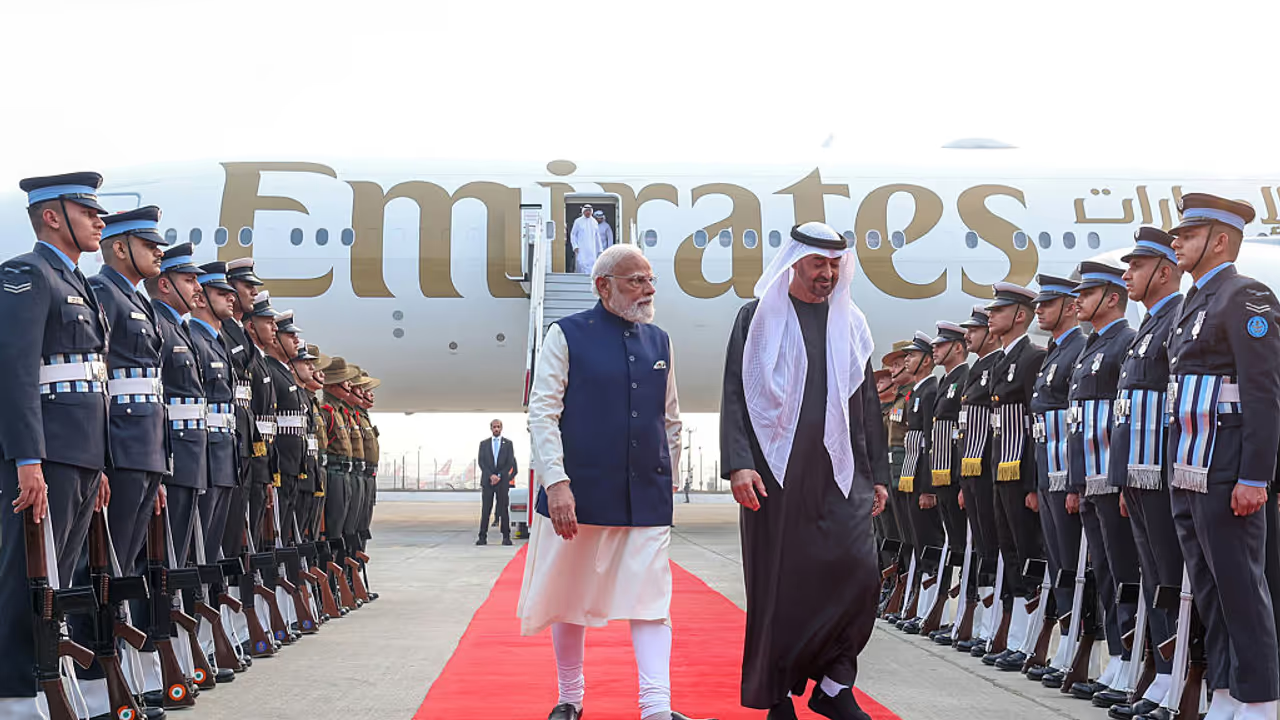
India is in talks with the six-nation GCC on a free trade pact to boost its $178-billion trade ties, cut tariffs and expand cooperation in goods, services, investment and energy security.
India is moving decisively to strengthen its economic footprint in the Gulf region by initiating negotiations for a comprehensive free trade agreement (FTA) with the six-nation Gulf Cooperation Council (GCC). The bloc includes the United Arab Emirates, Saudi Arabia, Qatar, Kuwait, Oman and Bahrain — countries that collectively represent one of India’s most strategically important trade and energy partners. The formal signing of the Terms of Reference (ToR) marks the official start of negotiations and signals New Delhi’s intent to position the Gulf as a major growth market for Indian exports, investments and services.

Trade Between India and GCG
Trade between India and the GCC has expanded rapidly in recent years, crossing roughly $178 billion in 2024-25. The Gulf already accounts for a significant share of India’s crude oil and natural gas imports, while also serving as a major destination for Indian goods such as gems and jewellery, engineering products, food items, textiles, chemicals and pharmaceuticals.
The UAE alone has emerged as one of India’s largest trading partners globally, bolstered further by the bilateral Comprehensive Economic Partnership Agreement (CEPA) signed in 2022.
Related Articles

The proposed India-GCC FTA aims to build on this momentum by reducing tariffs, simplifying customs procedures and addressing non-tariff barriers that currently limit trade expansion.
Beyond goods, the talks are expected to cover services, investment protection, intellectual property, digital trade and government procurement. Indian policymakers view services such as information technology, fintech, healthcare, education, logistics and professional services as key areas where Indian firms could gain improved access to Gulf markets.
Energy security remains a central pillar of the relationship. The Gulf supplies a substantial portion of India’s oil and gas needs, and officials see the FTA as a way to stabilise long-term energy ties while also expanding cooperation in emerging areas such as green hydrogen, renewables and clean energy technologies.
With Gulf countries investing heavily in economic diversification and post-oil strategies, Indian companies are expected to find new opportunities in infrastructure, manufacturing, food processing and digital services.
Another major dimension of the partnership is the Indian diaspora in the Gulf, estimated at nearly 10 million people. These expatriates play a crucial role in supporting Gulf economies while sending significant remittances back to India. Stronger trade and investment ties could translate into better employment prospects, skill mobility and labour protections for Indian workers in the region, further deepening people-to-people links.
From India’s perspective, the GCC FTA also fits into a broader strategy of trade diversification amid global supply-chain shifts and geopolitical uncertainties. As India seeks to reduce over-dependence on a few markets and integrate more deeply into global value chains, the Gulf’s proximity, capital availability and demand potential make it an attractive partner. For GCC nations, closer ties with India offer access to one of the world’s fastest-growing large economies and a vast consumer base.
While negotiations are expected to be complex, given the varied economic structures and sensitivities across GCC members, both sides have expressed optimism about reaching a mutually beneficial agreement. If concluded, the India-GCC FTA could emerge as one of India’s most consequential trade deals, reshaping economic engagement with the Gulf and positioning the region as a key pillar of India’s long-term growth strategy.