The 2026 Bangladesh election after Sheikh Hasina’s 2024 ouster saw Tarique Rahman’s BNP win decisively. India closely watched the shift amid concerns over security, trade and bilateral ties, as Hasina had been a trusted partner.
India’s strategic interest in the Bangladesh 2026 general election was unusually high, not merely because of shared geography and history, but due to profound political shifts that began with a student-led uprising in August 2024. That upheaval led to the removal of long-time Prime Minister Sheikh Hasina and the mobilization of a new political landscape, culminating in the Bangladesh Nationalist Party (BNP) — led by Tarique Rahman — winning a decisive victory in the polls. The result marked a major turn in Dhaka’s domestic politics and drew intense attention in New Delhi for its potential impact on regional security, cross-border cooperation and bilateral relations.

India had long regarded Hasina’s Awami League government as a generally reliable partner. Under her leadership, Dhaka and New Delhi strengthened ties on issues like border security, trade, connectivity and water sharing. Many Indian policymakers saw this alignment as a stabilizing force in the subcontinent. But Hasina’s exile following the 2024 protests — and her party’s absence from the 2026 ballot — opened space for new political forces. The BNP, historically more nationalist and less overtly India-aligned than the Awami League, re-emerged from years of political marginalization.
Tarique Rahman’s return to Bangladeshi politics after nearly two decades in exile was a defining moment. Once a polarizing figure with a controversial legacy, Rahman sought to project a more inclusive, forward-looking image during the election campaign, avoiding inflammatory rhetoric against India and emphasising national unity. His refrain of putting “Bangladesh First” signalled a shift away from past diplomatic postures that sometimes strained relations with New Delhi.
Related Articles

Despite this, India entered the election with a dual focus: supporting a credible, democratic process, while watching carefully for developments that could affect bilateral interests. New Delhi’s Ministry of External Affairs publicly emphasised its backing for free and fair elections but declined an official invitation to send observers — a decision that balanced India’s desire to support democracy with sensitivity to sovereignty concerns.
Analysts pointed out that India’s interest was not purely diplomatic but rooted in security concerns, especially along India’s nearly 4,100-km shared border with Bangladesh. Migration issues, border infiltration, and communal tensions — particularly following reported violence against Hindu minorities after Hasina’s departure — were all factors shaping Indian attention to the election. New Delhi had raised these concerns diplomatically and strengthened border security in states like West Bengal and Assam ahead of the polls.
Bilateral trade was another key dimension. India and Bangladesh’s economic relationship is substantial, with bilateral trade valued at around US$14 billion annually and India running a large trade surplus. Bangladeshi dependence on Indian cotton yarn and other imports means that any diplomatic cooling could disrupt supply chains and local industries. Indian policymakers, therefore, were keen that the new government in Dhaka remain pragmatic on economic ties, even if its political orientation changed.
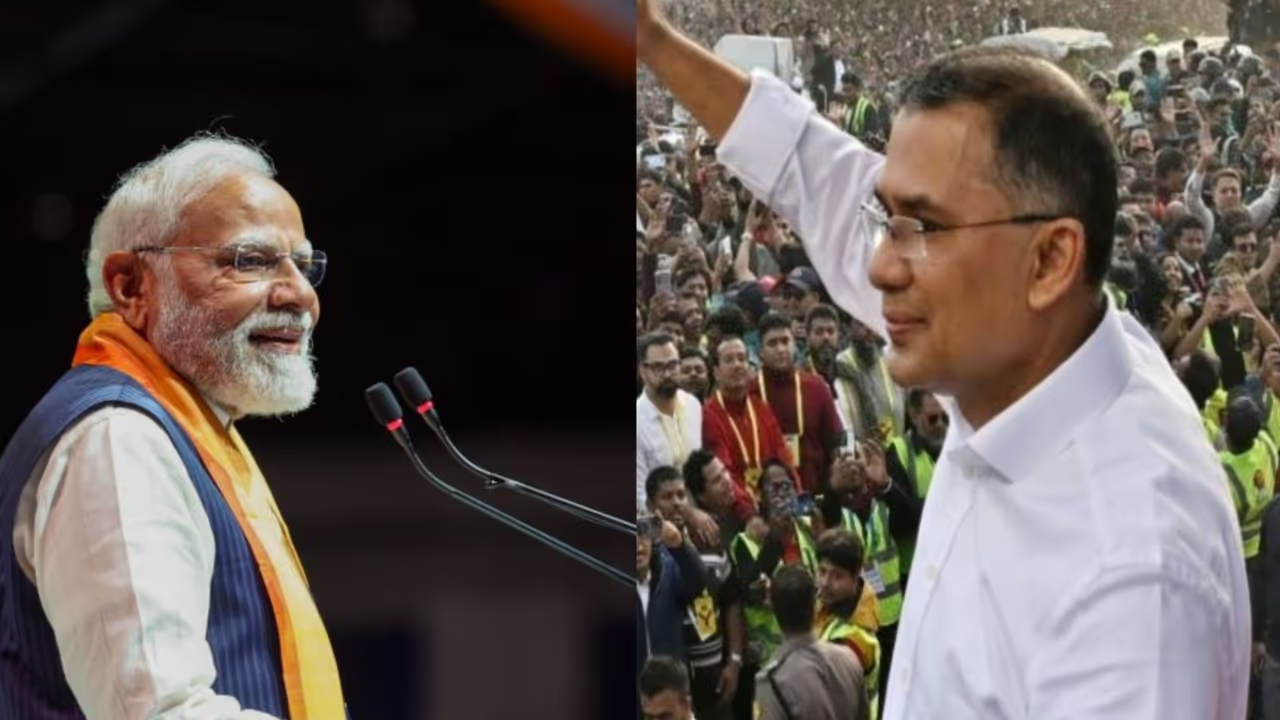
When the results began to emerge, the BNP’s victory was clear: the party crossed the majority threshold, positioning Tarique Rahman to become Bangladesh’s prime minister. The win was widely described as reflecting the voters’ desire for change following years of unrest and political division. New Delhi reacted swiftly; Prime Minister Narendra Modi publicly congratulated Rahman, praising the democratic expression of the Bangladeshi people and affirming India’s intent to continue working with Dhaka on shared goals of development, prosperity, and regional stability. Modi’s message underscored the importance India places on a stable neighbor and partner.
The BNP’s response was positive, thanking India for recognising the election outcome and expressing hope that relations would strengthen under the new government. BNP figures emphasised that the verdict was a people’s mandate and indicated readiness to engage constructively with India across multiple areas of cooperation.
A key question moving forward is whether the BNP under Rahman will maintain the cooperative tone with India that Hasina established. There are areas that could test the new relationship — notably border management, water sharing (especially the Teesta and Padma rivers), and the safety of minority communities within Bangladesh. Rahman has publicly pledged to protect all citizens irrespective of faith, saying “religion is individual, but the state belongs to everyone,” a message aimed at easing communal fears and signalling inclusive governance.
Security analysts note that China’s growing footprint in Bangladesh — particularly in infrastructure investments that could have strategic dual uses — remains an underlying concern for India. If Dhaka’s foreign policy were to tilt towards Beijing or Islamabad in ways that bypass Indian interests, it could recalibrate the regional balance. But Rahman’s emphasis on an “independent and balanced” foreign policy is aimed at reassuring all partners that Bangladesh will navigate its external relations pragmatically.
India also faces domestic political dimensions in watching the Bangladesh polls. Border states like West Bengal and Assam, both slated for elections later in 2026, have seen illegal migration become a central political issue. Developments in Bangladesh are likely to resonate across the border and influence electoral politics in these Indian states.
Overall, while the BNP’s return to power represents a major political shift in Bangladesh, the initial reactions from both sides point toward continuity rather than rupture in Indo-Bangladesh relations. India’s early outreach to Rahman and the BNP’s welcoming of cooperation signal a mutual interest in maintaining ties that promote stability, economic integration, and shared security goals in South Asia.
The 2026 Bangladesh election thus stands as a defining moment not just for Dhaka’s domestic politics, but for the region’s diplomatic landscape — a test of how new leadership can balance nationalist aspirations with pragmatic engagement with major neighbors like India.