
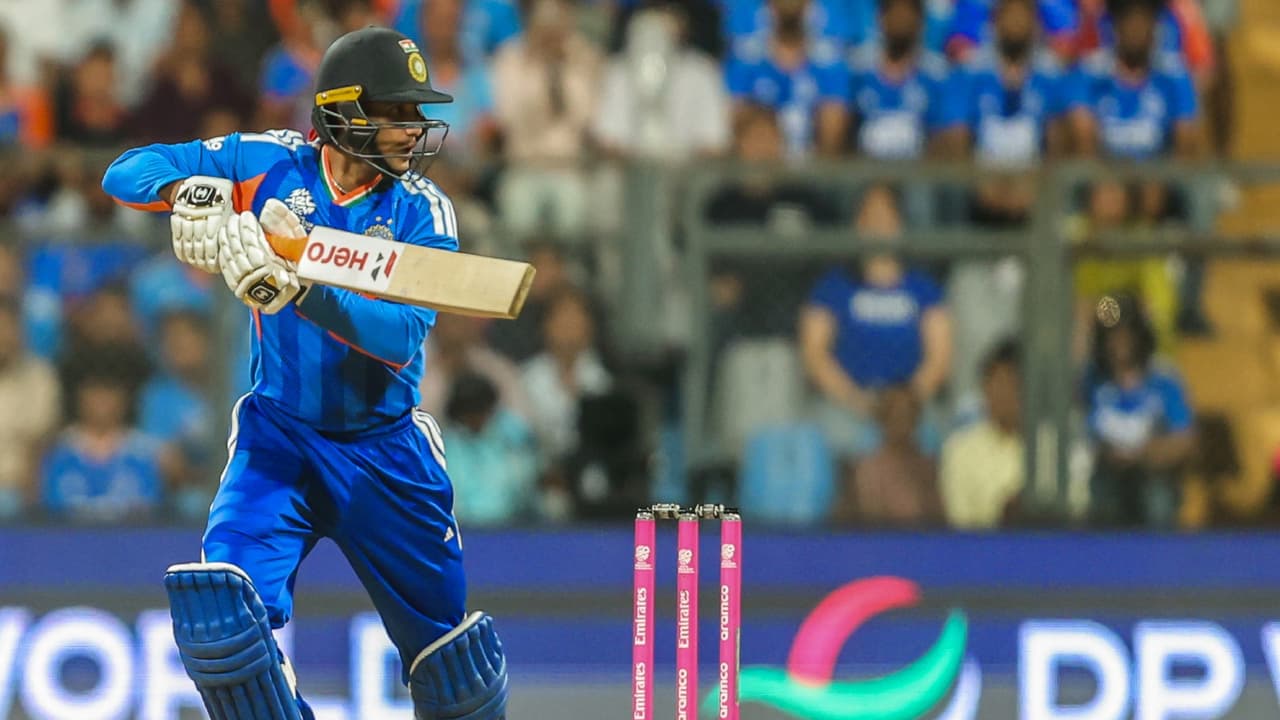
In the T20 World Cup final, India's formidable batting faces New Zealand's tactical off-spin attack. The Kiwis aim to exploit India's struggle against off-spinners, a key strategy targeting the left-handers in India's dominant lineup.
India's formidable batting lineup, which has dominated the ICC Men's T20 World Cup 2026, faces a tactical challenge in the final against New Zealand, with the visiting side looking to exploit a subtle vulnerability through their off-spinners. After a slow start with the bat in the ongoing tournament, India had posted two of the four highest totals in T20 World Cup history in their last three games, firmly establishing their batting. Yet, the Black Caps have spotted a potential weakness.

With many left-handers in India's top eight, offspinners turning the ball away from left-handers have emerged as a key strategic weapon. According to ESPNcricinfo, statistics from the tournament highlight the effectiveness of using off-spinners against India. Among two-over spells bowled by spinners, offspin accounted for nearly half (46.43%), and for one-over spells, it made up almost two-thirds (63.89%).
India's vulnerability in numbers
In seven innings, India have lost 15 wickets against offspin, the highest in the tournament, at a modest average of 15.87. This has slowed the defending champion's scoring against offspin. They have a strike rate of 120.20, lower than any other Super Eight team against the off-spinners.
Key batters under the scanner
Abhishek Sharma has been impacted the most by the off-spinners. The Indian opener, who is playing his first T20 World Cup, registered three successive ducks early in the tournament, twice falling to offspin in the opening over. Left-handed batter Ishan Kishan, India's leading run-scorer, has been dismissed five times in 48 balls, while Tilak Varma and Suryakumar Yadav have also struggled to maintain strike rates against quality offspin.
New Zealand's tactical plan
New Zealand's offspin attack will likely be led by 34-year-old Cole McConchie, who has impressed in the tournament despite being a late injury replacement. His ability to bowl in the powerplay and target left-handed batters gives the Black Caps a tactical edge against the Indian batting line-up, which is heavily dependent on their left-handers in the top eight.
While India's lineup has been overwhelmingly dominant, New Zealand's reliance on offspin, tactical planning, and fielding discipline could play a decisive role in Ahmedabad. Apart from Cole, the Black Caps could also use Glenn Phillips, who can chip in some overs with his offspin.
As the final approaches, it is clear that the contest will not only test India's batting might but also reward some strategic advantage for the Black Caps. Team India is aiming to defend its title at home and become the first side ever to win a T20 World Cup in front of the home crowd.
Squads
New Zealand Squad: Tim Seifert(wicketkeeper), Finn Allen, Rachin Ravindra, Glenn Phillips, Mark Chapman, Daryl Mitchell, James Neesham, Mitchell Santner(captain), Cole McConchie, Matt Henry, Lockie Ferguson, Devon Conway, Kyle Jamieson, Ish Sodhi, Jacob Duffy.
India Squad: Abhishek Sharma, Sanju Samson(wicketkeeper), Ishan Kishan, Suryakumar Yadav(captain), Tilak Varma, Hardik Pandya, Shivam Dube, Axar Patel, Arshdeep Singh, Varun Chakaravarthy, Jasprit Bumrah, Mohammed Siraj, Rinku Singh, Washington Sundar, Kuldeep Yadav. (ANI)
(Except for the headline, this story has not been edited by Asianet Newsable English staff and is published from a syndicated feed.)