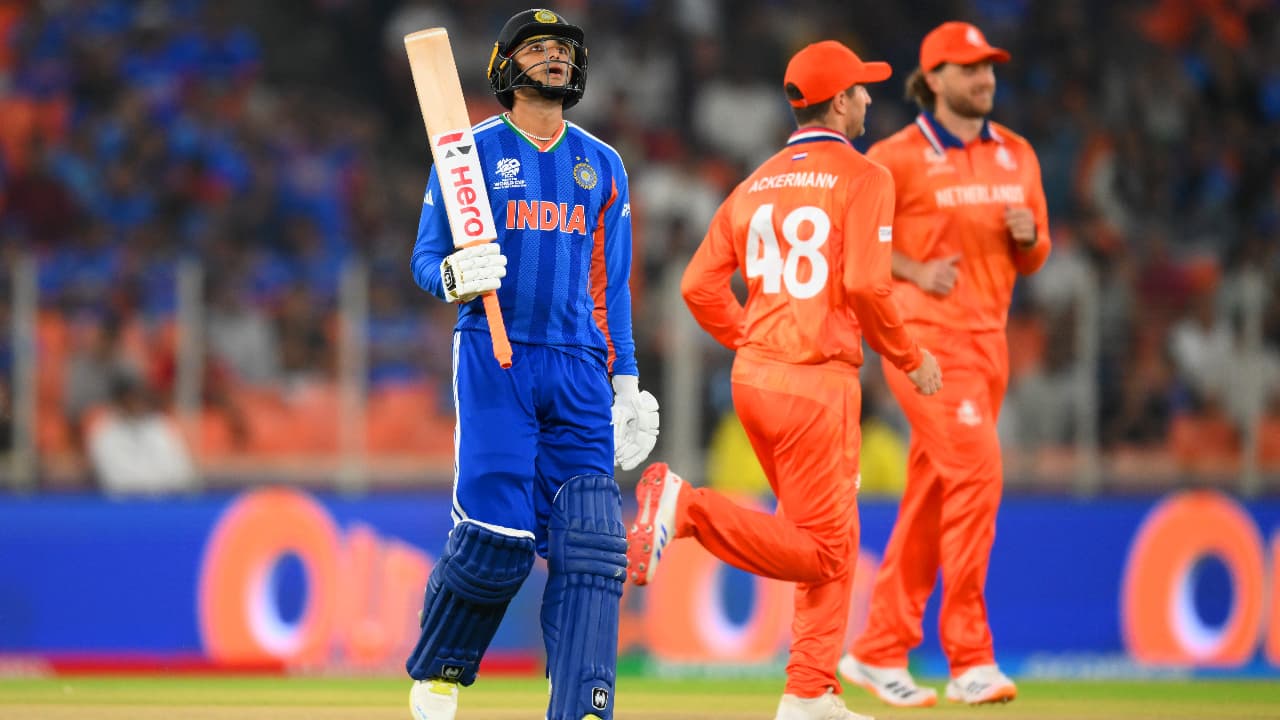
India captain Suryakumar Yadav backed Abhishek Sharma despite three ducks in the T20 World Cup 2026. He also explained Tilak Varma’s role and highlighted India’s flexible batting order ahead of the Super 8 match against South Africa.
India captain Suryakumar Yadav has thrown his support behind opener Abhishek Sharma ahead of the Super 8 clash against South Africa in the T20 World Cup 2026. Sharma has endured a difficult run, recording three consecutive ducks, but Yadav insisted he has no concerns about the youngster’s form.

Speaking at the pre‑match press conference, Yadav said: “I am worried about the people who are worrying about Abhishek Sharma. I am more concerned for the teams that will face him later. He did everything last year, now it’s time for us to return the favour. I have no concerns going into the game.”
Sharma was ruled out of the second match due to a stomach infection after his duck against the USA. He was then dismissed by off‑spinners in his next two appearances, including Aryan Dutt in the opening over against the Netherlands. The sequence has sparked strong reactions from fans and pundits, but Yadav remains confident Sharma will bounce back.
Related Articles

Tilak varma’s role explained
Another batter under scrutiny is Tilak Varma, who has scored 106 runs in four matches at a strike rate of 120.45. Yadav revealed that Varma’s approach has been shaped by team instructions. “The team management has told Tilak to play that way. If two wickets are down, he has to play out some overs and take backseat. I’m sure he must not be happy with the way he’s batting, but he’s been working hard in practice,” Yadav said.
Varma had missed the home T20I series against New Zealand due to injury and has often been forced to bat early in the innings during the World Cup. Yadav stressed that his role is situational and not a reflection of his overall ability.
Batting order flexibility emphasized
Yadav also highlighted India’s dynamic batting order, noting that positions from No.3 to No.8 remain flexible. “Except the openers, 3‑8 have to be flexible. If there’s no wicket down till 8‑9 overs you might see Dube or Pandya walking in. Even my position is flexible,” he explained.
Hardik Pandya has already featured across multiple middle‑order slots, while Rinku Singh and Shivam Dube have also been rotated. Yadav himself has returned to his familiar No.4 role but stressed that adaptability is key to India’s strategy.
Ahead of the South Africa clash, Yadav was one of four players, along with Ishan Kishan, Kuldeep Yadav, and Rinku Singh, to attend an optional training session. The captain’s confidence in Sharma and Varma, combined with India’s flexible batting approach, underlines the team’s belief in its depth as the tournament enters its decisive stage.