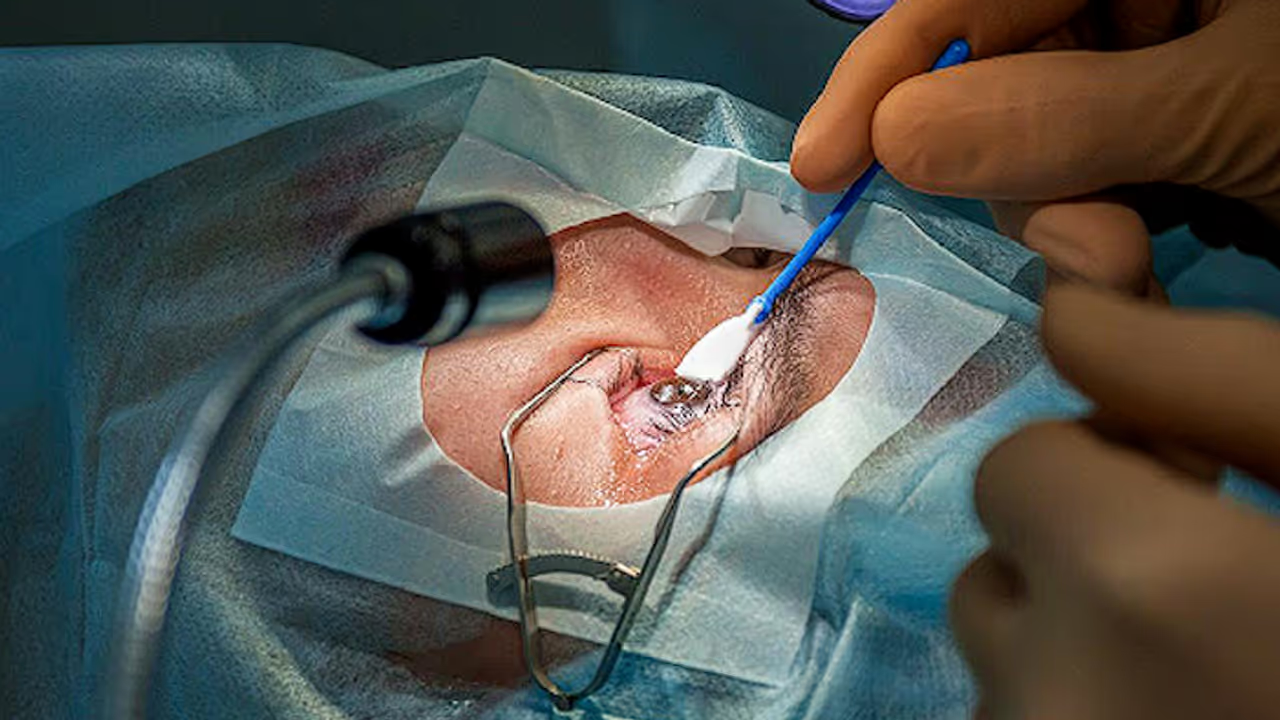
Success rate and eligibility criteria and recovery expectations represent essential knowledge for people who want to assess vision correction solutions.
People now consider LASIK to be the most common method for correcting vision because it provides a reliable way for people to see without using glasses or contact lenses. The success rate of lasik eye surgery remains high through clinical studies because of technological advances in laser systems and the development of improved surgical practices. The current medical procedures deliver exact results which experienced doctors perform who have spent many years developing their skills in refractive eye treatment.

Success rate and eligibility criteria and recovery expectations represent essential knowledge for people who want to assess vision correction solutions. The article provides an organized overview which explains LASIK outcomes together with the factors that impact them and the essential elements that should be evaluated before making a choice.
Understanding the Success Rate of LASIK Surgery
Related Articles

The success rate for lasik eye surgery reaches 96% to 99% for patients who achieve 20/20 vision or better but their results depend on their specific eye conditions and pre-surgical evaluation. Success is measured not only by visual acuity but also by patient satisfaction, reduced dependency on corrective lenses, and long-term visual stability.
Most patients achieve substantial vision improvements within a brief time frame following their surgical treatment according to clinical results. The modern laser systems provide precise cornea reshaping because their accurate technology enables exact material removal from the cornea.
Factors That Influence LASIK Success
Pre-Surgical Eye Health
The condition of the cornea, tear film stability, and overall eye health play a crucial role in determining the outcome. Patients with stable prescriptions and healthy corneal thickness are ideal candidates.
Surgeon Expertise
The participation of highly skilled expert medical professionals leads to improved assessment activities and strategic planning work and operational execution processes. The success rate of lasik eye surgery procedures depends on the exactness of surgical operations.
Technology Used
Advanced laser systems deliver better precision results which decrease operational errors. Blade-free and customized LASIK procedures further improve outcomes.
Patient Compliance
Post-operative care is critical. Following medical advice after lasik surgery contributes significantly to long-term success.
LASIK Surgery Age Limit
The lasik surgery age limit serves as a critical eligibility requirement for potential candidates. The minimum age requirement for candidates stands at 18 years yet surgeons typically advise patients to delay their procedures until they reach their mid-20s for their prescription to stabilize.
Medical professionals at leading eye hospitals do not establish specific upper age limits but they assess patient suitability based on presbyopia and cataracts and other eye conditions associated with aging. The complete eye assessment functions as the mandatory requirement to assess suitability for the procedure.
Is LASIK Surgery Permanent?
People want to know if the procedure produces permanent results. The answer to "is lasik surgery permanent" lies in understanding how the surgery works.
The LASIK process permanently changes corneal shape because of its surgical procedure. The structural change remains stable over time.However natural aging of the eye may still lead to conditions such as presbyopia which can affect near vision later in life.
LASIK provides vision correction that lasts for multiple years in most cases while only a small percentage of patients need additional procedures.
After LASIK Surgery: What to Expect
The time period which follows lasik surgery needs to be taken seriously because it determines both the recovery process and the final visual results. Patients experience better vision results after the first day post-surgery although their vision shows minor changes during the first days.
Immediate Effects -
- The patient experiences
- Mild irritation or dryness
- The patient experiences
- Sensitivity to light
- The patient experiences
- Temporary blurred vision
The symptoms disappear quickly after using the medications and eye drops which the doctor prescribed.
Visual Stabilisation
Daily vision improvement continues throughout the upcoming weeks. The follow-up appointments are essential because they enable doctors to track the patient's progress and take any necessary actions.
Lifestyle Adjustments
After lasik surgery, patients need to stay away from eye rubbing and dust exposure and intense physical exercise for a brief time.
LASIK Eye Surgery Recovery Time
The lasik eye surgery recovery time requires less time than most other surgical procedures. Most people can return to their regular activities after one to two days.
Recovery Phases
Initial Recovery (First 48 Hours)
The patient experiences rapid vision growth. The patient can begin basic daily activities after the first day but needs to do so with caution.
Short-Term Recovery (1–2 Weeks)
The patient experiences minor visual disturbances which will eventually resolve. The patient experiences eye dryness which will remain but can be controlled.
Complete Recovery (1–3 Months)
The patient reaches complete vision stability after the cornea has finished its healing process.
The quick recovery timeline of lasik eye surgery leads to high success rates, which makes the procedure popular among patients who want to maintain their daily activities.
Benefits That Contribute to High Success Rates
Precision and Predictability -
Modern LASIK techniques deliver accurate results tailored to individual eye structures.
Reduced Dependency on Corrective Lenses -
Most patients achieve significant freedom from glasses or contact lenses.
Quick Procedure -
The surgery itself takes only a few minutes per eye, with immediate visual improvement.
Minimal Downtime -
Short lasik eye surgery recovery time allows patients to return to normal life quickly.
Who Should Consider LASIK?
Individuals who meet the following criteria are generally suitable candidates:
- Stable vision prescription
- Healthy corneas
- No severe dry eye condition
- Within the recommended lasik surgery age limit
- Realistic expectations regarding outcomes
- A detailed consultation is essential to determine eligibility and expected results.
Important Considerations Before Surgery Must Know
A thorough pre-operative evaluation is mandatory to assess suitability. Skipping this step can affect outcomes.
Don’t Miss
Choosing the right eye care provider is critical. Facilities offering advanced technology and expert care ensure better results.
Act Now
The process of early consultation helps to determine whether someone can become a candidate for treatment and it permits doctors to make necessary adjustments before the patient's vision worsens beyond recovery.
Accessibility and Affordability
Multiple LASIK treatment centers provide affordable packages which include their best low-cost treatment options. Customers who choose discount offers can access advanced vision correction services at lower costs while maintaining high-quality standards.
Patients should choose treatment facilities which use advanced medical expertise and modern equipment because those factors provide better protection and treatment results.
Long-Term Outlook
The long-term effectiveness of LASIK is well-documented. Patients who receive proper eye care together with scheduled eye examinations will achieve vision stability throughout multiple years. The procedure's reliability together with the high success rate of lasik eye surgery establishes it as a dependable method for correcting refractive vision problems.
Conclusion
LASIK surgery achieves high success rates because of its combination of advanced technology and precise clinical techniques. The results of medical procedures depend on three main factors which include how patients are selected, the skills of the surgeon, and the quality of post-surgical treatment.
People can make better choices about LASIK surgery when they understand the age restrictions for the procedure, the expected recovery process, and the advantages that will last throughout their lives. The combination of our experienced doctors and our long history of providing excellent eye care services makes LASIK a trustworthy solution for correcting vision problems.
FAQs
1. How successful is LASIK eye surgery?
The success rate of LASIK eye surgeries reaches between 96% and 99% according to their success rates which show that most procedures achieve successful outcomes. For the majority of persons, visual acuity should be at least 20/20.
2. What is the age requirement for LASIK Surgery?
You must be at least 18 years of age to qualify for LASIK surgery; however, you usually must have stable vision before qualifying which is frequently realized in your mid-twenties.
3. How long will it take to recover from LASIK?
Recovery times will vary. For the first two-four days, you can expect to resume your normal activities, while complete healing will take anywhere from one to three month's duration to occur.
4. Is LASIK permanent?
Yes, because cornea will be permanently reshaped; however, you may experience additional visual changes due to age as they occur over time.
5. After LASIK, what must I do?
Avoid rubbing your eyes and keep them away from dust, debris, etc. Also, you must take prescribed medications in accordance with instructions.
6. Are there any affordable options for LASIK?
Yes, many of the leading LASIK centres currently offer relatively low prices as well as price reduction opportunities, such as discount plans.