
What started as a lockdown convenience has turned into a lifeline, fueling Klarna and Affirm’s rise, rattling investors, and reshaping how Americans shop for essentials.
- BNPL usage is shifting from discretionary buys to everyday essentials as inflation and job uncertainty bite.
- Klarna’s post-IPO slump contrasts with Affirm’s steadier position as Wall Street’s BNPL category leader.
- BNPL spending is set to hit a record $20.2 billion this holiday season, cementing “pay later” as a core retail checkout option.
During the COVID-19 lockdowns, millions of shoppers, stuck at home and glued to their screens, embraced Buy Now, Pay Later as an easy way to click “purchase” first and worry about payments later. What began as a pandemic convenience soon hardened into a habit.

In the years that followed, as inflation surged to multi-decade highs and more Americans found themselves living paycheck to paycheck, BNPL quietly evolved from a discretionary spending tool into a financial lifeline— used not just for holiday splurges, but increasingly for everyday essentials.
At the center of this shift stood two names: Klarna and Affirm. The pair helped mainstream BNPL in the U.S., especially during peak shopping seasons, enabling consumers to spread payments over as many as 36 installments. Wall Street has since described the sector’s growth as “exponential,” with Klarna and Affirm emerging as the clear standard-bearers of America’s BNPL boom.
Klarna's Public Debut
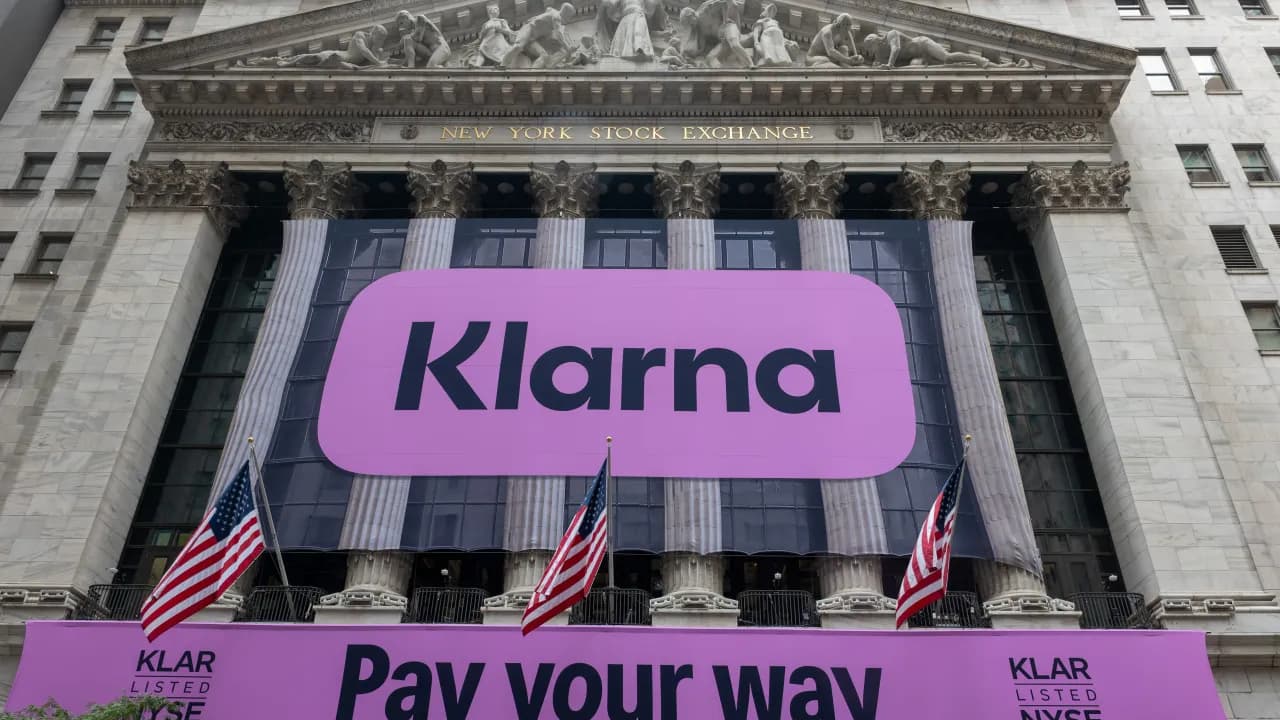
In September, Klarna finally went public in the United States after much delay. It was supposed to get listed in April, but Trump tariffs threw a wrench in the works.
Klara was founded in 2005, and the Sweden-based company has been one of the most preferred BNPL platforms, mainly in the United States. The company reportedly raised cash in 2021 at a $45.6 billion valuation, which fell to $6.7 billion in the following year as still-high inflation and rising interest rates gripped the economy.
During the September debut, Klarna was valued at nearly $20 billion as its stock started trading on the New York Stock Exchange. But in just three months, the company has lost half its value and now has a market cap of $10 billion.
Several brokerages trimmed price targets post-earnings in November to “better reflect relative valuation” and attributed the stock decline to higher-than-expected Wall Street estimates. The company’s revenue has seen steady growth over the quarters.
Affirm’s Performance Since Going Public
Affirm went public four years before Klarna and has seen a nearly 33% fall in its stock price since its debut in 2021, when it closed at $97.24. But a very volatile macro environment, burdened by inflation, a weak job market, and a consumer pullback, impacted the company even when demand for its BNPL services did not.
Last week, Wolfe Research said it views Affirm as a "differentiated" BNPL provider with growth drivers, including 0% APR loans, card adoption, and international expansion.
Freedom Capital has said that Affirm is considered the category leader in BNPL payment options to consumers in the U.S. The company’s "tremendous" share gains in the U.S. have translated into a profitable business and a mid-20s grower, the firm said. Analysts expect a strong holiday season for Affirm.
Holiday Season: BNPL’s Glorious Period Of The Year
In December, Adobe Analytics said that usage of the flexible payment method hit an all-time high on Cyber Monday, driving $1.03 billion in online spend, an increase of 4.2% compared to the year-ago period.
In an Adobe survey of over 1,000 U.S. consumers conducted in November this year, respondents said they were most likely to use BNPL for purchases of electronics, apparel, toys, and furniture.
According to Adobe, this holiday season is expected to see $20.2 billion in consumer spending via BNPL platforms. In 2024, BNPL spending totaled $18.2 billion. So far, from Nov. 1 to Dec. 1, spending has hit $10.1 billion, a 9% growth from 2024.
BNPL: The Resort To Purchasing Power
As purchasing power remains uncertain in the U.S. market, given tariff-driven price increases and a volatile job market, BNPL usage is increasing as reliance on the ability to pay later grows.
Over the years, this trend is expected to continue, according to Wall Street analysts, who believe it has “seen exponential growth over the past decade,” with several retailers integrating it into their online payment methods. Amazon, Walmart, and Target have all integrated BNPL into their platforms to ensure the buying spree does not stop and to encourage consumers to resort to pay-later options.
PayPal also offers PayPal Pay in 4, an interest-free, no-fee BNPL option, and, in November, launched it in Canada. In 2024, PayPal processed more than $33 billion of BNPL payment volume globally, up approximately 21% from 2023.
The company’s Pay in 4 provides consumers with the option to split eligible purchases into four interest-free payments over six weeks.
Afterpay, which Jack Dorsey’s Block owns, is another BNPL option widely adopted in the United States and helps consumers break down purchases into instalments of 3, 6, 12, or 24 months.
How Do Retail Traders Feel?
Retail sentiment on Affirm dipped to ‘bearish’ from ‘bullish’ territory compared to a week ago, with message volumes at ‘extremely high’ levels, according to data from Stocktwits.
While sentiment on Klarna remained in the ‘bearish’ territory compared to a week ago, and PayPal’s retail sentiment was unchanged in the ‘neutral’ territory for the same period.
Shares of Affirm have gained over 7% this year, while PayPal’s stock has declined nearly 29%. Since going public in September, Klarna’s stock has fallen 33%.
For updates and corrections, email newsroom[at]stocktwits[dot]com.<
