Silver Scam Alert: With silver prices rising, fake jewellery is flooding the market. Learn simple home tests like magnet, ice, water and sound checks to identify real and fake silver safely.
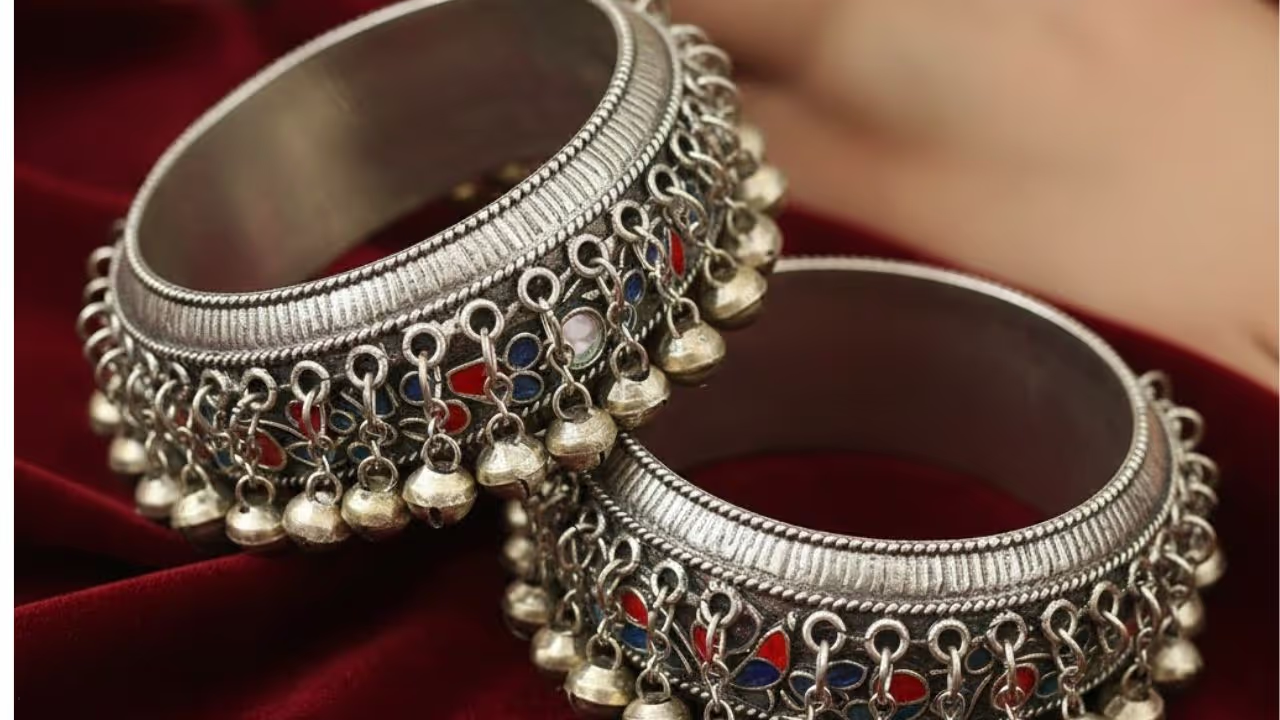
Silver Scam Alert: Silver prices are continuously rising, and along with it, the market is flooded with fake or adulterated silver jewelry. People often get deceived by the shine, weight, and design. Before heading to a jeweler, you can identify real and fake silver at home with some simple tests. These tests are completely domestic, safe, and don't require any expensive items.

1. Magnet Test
Silver is not magnetic. First, take a simple magnet and bring it near the jewelry. If the jewelry sticks to the magnet or you feel a pull, it means it's mixed with iron or some other metal. Real silver does not react to a magnet at all.
2. Ice Test
Silver is an excellent thermal conductor. Take an ice cube and place it on the silver jewelry. If the ice starts to melt very quickly, it's a sign of real silver. On fake silver, the ice will melt slowly.
Related Articles

3. Smell Test
Real silver has no smell. Rub the jewelry slightly and smell it. If it smells like metal, rust, or sulfur, it might be fake or adulterated. Pure silver is completely neutral.
4. Water Test
Fill a bowl with water and drop the jewelry in it. Real silver sinks immediately because it has a higher density. If the jewelry floats or sinks slowly, it might be adulterated.
5. Sound Test
Drop the silver jewelry lightly on a solid surface. Real silver produces a clear, sharp, and long-lasting "ting" sound. The sound of fake or adulterated silver is dull and dies out quickly.