A rare 1207 AD hero stone with a 14-line inscription has been discovered in Soraba taluk. The find sheds light on the region’s medieval history, Chalukya-era rule, and the story of a brave warrior mentioned in the ancient inscription.
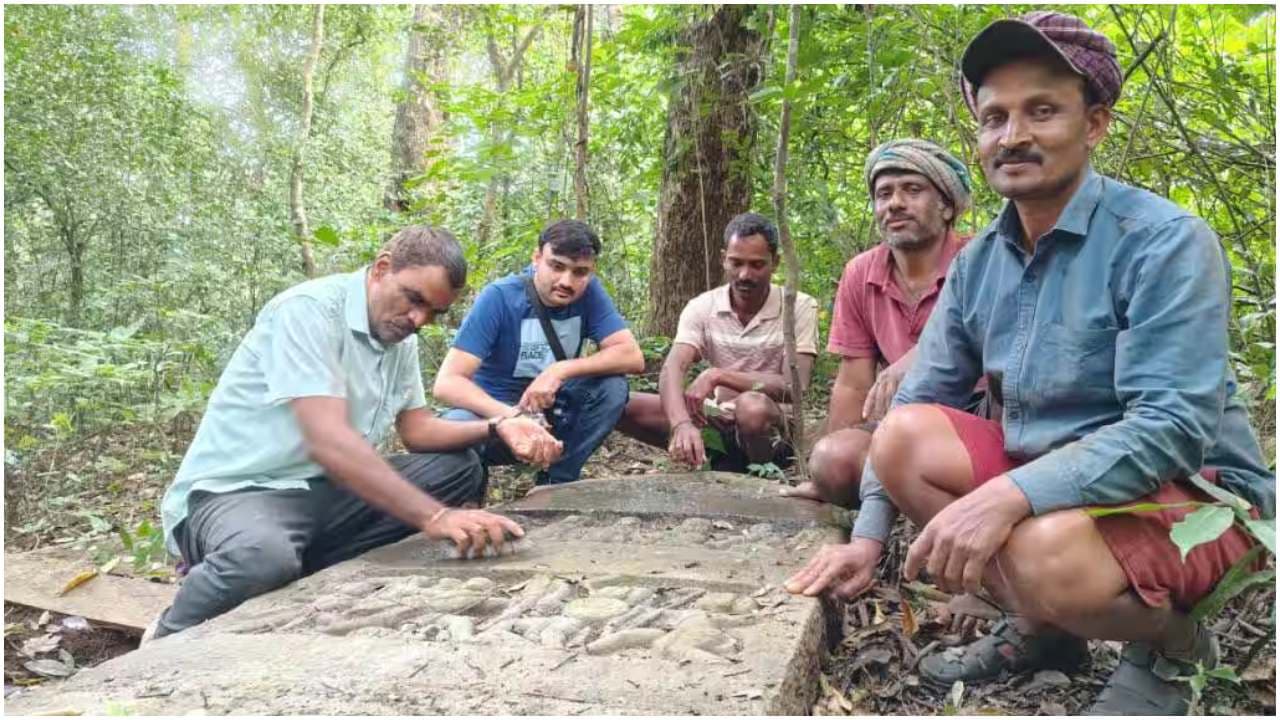
A rare hero stone dating back to 1207 AD has been discovered in Kanahalli village in Soraba taluk, shedding new light on the region’s medieval history. The significant archaeological find was made by history student Ulavi Avinash Chakrasali, and experts believe the discovery will provide valuable insights into the political and cultural landscape of the era.

The hero stone is remarkably large, measuring about nine feet in length and three feet in width. It features intricate carvings arranged in three sections, depicting scenes related to the hero’s bravery and his journey to heaven after death.
Detailed Carvings Depict Hero’s Battle And Afterlife
The lower section of the hero stone shows the warrior fighting enemies with a bow and arrow, illustrating the fierce battle in which he took part. The middle section depicts celestial maidens, known as apsaras, carrying the fallen warrior to heaven after his heroic death.
Related Articles

The upper section features a Shivalinga and a Nandi bull, both considered sacred symbols in Hindu tradition and often associated with divine realms. The hero is also portrayed in a devotional posture, sitting in a lotus position with folded hands, symbolising his spiritual ascension.
14-Line Inscription Praises Chalukya King
The hero stone contains a 14-line inscription carved in two sections. The inscription praises Jagadekamalla of the Western Chalukya dynasty, addressing him with grand titles such as “Prithvivallabha Maharajadhiraja Parameshwaram”, “Paramabhataraka”, “Satyashraya Kulatilaka”, and “Chalukyabharana”.
The inscription also mentions that during the same period, the Banavasi-12000 province was ruled by Hemmadideva, the son of Kirtideva.
Story Of Warrior Hadavala Kannayya
The inscription narrates the story of a warrior named Hadavala Kannayya from Kanahalli. According to the text, Kannayya sought permission from the local Banavasi chief before entering the battlefield.
He is described as having fought bravely, killing many enemy soldiers and their horses before ultimately dying a heroic death. The inscription poetically states that he ascended to heaven after his sacrifice.
However, some letters in the 10th line of the inscription have faded over time, making it difficult for historians to determine exactly whom Kannayya was fighting against.
Honour Granted To Warrior’s Family
Following Kannayya’s death in battle, King Hemmadideva is said to have restored the position of Kanahalli’s chieftain, or Nayak, to the warrior’s family in recognition of his bravery.
The inscription also records that the hero stone itself was carved by a sculptor named Beerayya.
Discovery Sheds Light On Regional History
Historians believe this discovery is particularly significant because it is the first known reference to King Hemmadideva found in Soraba taluk. They note that the inscription highlights the warrior culture of the time, as it records that Kannayya, a local chieftain, personally took part in the battle.
The inscription also suggests that Kanahalli may have been under the influence of two different rulers during that period.
Ancient Lion Sculpture Found Nearby
Interestingly, another ancient artefact was discovered about 800 metres away from the hero stone. The object is a lion sculpture believed to date back to the 5th century. It measures about 65 centimetres in length and 12 centimetres in height, although part of its front portion has been damaged over time.
History researcher Ramesh B. Hirejambur guided the fieldwork and assisted in analysing the inscription. Environmentalist G. Arunkumar, along with local residents Nemmadi Santosh, Somashekhara, Somappa and Tokappa, also played a role in locating the hero stone.