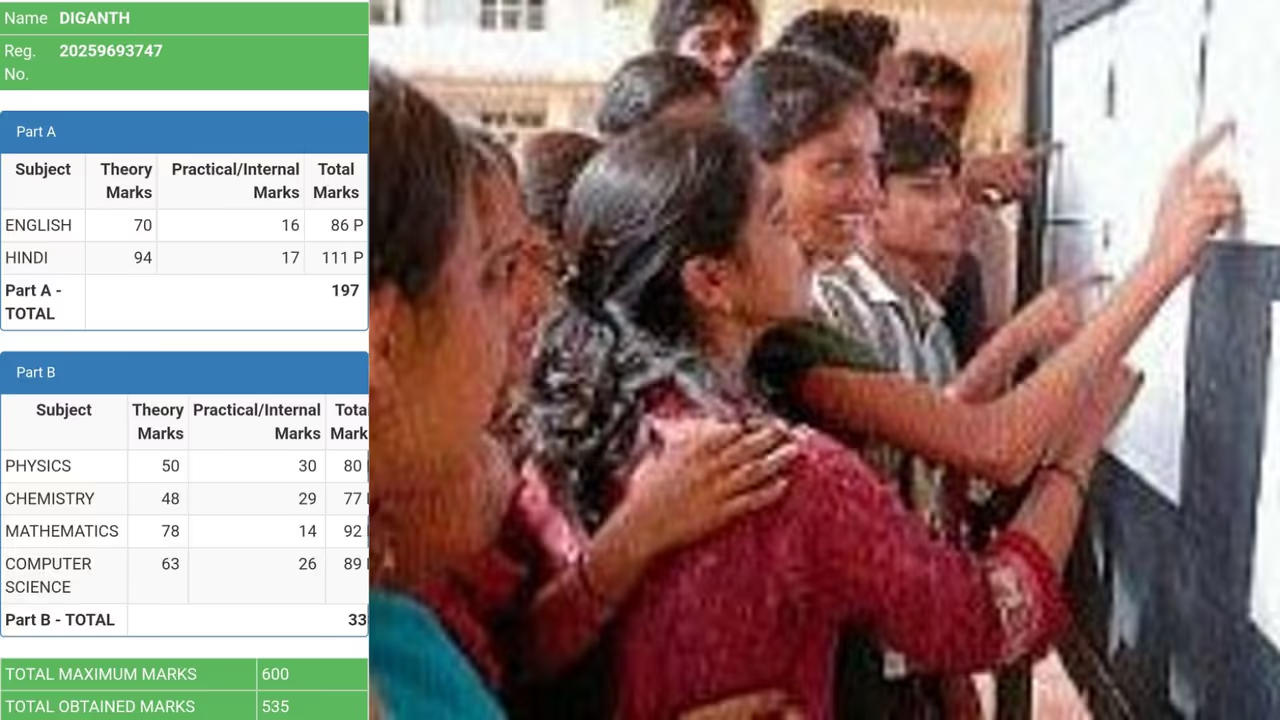
A Karnataka 2nd PUC results error has sparked outrage after a student was awarded 111 marks out of 100 in Hindi. The discrepancy has raised serious concerns about evaluation accuracy, with the board facing criticism over lack of checks and possible technical lapses.
The Karnataka Pre-University Examination Board has come under sharp criticism following a major error in the recently announced 2nd PUC results. The incident has sparked widespread concern over the credibility of the evaluation process and raised questions about the accuracy of the results. The issue has also put the spotlight on the Education Department, especially after recent claims of achieving ‘historic results’.

Student Awarded 111 Marks Out Of 100
In a startling case, a student was reportedly awarded 111 marks in Hindi, despite the subject carrying a maximum of 100 marks. The marksheet showed the student as having passed the examination. The unusual score left the student and their parents shocked and confused.
How Did the Error Occur?
Preliminary information suggests that the student may have been a repeater or had appeared for improvement. The student scored 94 marks in the theory examination, while the college awarded 17 marks for internal assessment. These scores appear to have been incorrectly added together, resulting in a total of 111.
Related Articles

Questions Raised Over Evaluation Process
The incident has raised serious concerns about the checks and balances in place before the declaration of results. Questions are being raised about how such an obvious discrepancy went unnoticed, including whether the evaluation system or software failed to flag the error. There are also concerns about whether similar mistakes may have affected other students.
Calls For Accountability
The controversy has put pressure on the Education Department to address the issue promptly. There is growing demand for clarification on whether the error lies in the theory marks or the internal assessment calculation. Such lapses risk undermining public trust in the examination system and highlight the need for stricter verification processes.