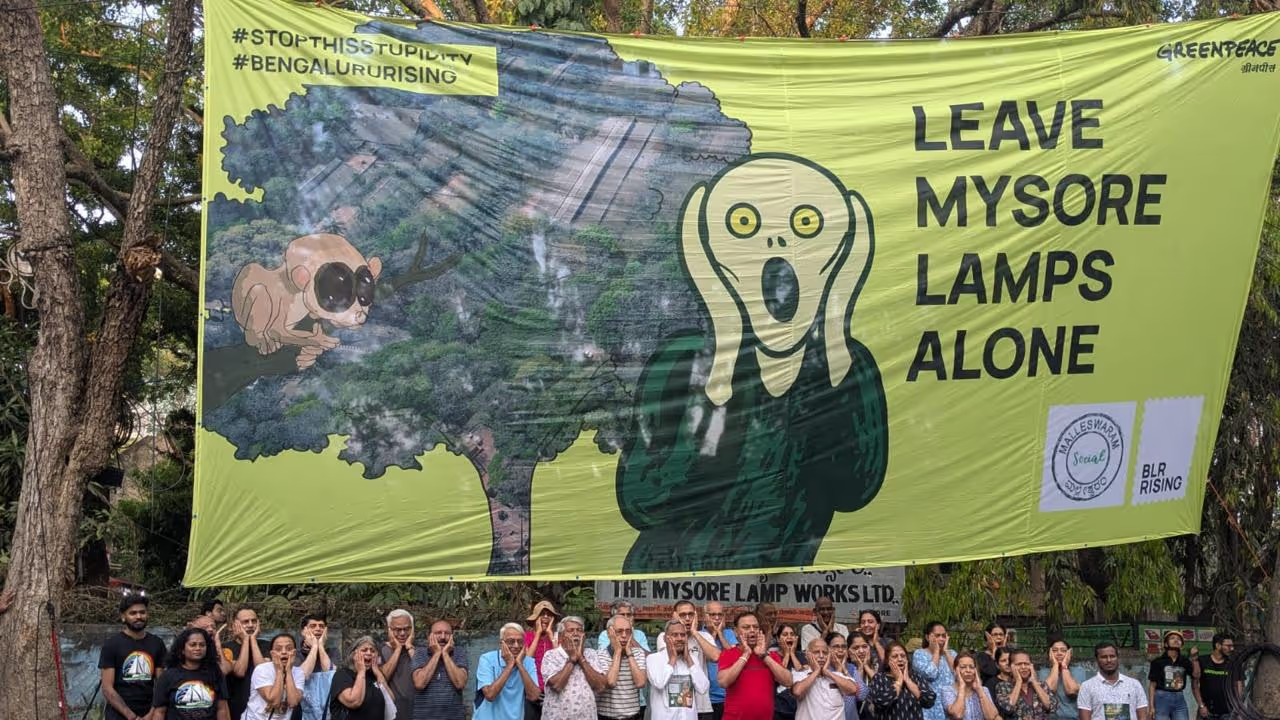
Residents and environmental groups in Bengaluru protested against the proposed convention centre at Mysore Lamps, raising concerns over loss of green cover, traffic congestion, and poor urban planning, while demanding sustainable and citizen-focused development.
In a strong show of public dissent against what they describe as chaotic and short-sighted urban development, several citizen groups across Bengaluru took to the streets on Tuesday. Organisations such as Greenpeace India and Bengaluru Rising led coordinated protests at key locations, highlighting long-pending infrastructure projects and raising concerns over the city’s planning priorities.

The demonstrators targeted incomplete flyovers and controversial development proposals, calling them “foolish projects” that have disrupted daily life, drained public resources, and failed to deliver meaningful solutions. The protests aimed to draw attention to the growing frustration among residents over delays, poor planning, and lack of accountability in urban development.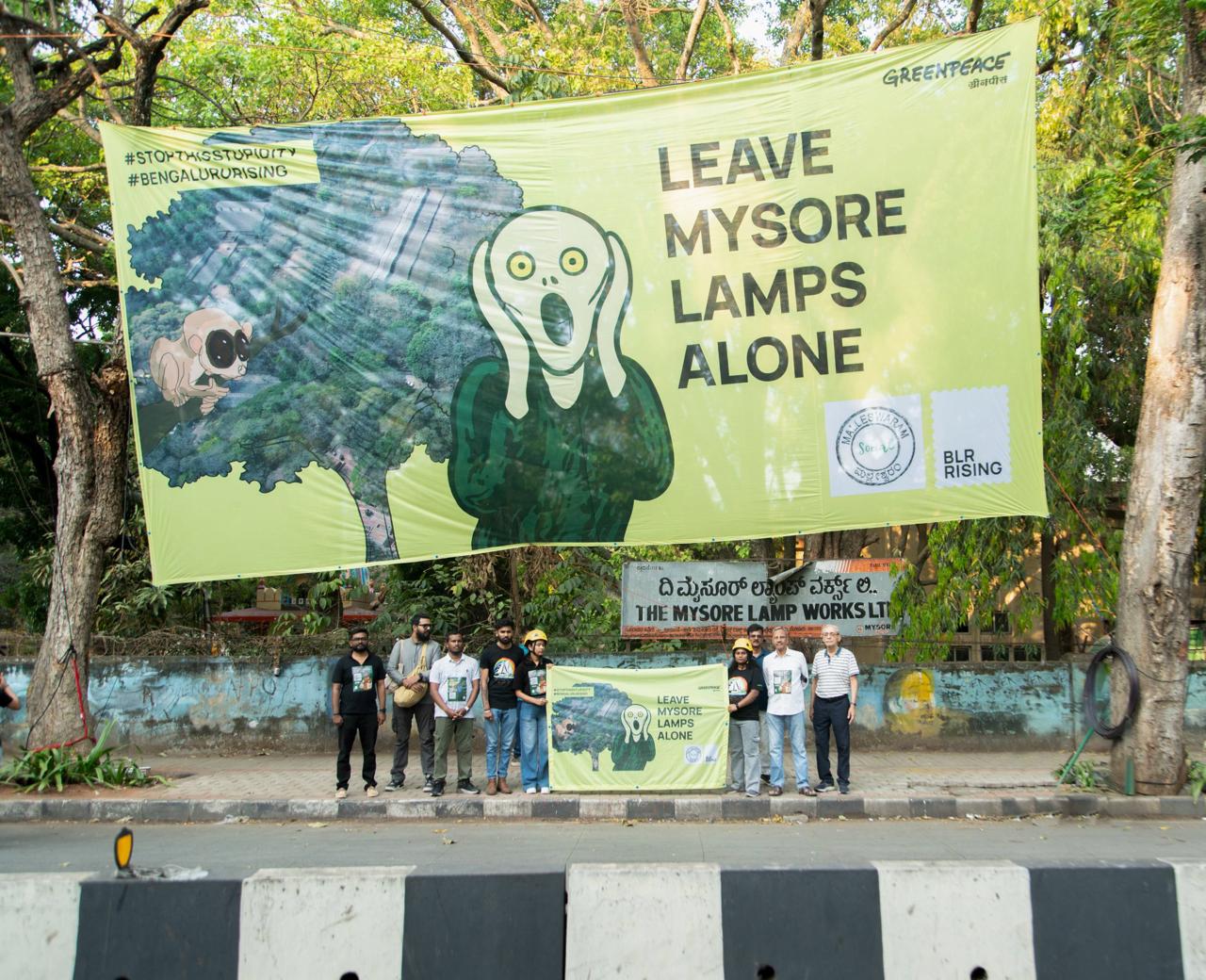
Focus on Incomplete Flyovers
Protesters gathered near major project sites, including Rajarajeshwari Nagar and Dommasandra, holding placards labelling the stalled works as “foolish projects”. They pointed out that these unfinished structures have been causing severe inconvenience to commuters and residents alike.
Related Articles

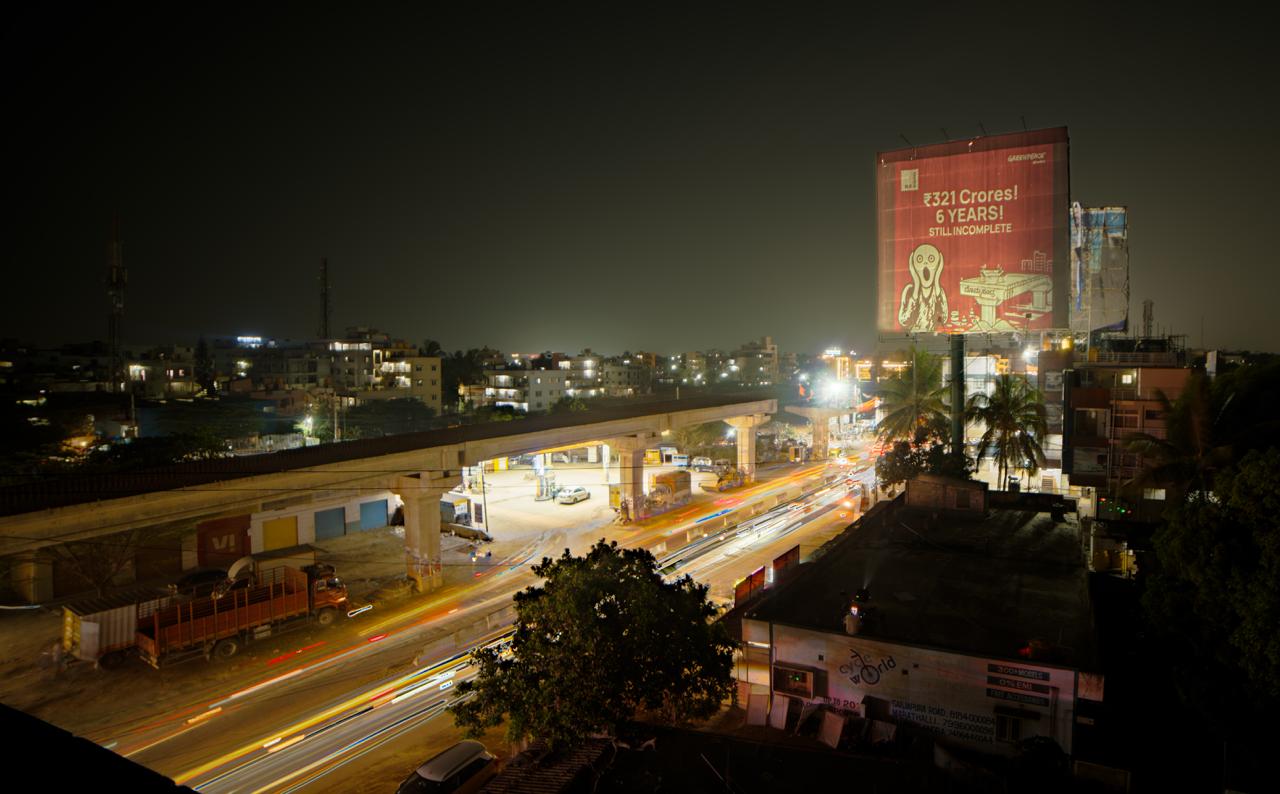
The flyover near the Rajarajeshwari Nagar arch has remained incomplete for over four years, while the Dommasandra flyover has seen little to no progress for nearly six years. These delays, citizens say, have led to traffic congestion, safety concerns, and unnecessary hardship for thousands of daily commuters.
Concerns Over Mysore Lamps Project
Another major issue raised during the protests was the proposed convention centre at the Mysore Lamps site. Activists warned that the project could result in the loss of one of Bengaluru’s significant green patches.
Amrutha SN, Climate and Energy Campaigner at Greenpeace India, explained the term “foolish projects”.
“These are projects that disrupt daily life, face prolonged delays, incur excessive costs, remain incomplete, or fail to address the problems they were meant to solve,” she said.
She further added that candidates contesting the Greater Bengaluru Authority elections must take these concerns seriously.
“We must prevent Bengaluru from becoming a global laughing stock,” she said.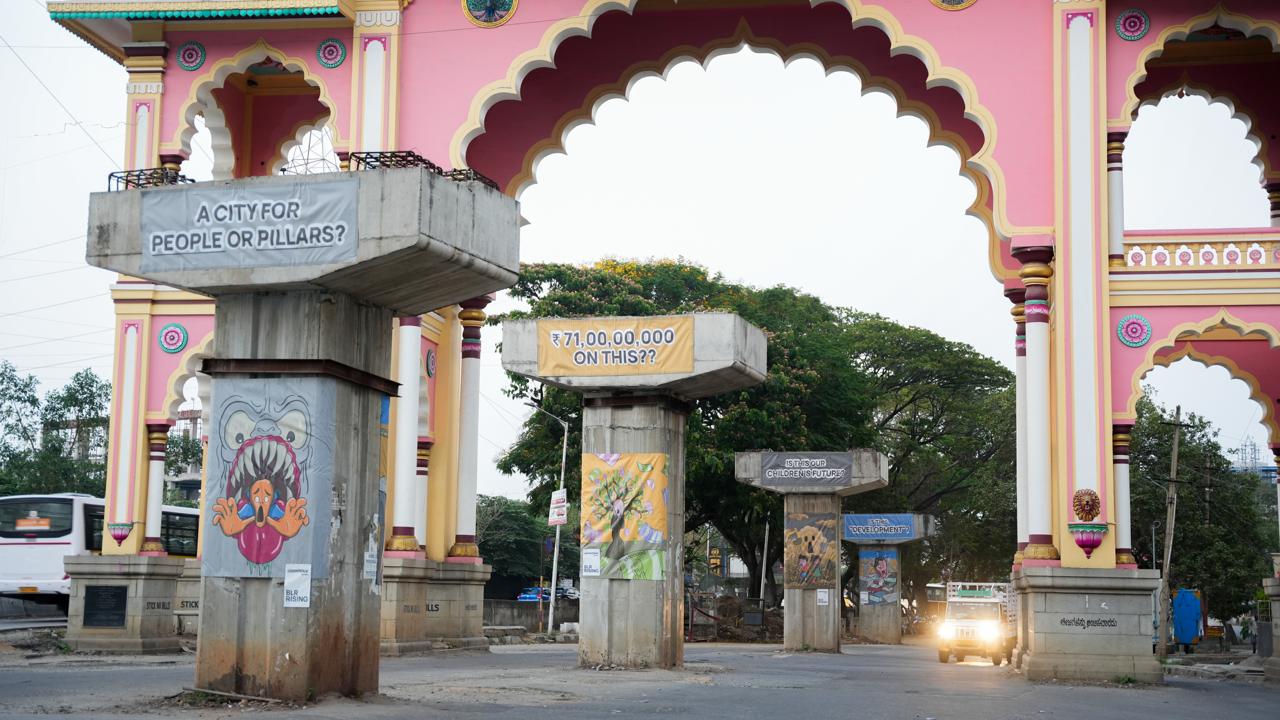
Demand for Sustainable Urban Planning
The protests reflect a broader criticism of Bengaluru’s development model over the past decade, which activists say has prioritised flyovers and road expansion over essential civic needs such as walkable footpaths, clean air, and the preservation of green-blue spaces, including lakes and parks.
Kaustubh Rao from Malleswaram Social highlighted the ecological importance of existing green spaces.
“Urban planning must prioritise ecology and biodiversity. Protecting Bengaluru’s remaining green cover should be the first step,” he said.
He added that the forested area near the defunct Mysore Lamps factory has the potential to be developed into a public space accessible to all.
“Turning it into a convention centre will benefit only a few while increasing traffic, pollution, and urban heat,” he noted.
Citizens Push for Participatory Governance
The protest is a continuation of the “Imaginarium” workshops conducted in recent months, which brought together citizens, students, professionals, and long-time residents. These discussions highlighted a clear gap between the government’s vision of large-scale infrastructure projects and citizens’ aspirations for a more liveable and pedestrian-friendly city.
Participants advocated for a Bengaluru that is well-connected, shaded, and designed for people rather than vehicles, where walking the last mile is safe and convenient.
‘Silicon Valley of the East’ Under Scrutiny
By staging the protest on April 1, activists symbolically criticised what they described as “absurd” planning decisions in a city often referred to as the “Silicon Valley of the East”. They argued that despite its global reputation, Bengaluru continues to rely on outdated urban development approaches.
However, the protest was not merely symbolic. Citizen groups, including Greenpeace, have urged the city administration and the state government to adopt the “Imaginarium” model, which emphasises inclusive planning and community participation.
Their message was clear: citizens must have a meaningful role in shaping Bengaluru’s future, rather than bearing the consequences of poorly conceived projects.