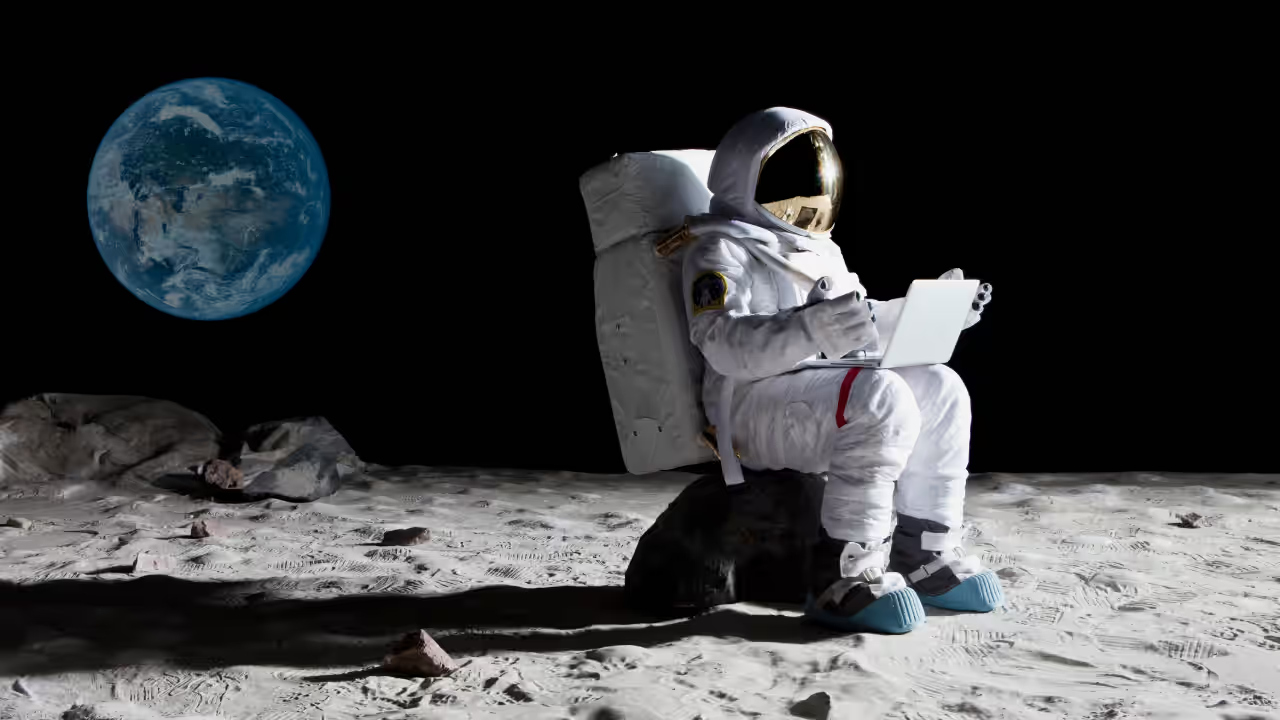
NASA’s Artemis II mission will send four astronauts around the Moon aboard Orion, marking humanity’s return beyond Earth orbit after 50 years. The 10-day mission will test systems for future lunar landings.
It’s been over five decades since humans made history by landing on the Moon, and in the years that followed, lunar exploration largely slowed down. Now, the United States is set to revive that ambition. Four astronauts are preparing to journey towards the Moon aboard the Orion spacecraft as part of NASA’s Artemis II mission.

If everything goes according to plan, the spacecraft will lift off on Thursday at 3:24 AM, Indian Standard Time. The launch will take place from the Kennedy Space Center in Florida. Scientists have a two-hour window to launch, but if the weather plays spoilsport, they will postpone the attempt to April 6.
This launch is a pretty big deal because no human has left Earth's orbit in the last 50 years, so there's a lot of excitement around it. NASA's ultimate goal is to land people on the moon again. This mission is a crucial first step. The four astronauts will spend 10 days flying around the moon and coming back. Their main job is to test if the Orion spacecraft is safe and suitable for humans on long journeys. They will also check the navigation systems and other equipment. After they return, the astronauts will go through medical tests to see how the trip affected them physically and mentally.
Related Articles

Also read: NASA Signs $180 Million Deal to Explore Moon’s South Pole by 2030
NASA Artemis II Mission
For the first two days after launch, the spacecraft will stay in Earth's orbit. During this time, the crew will run detailed checks on all its systems, including safety, navigation, and communication. After that, the spacecraft will head towards the moon, travelling farther than any human has ever gone before. From that unique position, they will study the moon's surface and analyse the data they collect.
More tests will be carried out during the return journey. Finally, the capsule will re-enter Earth's atmosphere and splash down in the Pacific Ocean at a staggering speed of 40,233 km/h.
This isn't the first time for this spacecraft. In 2022, NASA sent the same vehicle on an uncrewed test flight to the moon as part of the Artemis I mission. Looking ahead, NASA plans to land astronauts on the moon with the Artemis III mission in 2027. A year later, the fourth phase of the project aims to land on the moon's south pole and even dock with a lander.
Also read: How Long Will Artemis IV Astronauts Stay on the Moon? NASA Explains