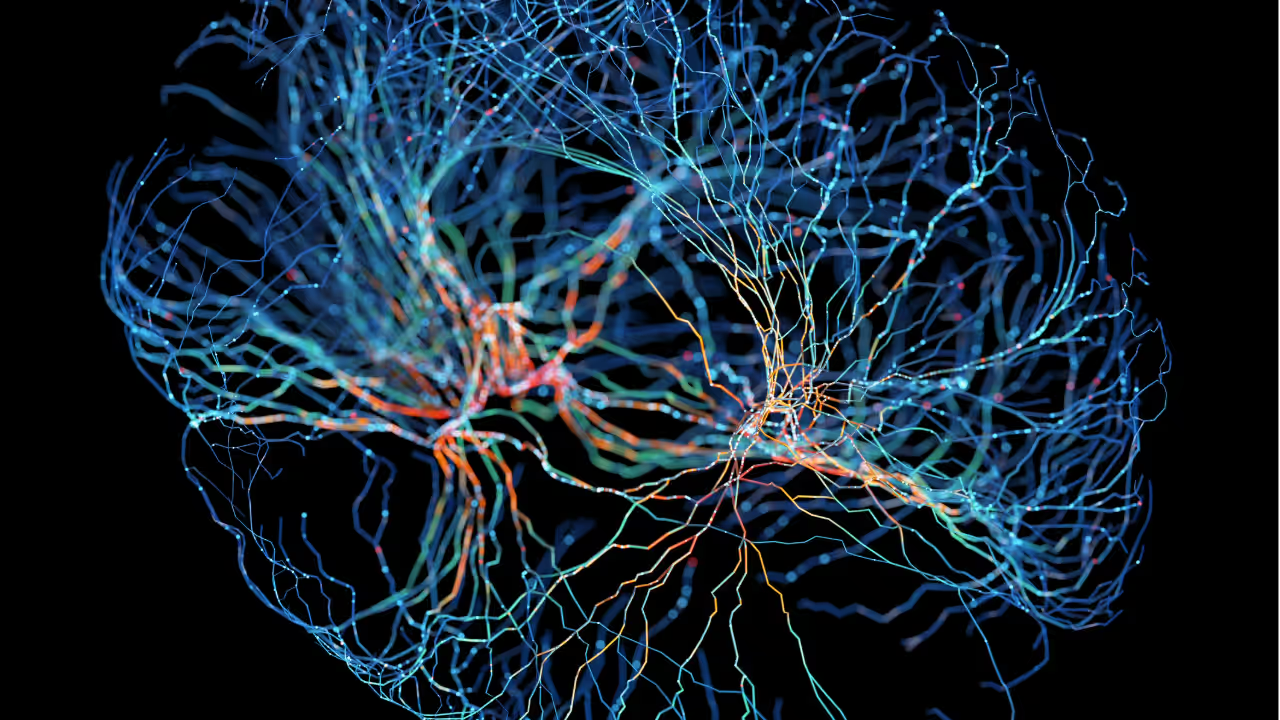
Discover how the human brain stores memories. A new study reveals how content and context neurons work separately to create clear, flexible memories. Learn how this works.
Scientists at the University of Bonn have made a significant discovery regarding how the human brain stores memories. Their research, published in the journal Nature, explains how the brain maintains a clear distinction between what happened and the circumstances in which it occurred. Instead of blending these two types of information, the brain stores them separately and connects them when necessary, ensuring that memories remain clear and adaptable.

Recognising People
Humans are exceptionally skilled at identifying people or objects in various situations. For example, you can easily distinguish between meeting a friend in a casual setting and seeing them in a formal environment.
According to Professor Florian Mormann, particular brain cells known as concept neurons respond to specific individuals or objects regardless of the context in which they are encountered. These cells are found deep within the brain’s memory-related regions.
Related Articles

Key Question
While recognising something is important, the brain also needs to associate that information with its context to make the memory meaningful. Past studies on animals suggested that single neurons might handle both roles.
This led Dr Marcel Bausch and his team to investigate whether the human brain operates differently. They wanted to determine if humans store content and context separately and, if so, how these elements are connected during the process of recalling a memory.
Also read: 24 Minutes of Specially Created Music Can Significantly Lower Anxiety Levels
Brain Monitoring
To explore this, the researchers examined patients with severe epilepsy who had electrodes implanted in their brains for medical treatment. These electrodes enabled scientists to monitor brain activity in areas associated with memory, such as the hippocampus.
While undergoing treatment, the patients performed simple computer-based tasks. They were shown pairs of images and asked varied questions about them. This allowed researchers to observe how the same image was processed under different conditions.
Two Systems Found
The team examined more than 3,000 neurons and identified two distinct types. One group, referred to as content neurons, responded to specific images, such as a biscuit, irrespective of the question asked.
The second group, known as context neurons, reacted to the type of question, like whether something was bigger or smaller, regardless of the image displayed. Very few neurons fulfilled both roles simultaneously, which highlights a difference between human brain function and findings in animal studies.
Working Together
The study also revealed that these two groups of neurons work closely together, particularly when a person gives a correct answer. Over time, their interaction strengthens, with one group influencing the other within milliseconds. This enables the brain to reconstruct complete memories even when only partial information is available, a process called pattern completion.
Flexible Memory
The separation of roles helps explain the adaptability of human memory. By storing content and context in separate systems, the brain can reuse the same information in various situations without needing a unique memory for each one.
As Dr Bausch explains, this division allows for flexible application of knowledge while preserving specific details. Professor Mormann adds that this ability to link information helps in generalising knowledge while retaining individual experiences.
Future Research
The researchers noted that their study focused on controlled scenarios where context was defined by on-screen questions. In real life, context can also be influenced by the environment or surroundings.
Future research will examine whether the brain processes everyday situations in the same way. Scientists also plan to investigate the effects of disrupting the connection between content and context neurons, which could offer deeper insights into memory-related issues and decision-making processes.
Also read: Fathers’ Smoking Habits Could Increase Diabetes Risk in Children, Study Finds